
The Sanātana Model begins with a simple question: how does a civilization survive even when its political forms disappear? It sees society as a living continuum, not merely an arrangement of individuals and institutions. Its basic structure moves through interconnected circles—Pinda, Kutumb, Community, Institutions, Gram, Kshetra, Rashtra and Brahmanda. Each level sustains and influences the other. Therefore, Sanātana does not mean unchanged; it means continuity through transformation. Dynasties may fall and states may change, yet civilization survives when its social, cultural and knowledge systems continue reproducing themselves across generations. The Sanātana Model studies this continuity.
Sanatana Model
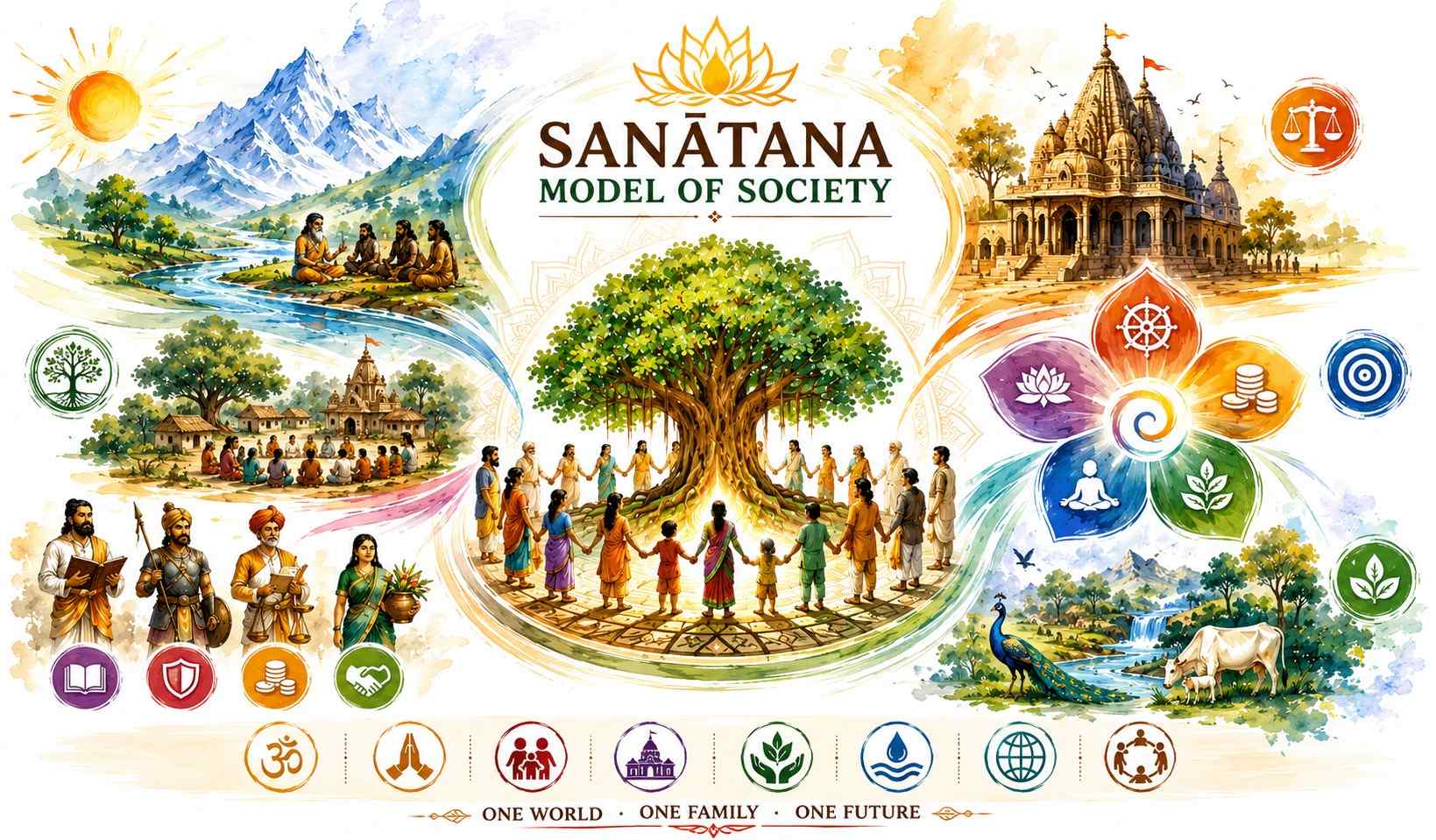
Sanatana Model of Society
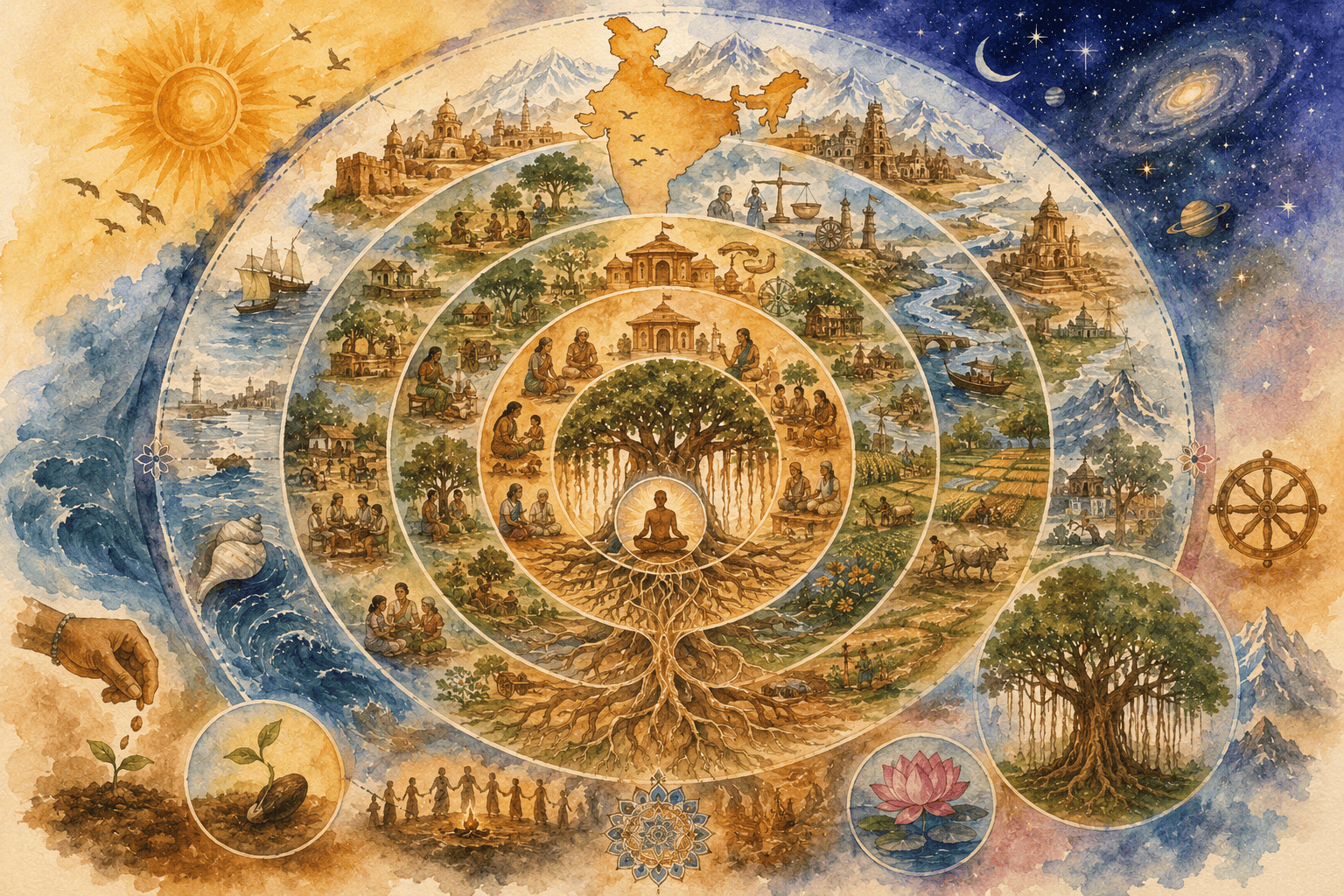
1. ‘Sanātana Model of Society’ – An Introduction
1. ‘Sanātana Model of Society’ – An Introduction
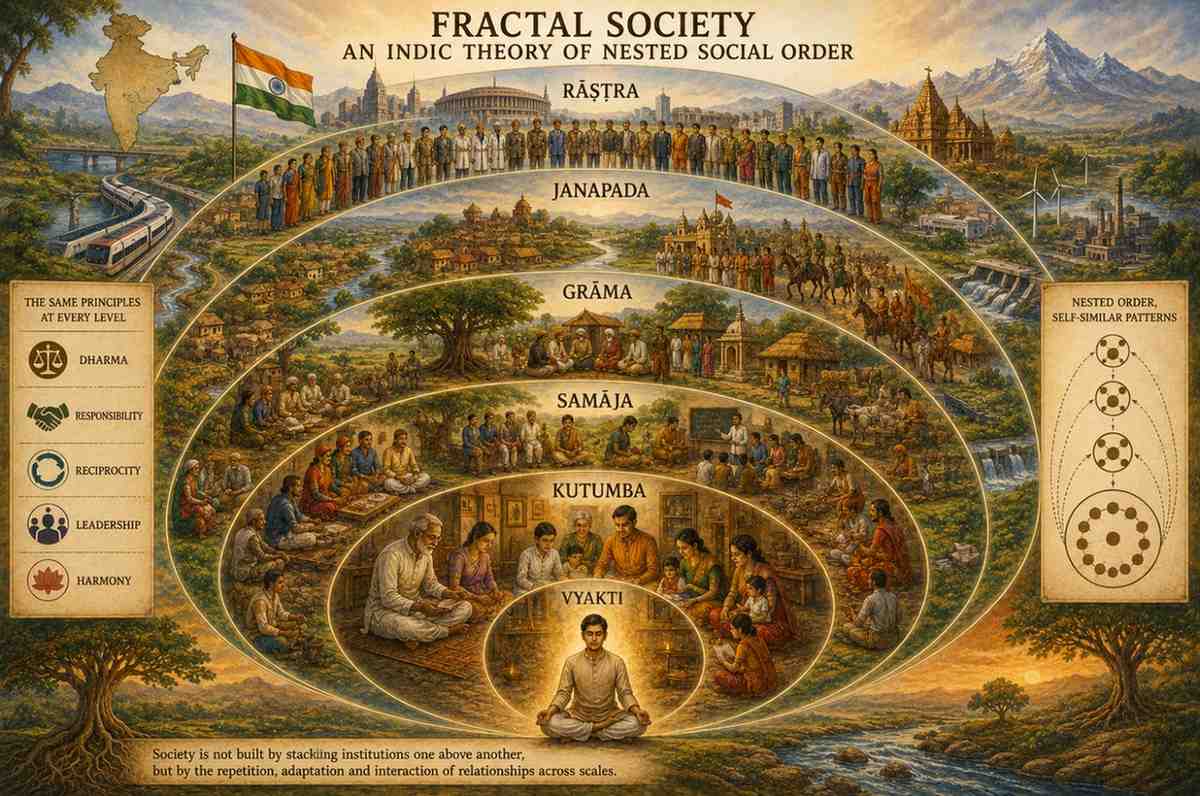
Fractal Society: An Indic Theory of Nested Social Order
Fractal Society: An Indic Theory of Nested Social Order
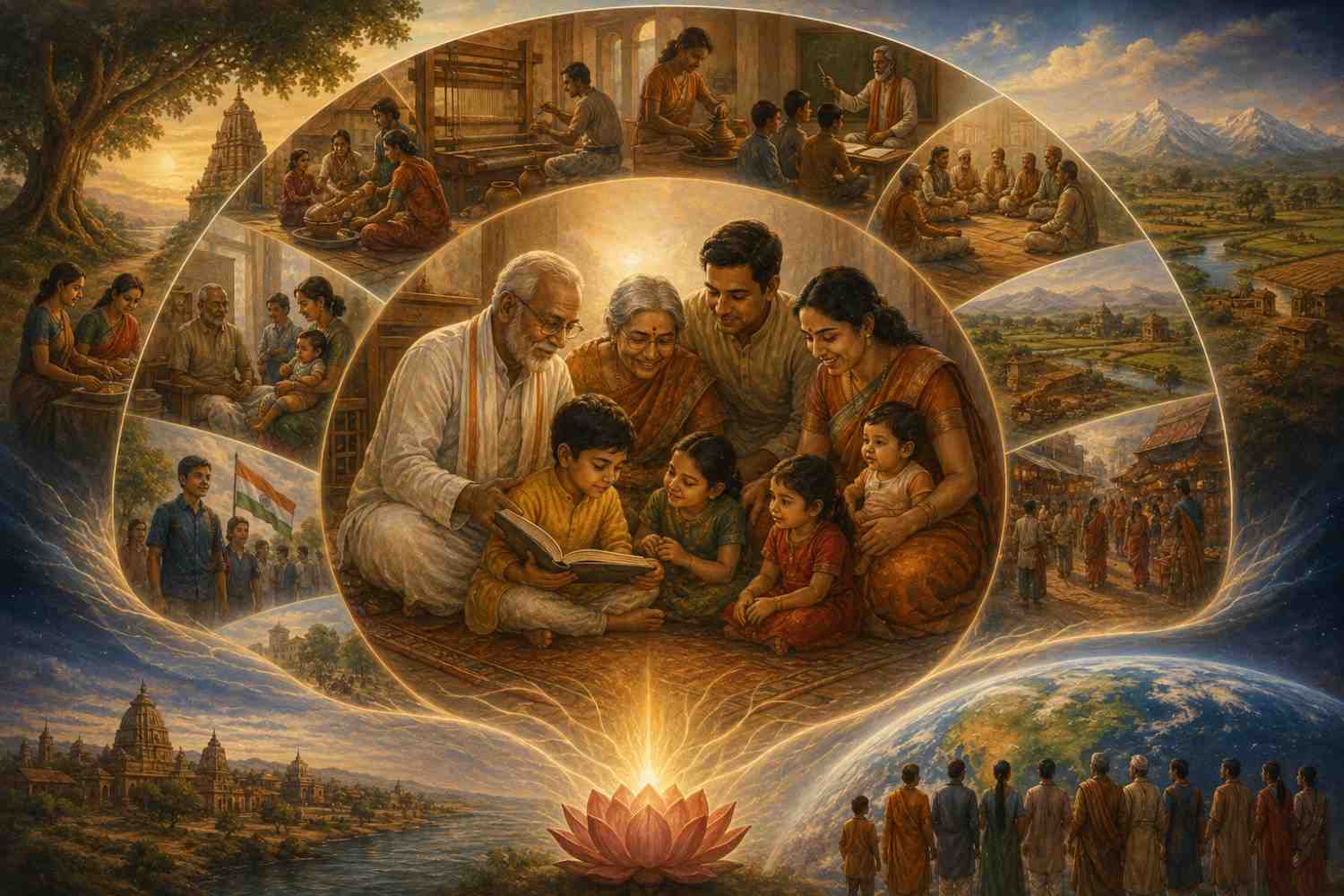
The Family as a Civilizational Institution: Re-centering the Kutumba in Social Theory
The Family as a Civilizational Institution: Re-centering the Kutumba in Social Theory
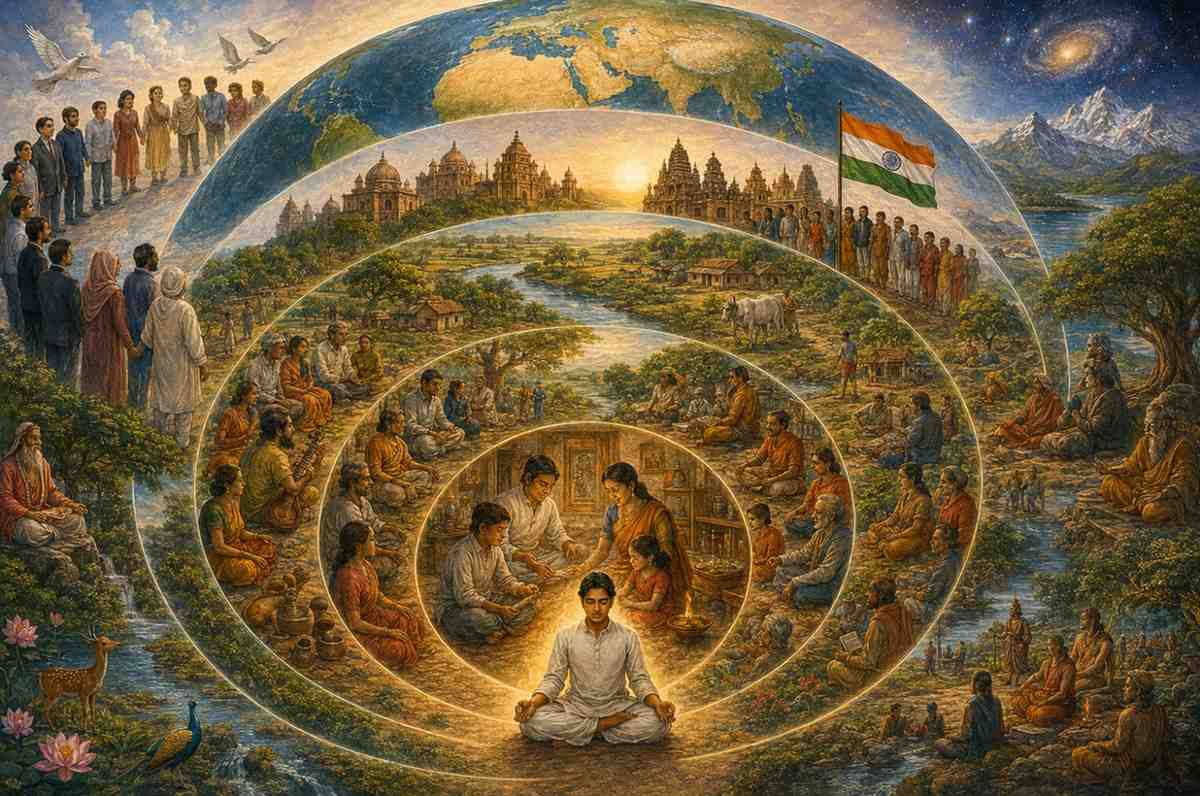
Beyond the Individual and the State: The Sanātana Model of Society