
The Indic model of transformation does not begin with the revolutionary destruction of the existing order. Social change is understood as a transformation of interconnected systems. Change in the individual must influence family, society, institutions and political order, while reform at one level cannot succeed by ignoring the others. The aim is not merely to replace one ruling structure with another, but to restore balance across the social whole. Dharma therefore provides the principle of transformation: change is necessary, but destructive rupture is not its only form. The Indic approach moves beyond revolution toward regeneration, adaptation and the gradual reorganization of society.
Holistic Transformation
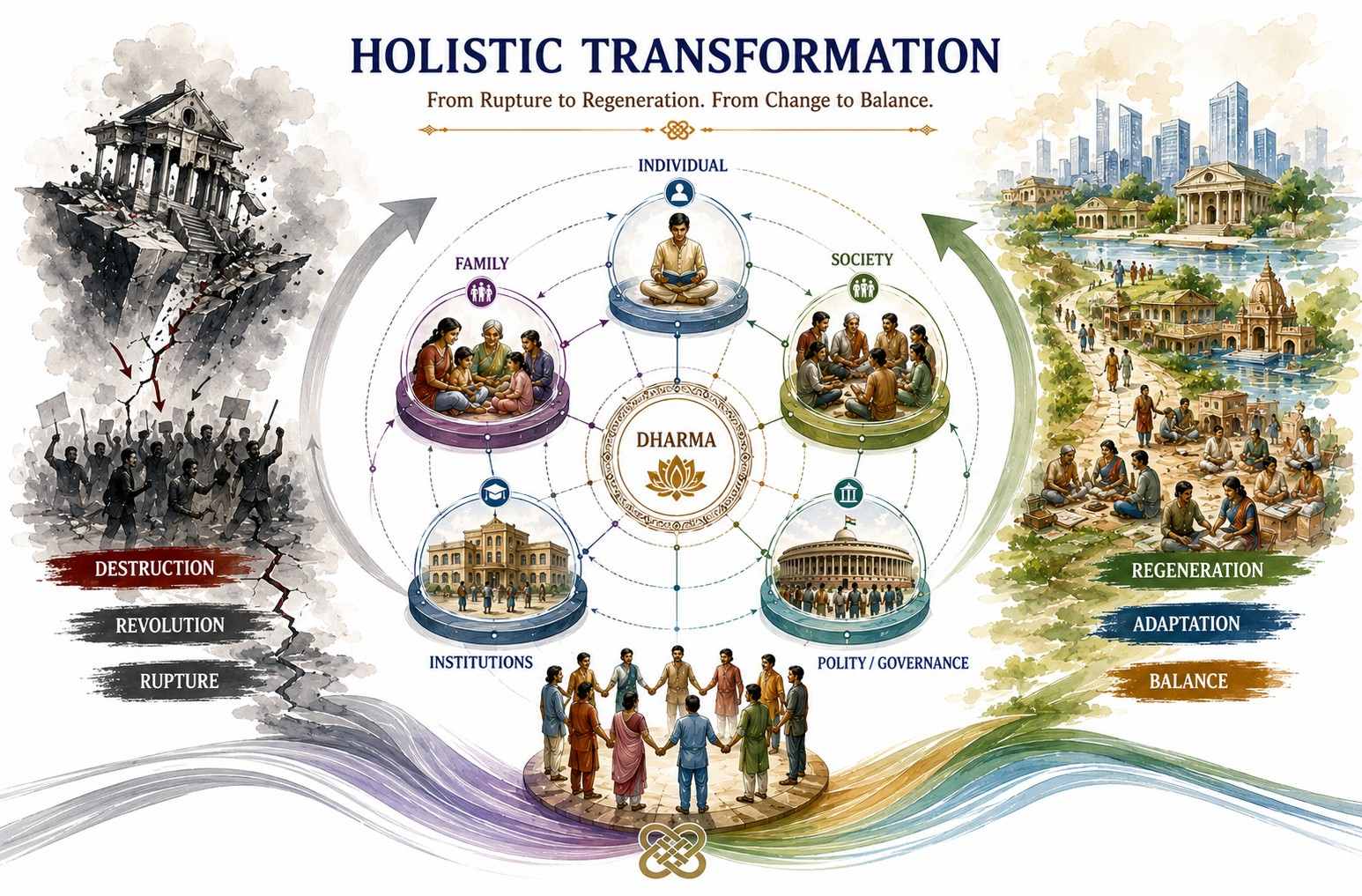
Holistic Transformation
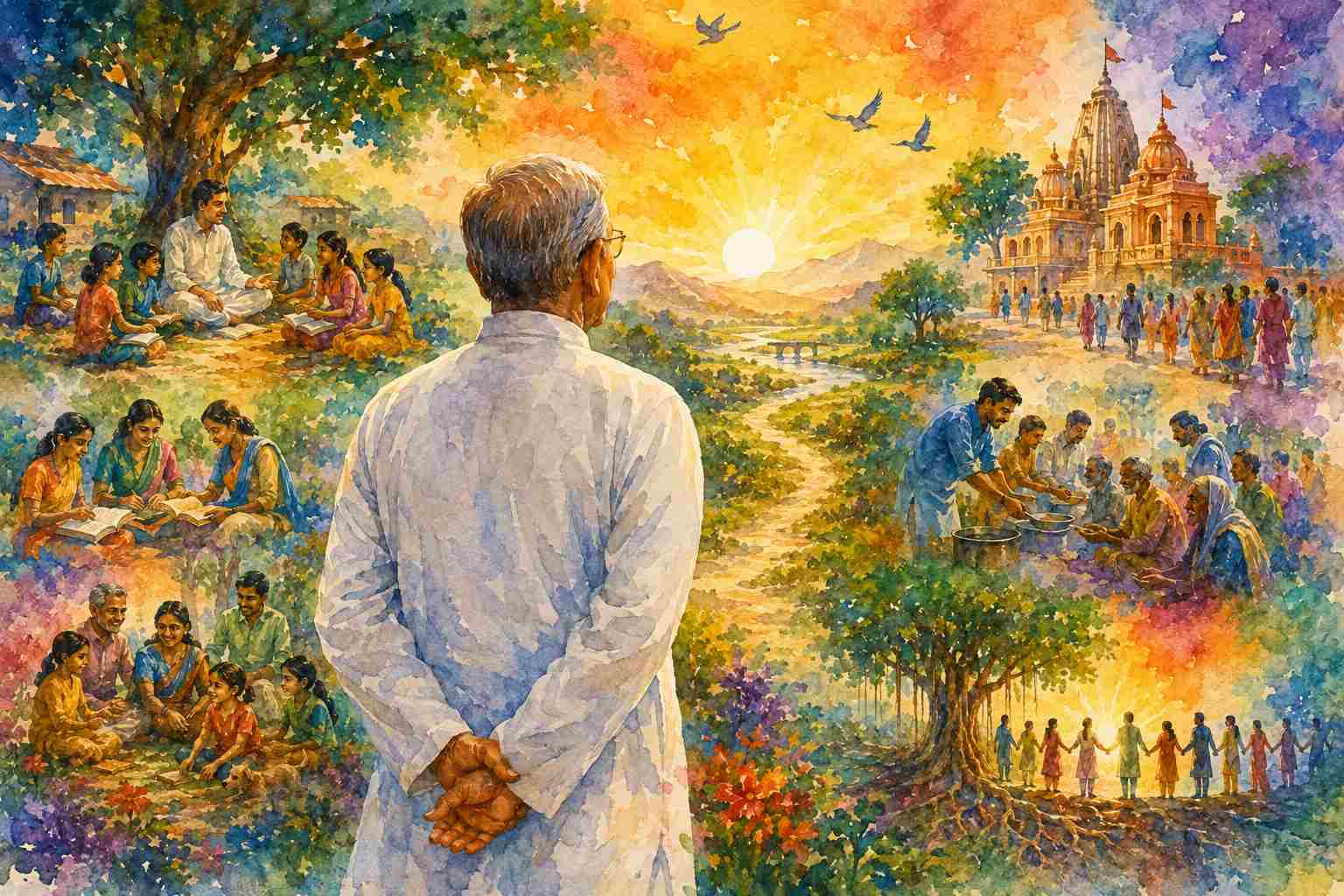
From Survival to Upliftment: Pandurang Shastri Athavale Ji and the Third Stage of Human Relationship
From Survival to Upliftment: Pandurang Shastri Athavale Ji and the Third Stage of Human Relationship
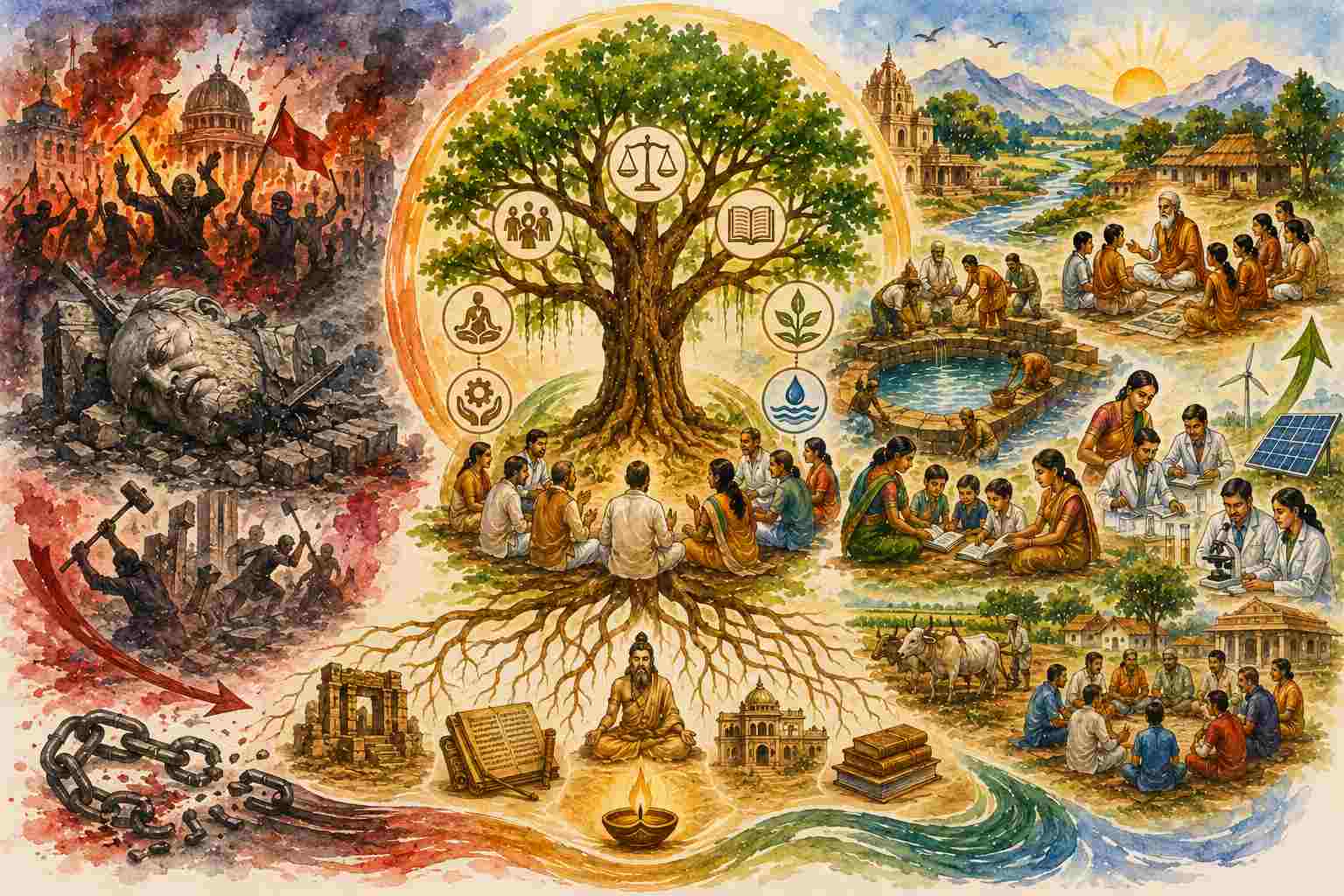
8. Holistic Transformation over Violent Revolution: An Introduction
8. Holistic Transformation over Violent Revolution: An Introduction
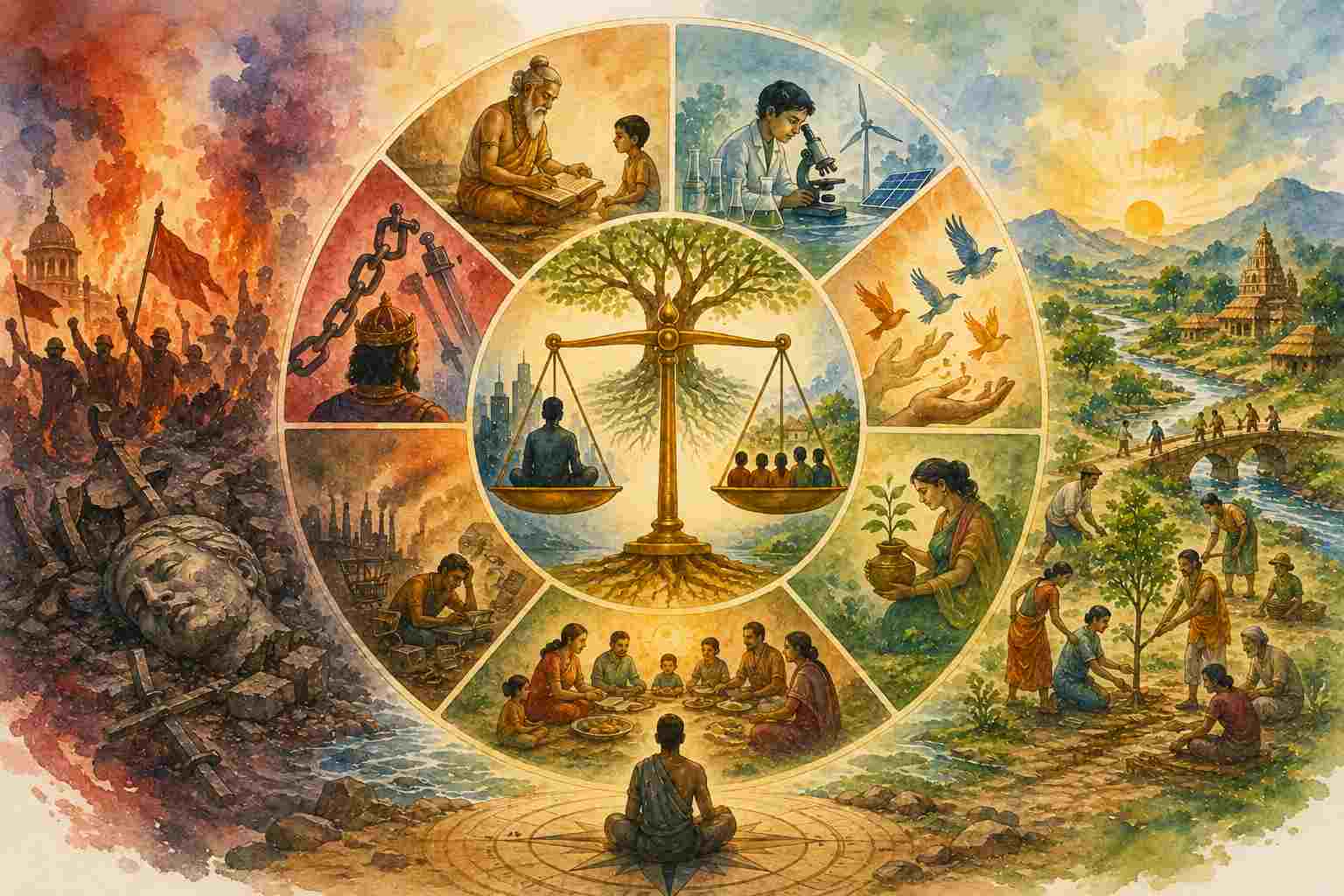
The Balance Principle: An Indic Framework for Sustainable Social Transformation
The Balance Principle: An Indic Framework for Sustainable Social Transformation
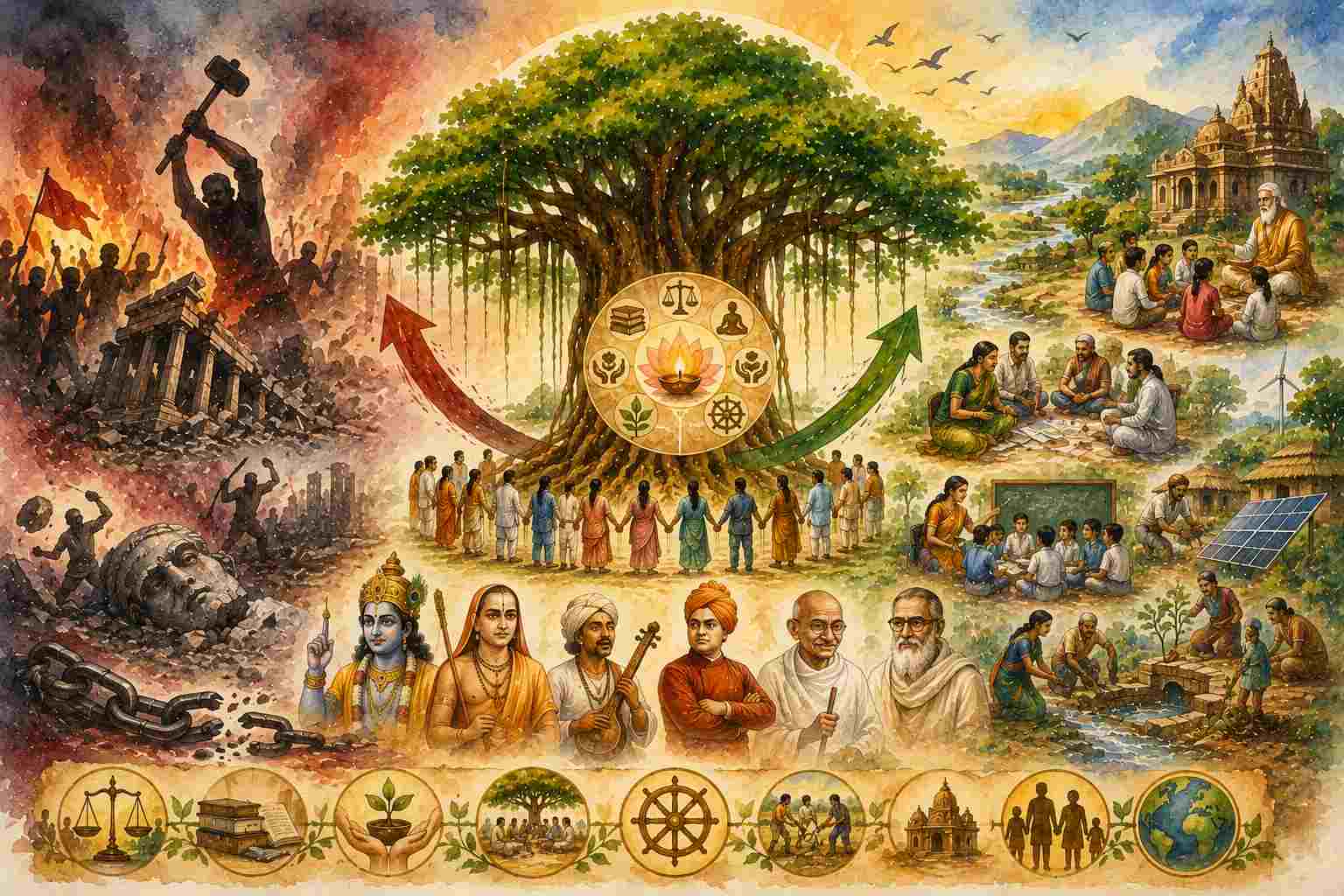
Restoration over Revolution: Dharma as the Principle of Civilizational Renewal
Restoration over Revolution: Dharma as the Principle of Civilizational Renewal
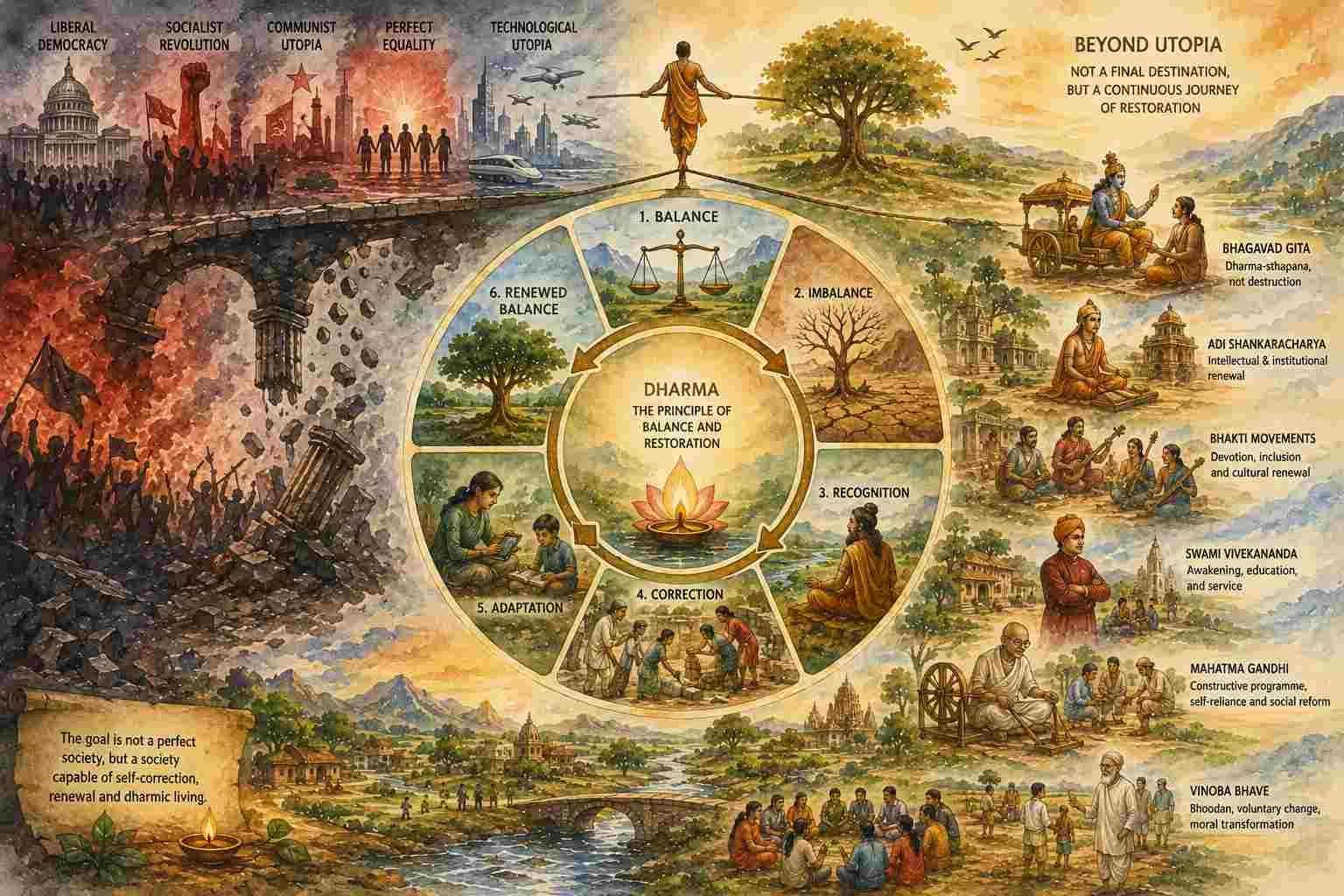
Beyond Utopia: The Indic Theory of Social Change