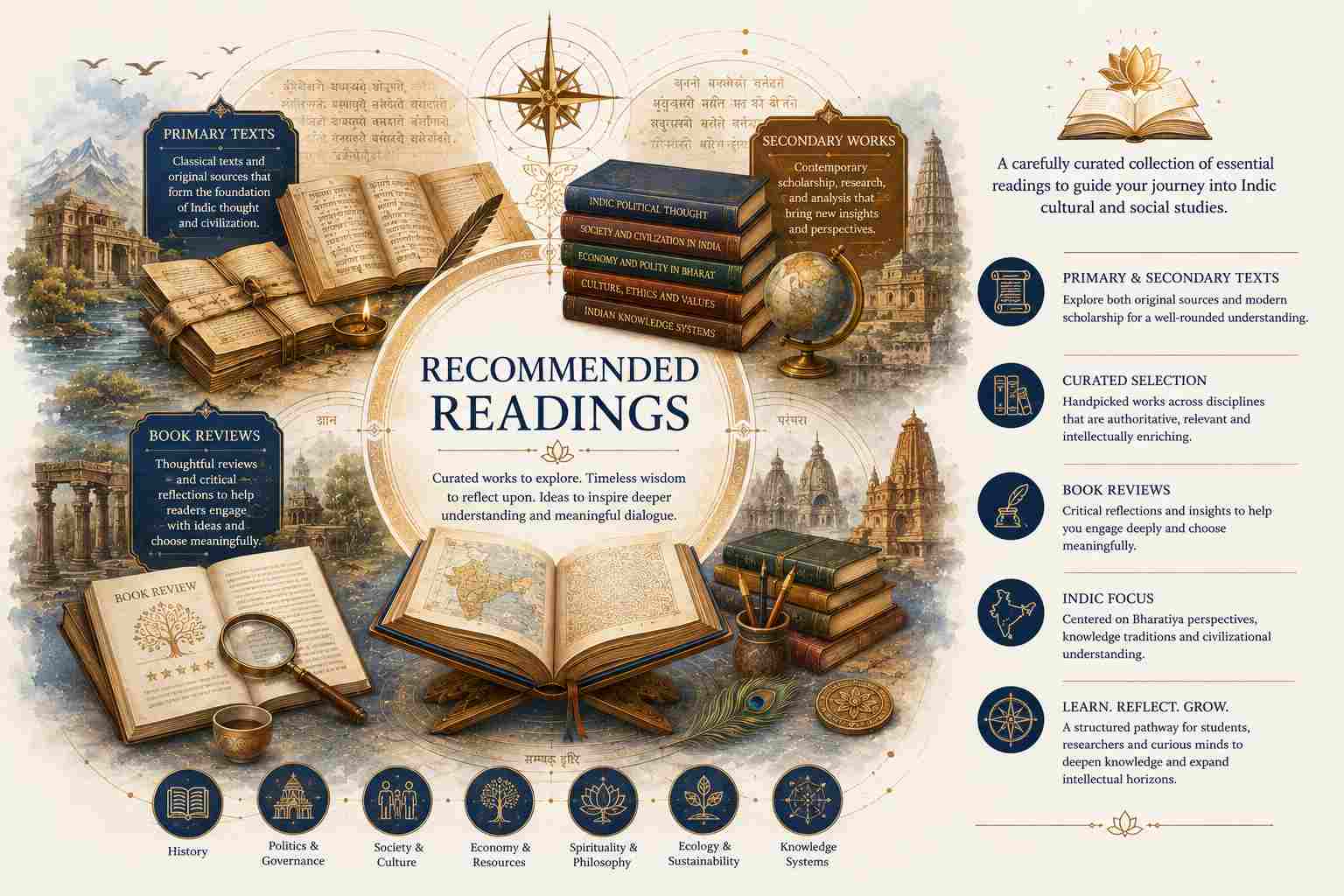
A section includes carefully curated collection of essential books, articles, reports, and classic works for anyone interested in Indic Cultural and Social Studies. These recommendations provide a structured pathway for exploring foundational concepts, contemporary scholarship, and civilizational perspectives across diverse disciplines, helping readers deepen their understanding and expand their intellectual horizons.
Recommended Readings
Primary and Secondary Sources
Primary Sources: Every civilization speaks through its original voices, and understanding a civilization requires engaging with those voices as directly as possible. This collection brings together foundational texts, rare documents, inscriptions, manuscripts, speeches, letters, reports, archival records, and other primary materials that allow readers and researchers to encounter evidence before it is filtered through later interpretations. The aim is not merely to preserve sources, but to make them accessible for careful reading, contextual study, comparison, and further inquiry.
By returning to original sources, researchers can examine the language, categories, institutions, experiences, and ideas through which Bharat understood and organised its social and civilizational life. These materials provide an opportunity to question inherited narratives, revisit established interpretations, and develop arguments grounded in evidence. The collection therefore serves as a foundation for deeper research into Bharat’s cultural, social, political, intellectual, and civilizational traditions, while encouraging readers to approach primary sources with curiosity, critical judgement, and an openness to multiple interpretations.
Secondary Sources: Knowledge grows through dialogue, interpretation, and the continual engagement of ideas. This collection brings together scholarly books, research papers, commentaries, reviews, monographs, and analytical works that interpret and examine primary sources through diverse academic perspectives. It provides readers with access to the conversations that have shaped our understanding of Bharat’s cultural, social, political, intellectual, and civilizational traditions, while also allowing them to encounter differing arguments, methodologies, and schools of interpretation.
The collection encourages readers to move beyond a single reading of a source and engage with the debates, disagreements, continuities, and changing interpretations that emerge through scholarship. By placing different perspectives alongside one another, it enables researchers to critically evaluate existing arguments, identify gaps, develop new questions, and situate Indic Cultural and Social Studies within wider intellectual discourse. The purpose is not to prescribe one interpretation, but to create the scholarly foundation from which new research, alternative readings, and deeper civilizational inquiries can emerge.
Primary Sources
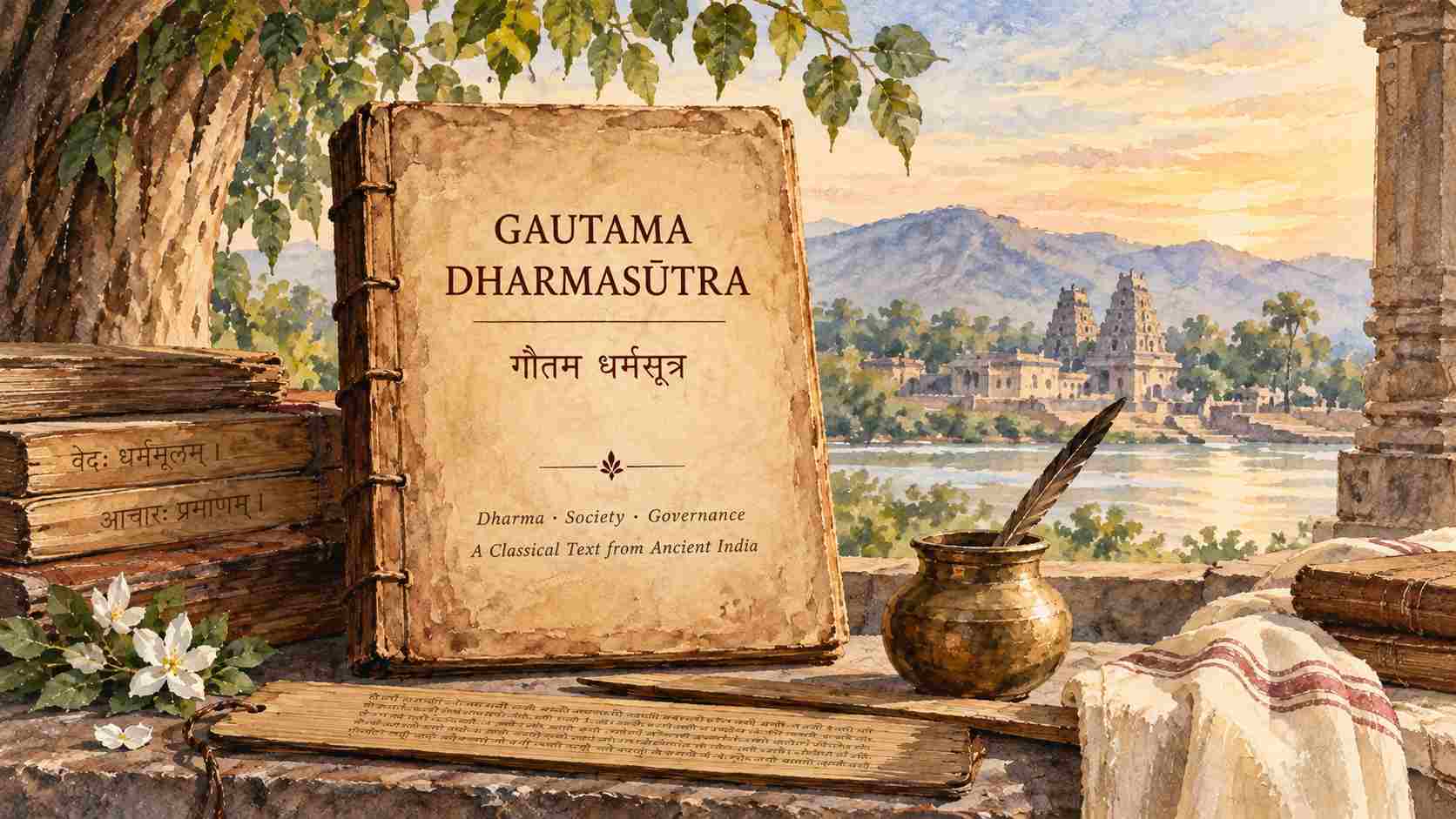
Gautama Dharmasūtra
Gautama Dharmasūtra
Nīlakaṇṭhī
Nīlakaṇṭhī
Jayamaṅgalā – जयमंगला
Jayamaṅgalā – जयमंगला
Secondary Sources
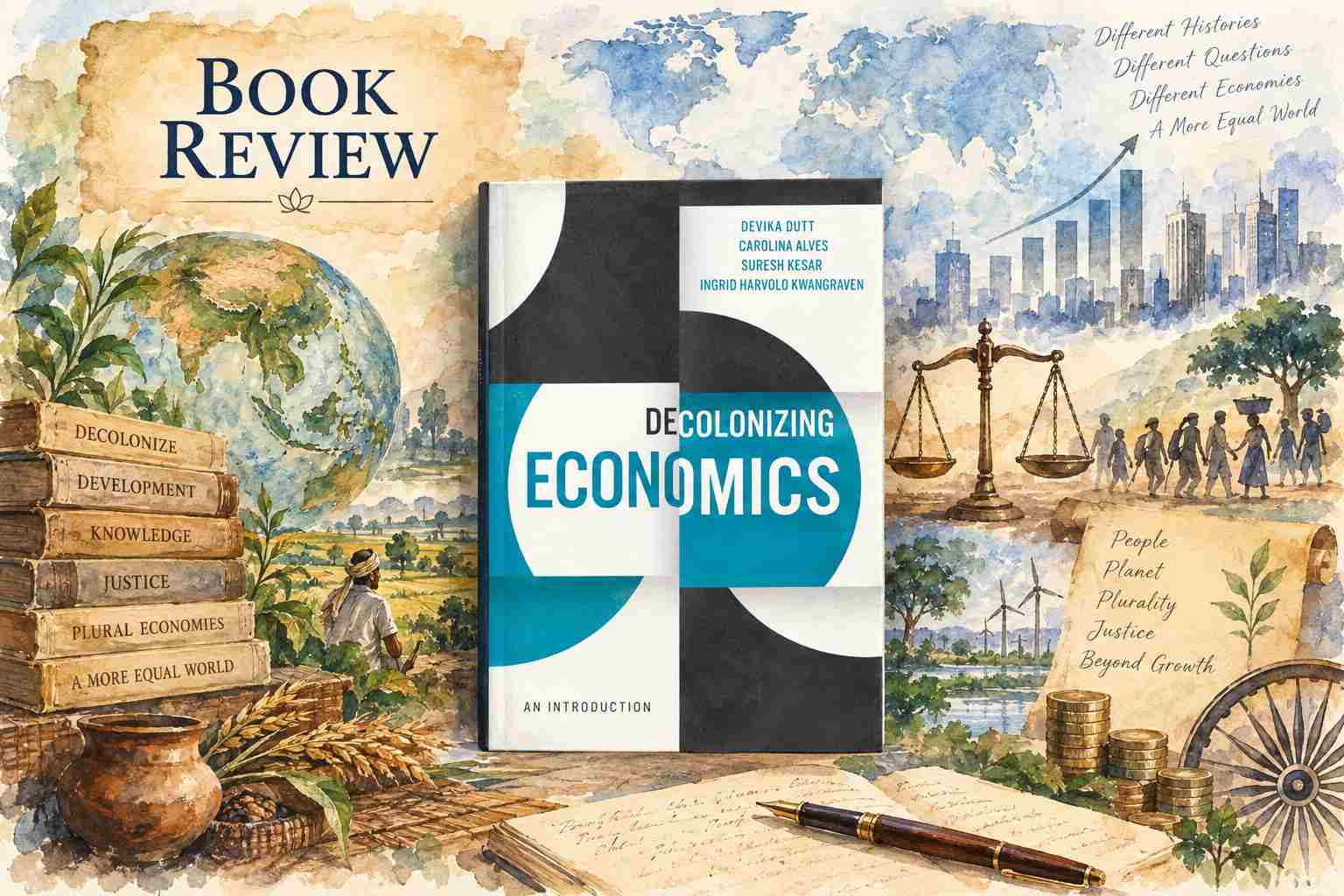
Decolonizing Economics: An Introduction (A Book Review)
Decolonizing Economics: An Introduction (A Book Review)
Dattopant Thengadi ji and ‘The Third Way’
Dattopant Thengadi ji and ‘The Third Way’
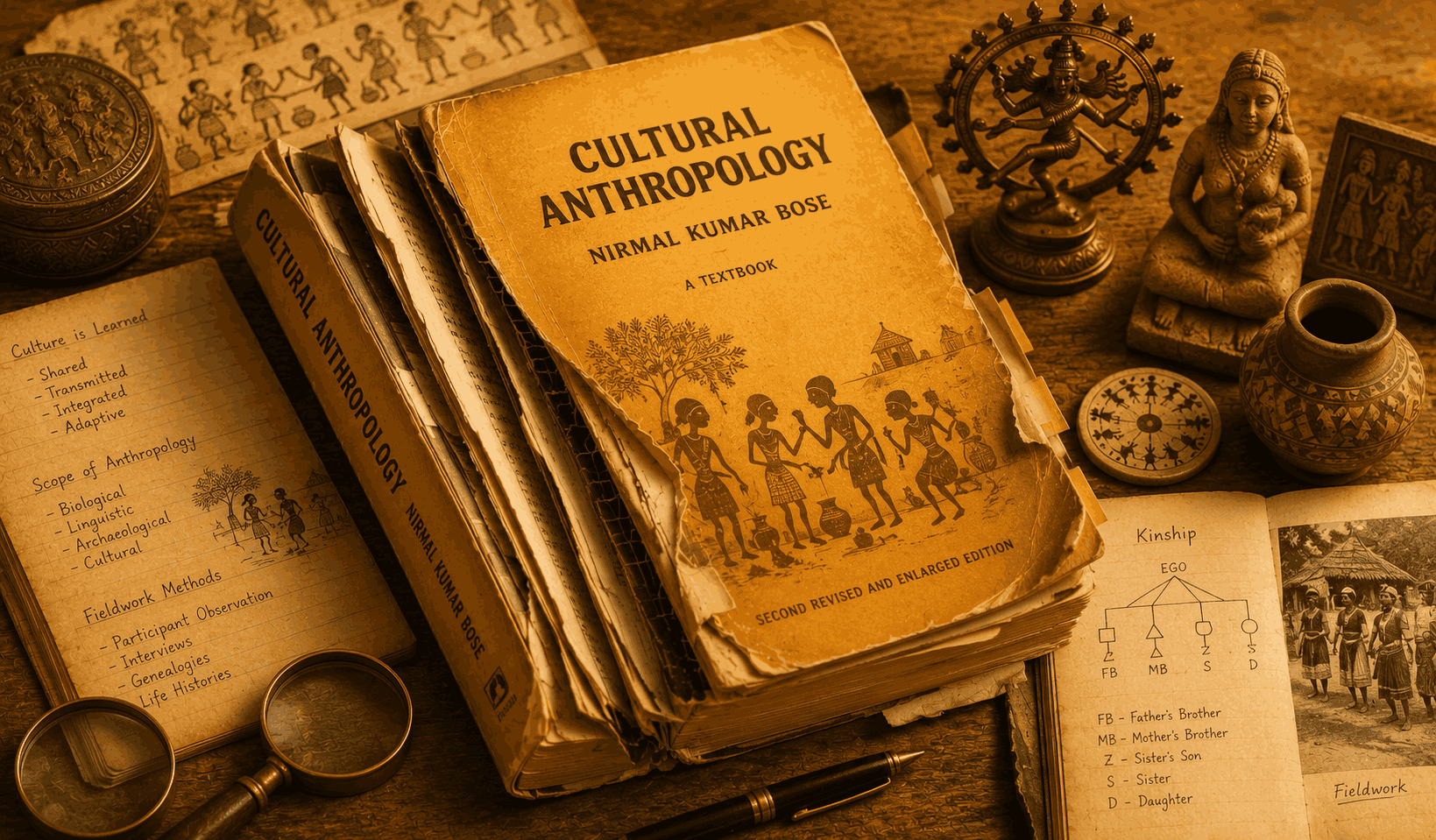
Cultural Anthropology – Nirmal Kumar Bose – Part 1