
The Indic Systems Model understands society as an interconnected system rather than a collection of separate institutions. Dharma, Artha, Kama and Moksha represent different dimensions of human and social life, while family, community, economy, polity and knowledge systems remain interconnected. No sphere functions in complete isolation. Economic activity affects social relations; political power influences institutions; knowledge shapes both. Dharma provides the regulating principle that prevents one dimension from destroying the others. The model therefore studies relationships, feedback and balance between different systems. Social stability emerges not from uniformity, but from maintaining coherence among diverse and interconnected functions.
Indic Systems Model
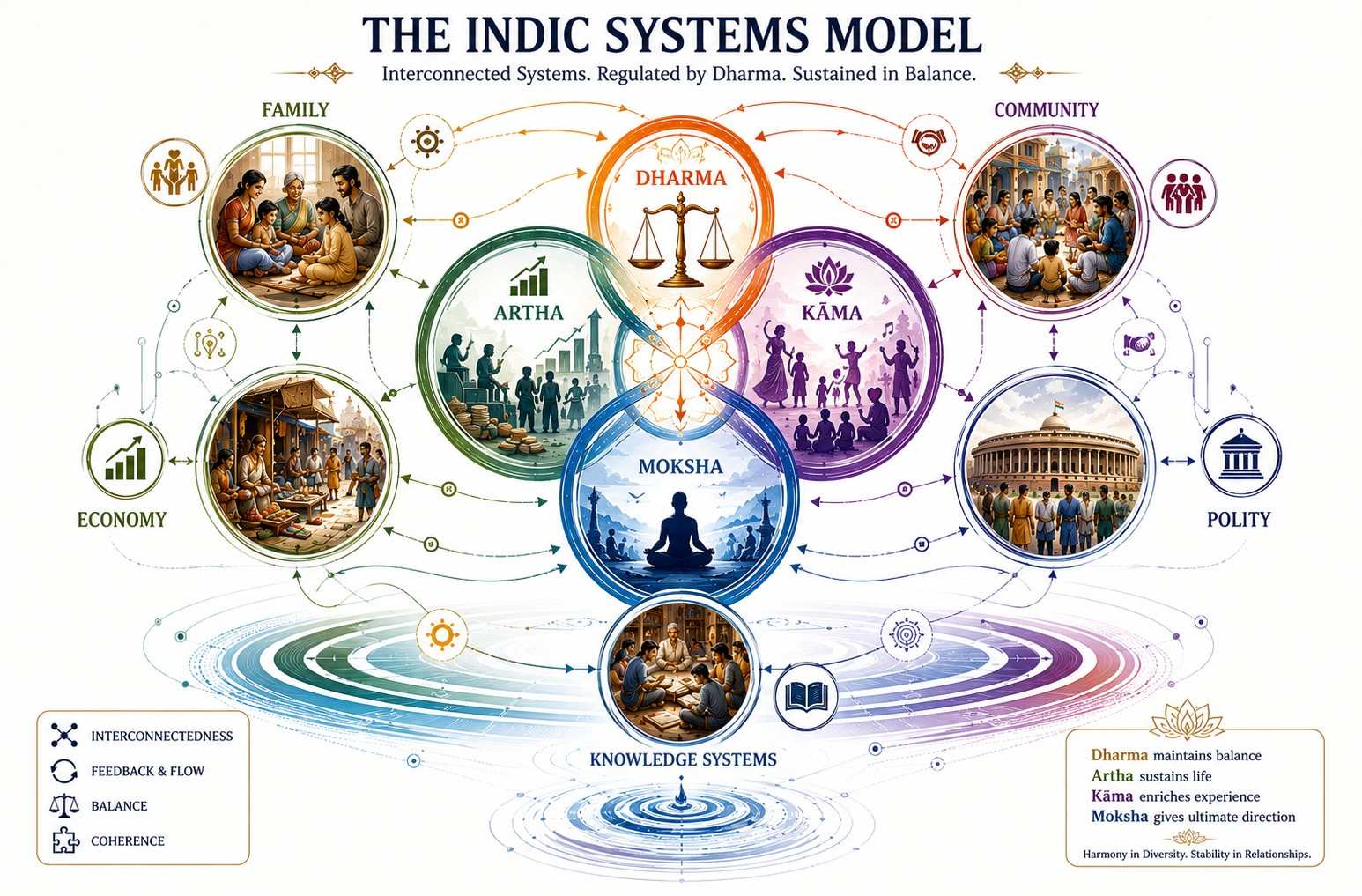
Systems Model of Society
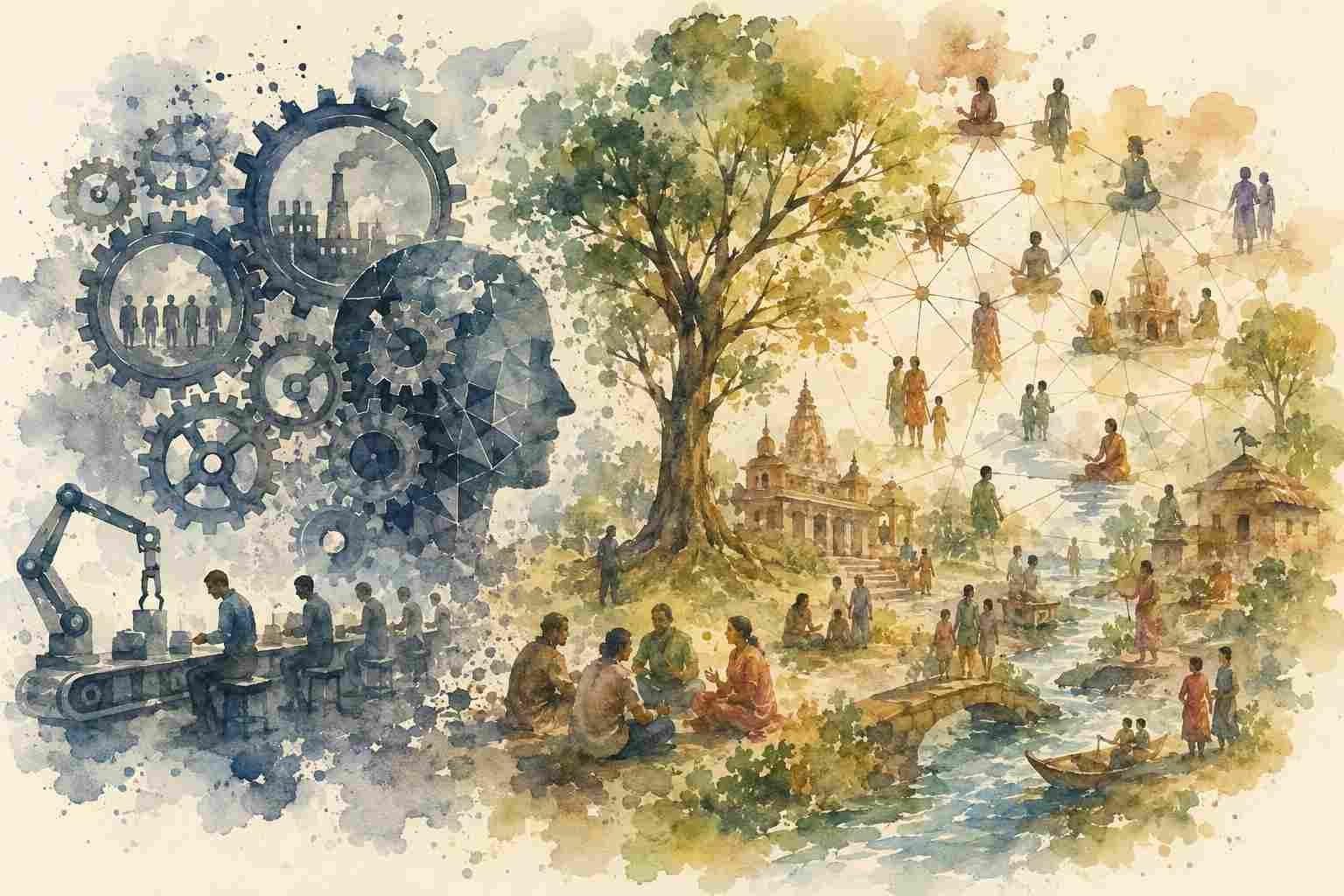
5. Systems Model of Society: An Introduction
5. Systems Model of Society: An Introduction
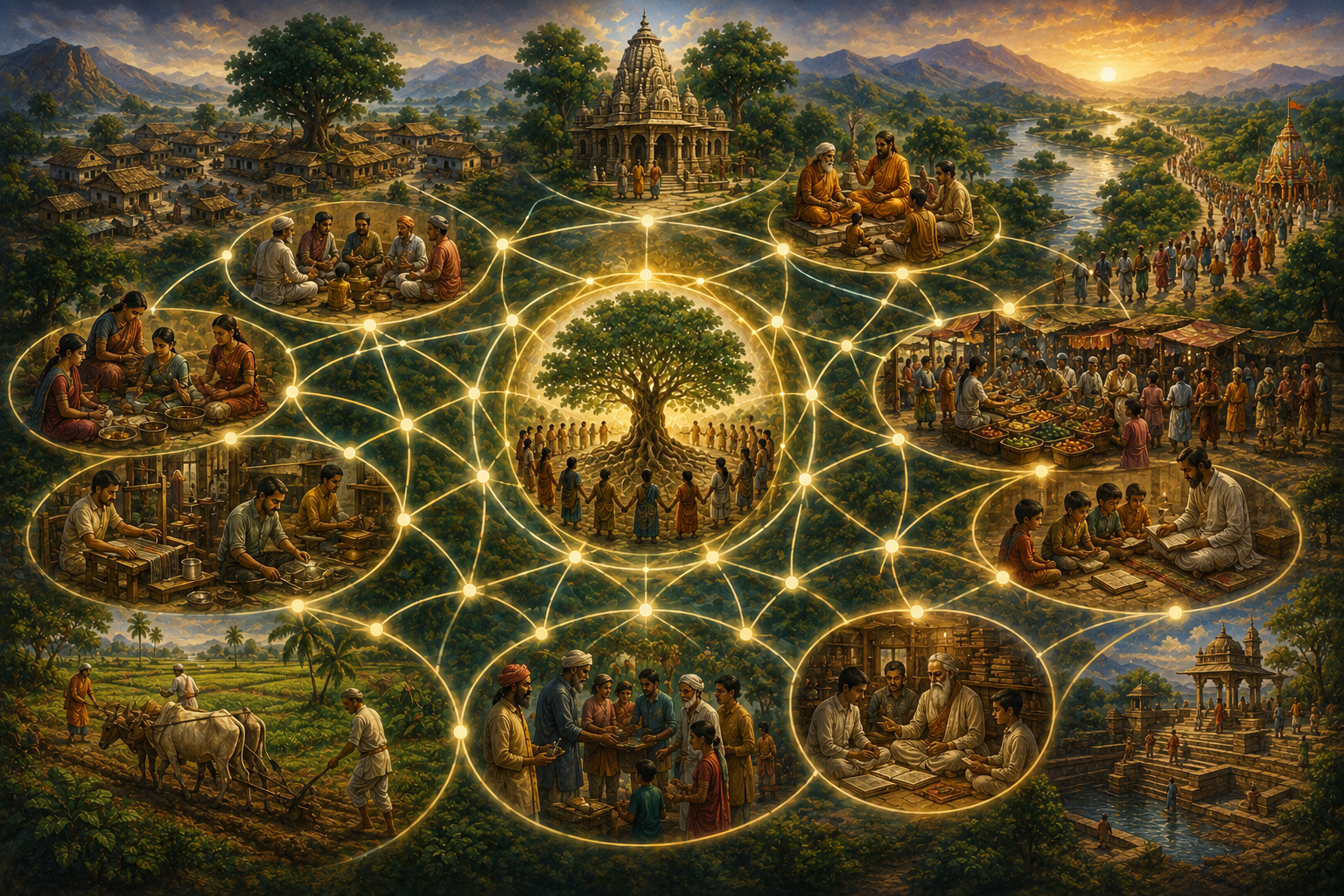
Emergence and Civilizational Order: Understanding Society as a Complex Adaptive System
Emergence and Civilizational Order: Understanding Society as a Complex Adaptive System
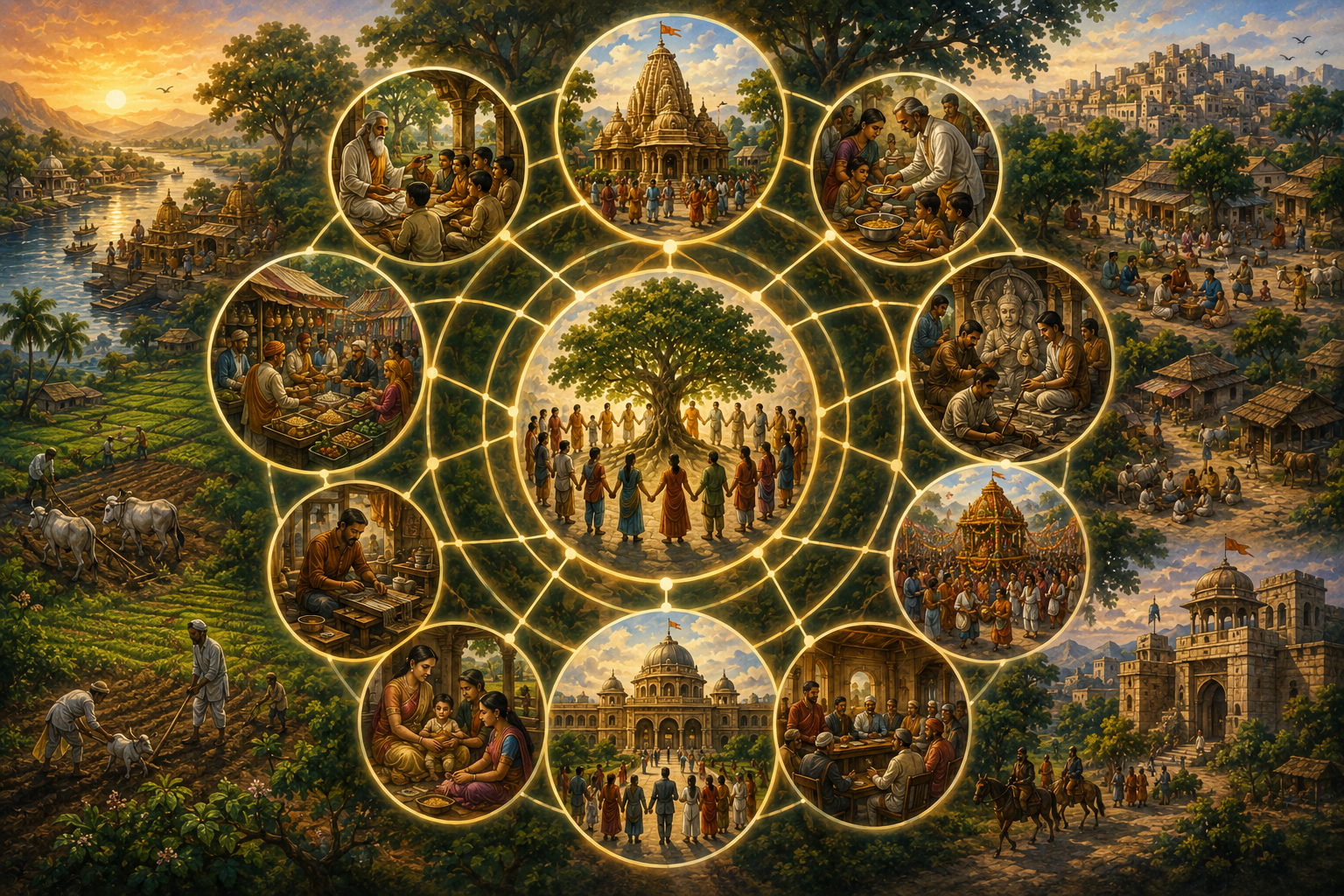
The Ecology of Institutions: Family, Temple, Market and State as an Interdependent System
The Ecology of Institutions: Family, Temple, Market and State as an Interdependent System
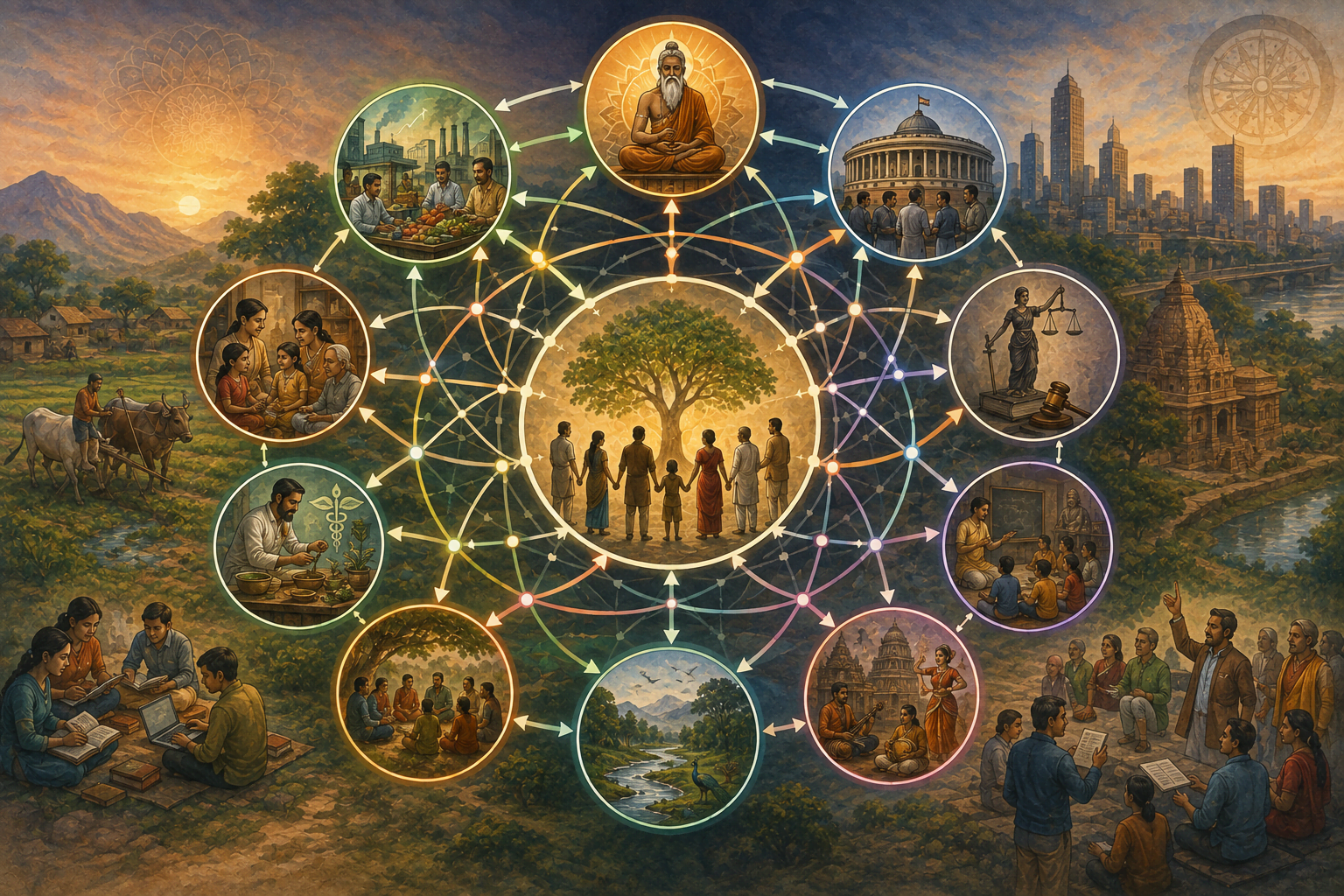
Beyond Mechanistic Sociology: An Indic Systems Theory of Society