
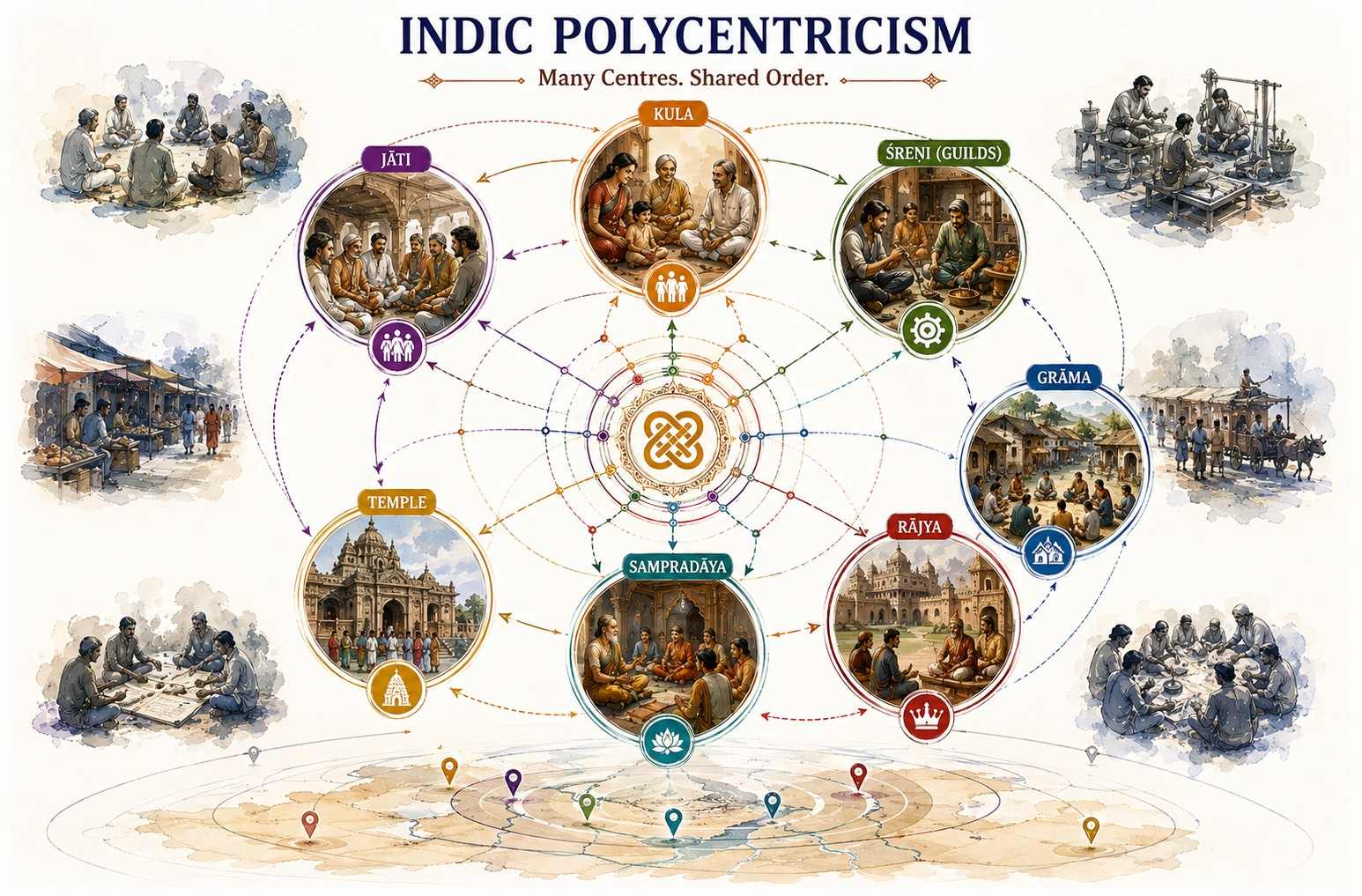
The Indic model of polycentricism understands society and power as organized through multiple centres rather than a single sovereign authority. Kula, Jāti, Śreṇi, Grāma, temple, Sampradāya and Rājya functioned as distinct centres of social organization, authority and decision-making. These centres could cooperate, overlap and sometimes compete without being completely absorbed by one central institution. Political power was therefore only one centre among many. Social order emerged through coordination across these different levels. Indic polycentricism helps explain how society maintained autonomy and continuity even during political fragmentation. It studies power as distributed, relational and embedded within multiple institutions.
Indic Polycentricism
Decentralization
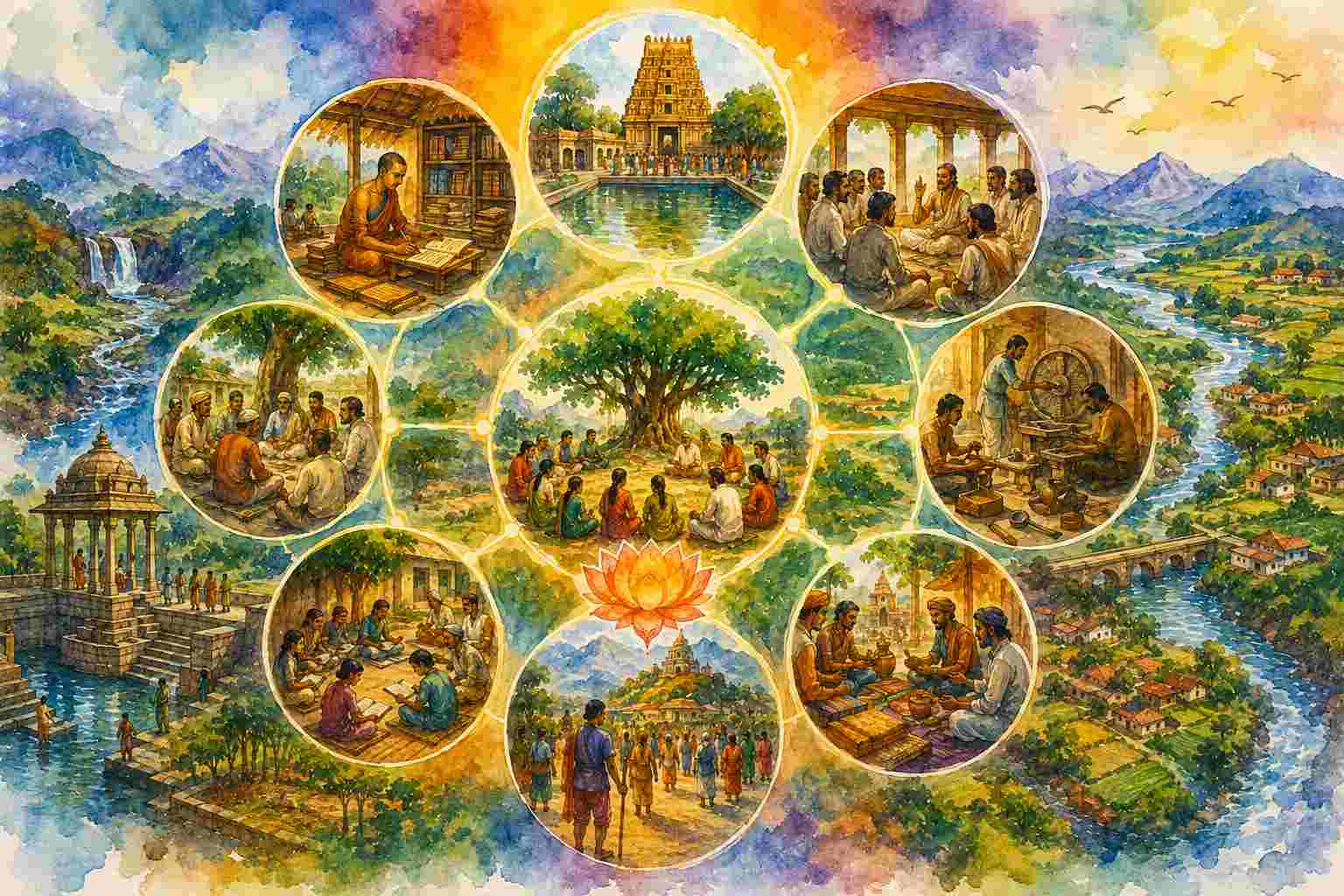
7. Polycentric Autonomy and Local Resource Systems: An Introduction
7. Polycentric Autonomy and Local Resource Systems: An Introduction
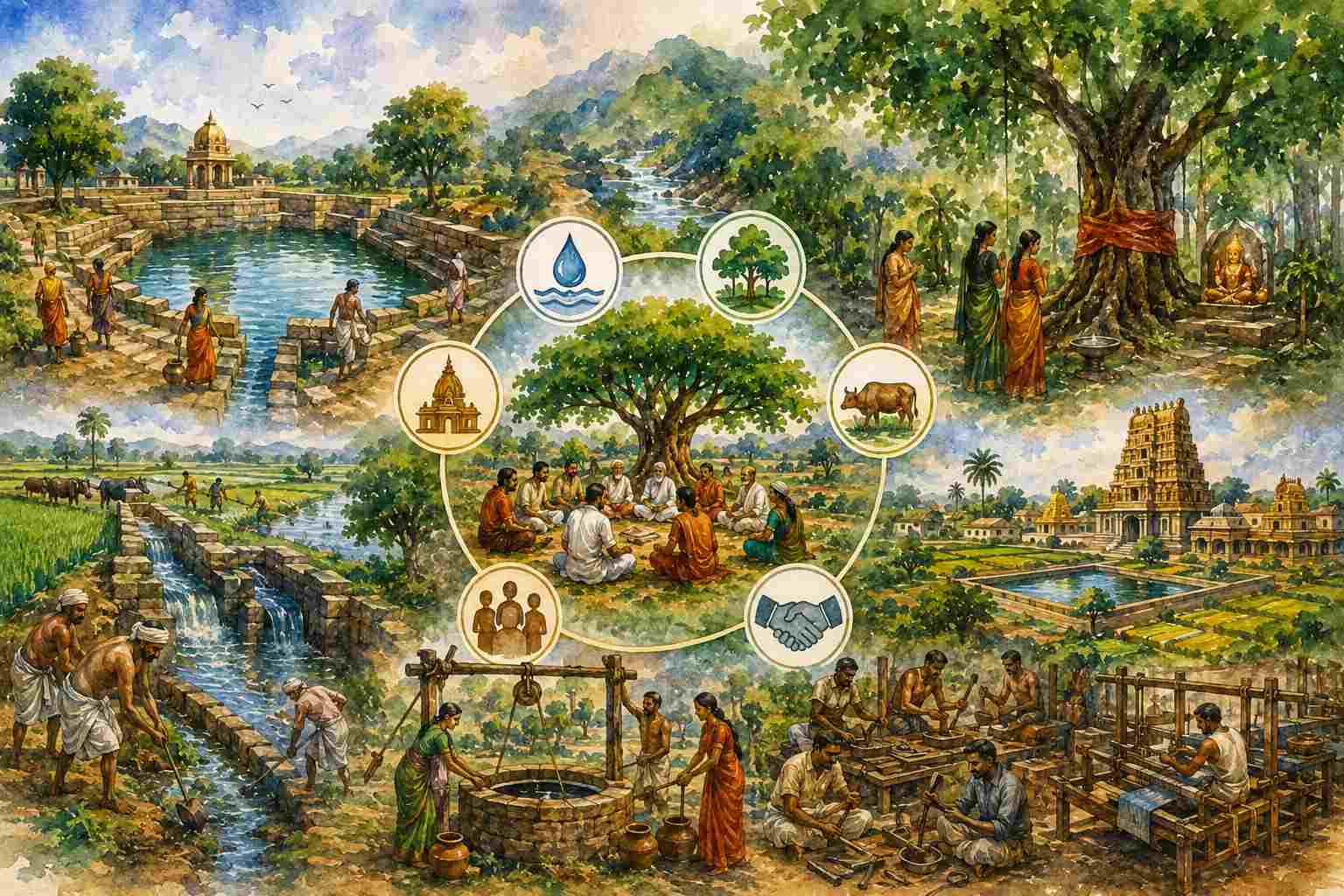
From Commons to Civilization: Local Resource Systems and the Ecology of Self-Reliance
From Commons to Civilization: Local Resource Systems and the Ecology of Self-Reliance
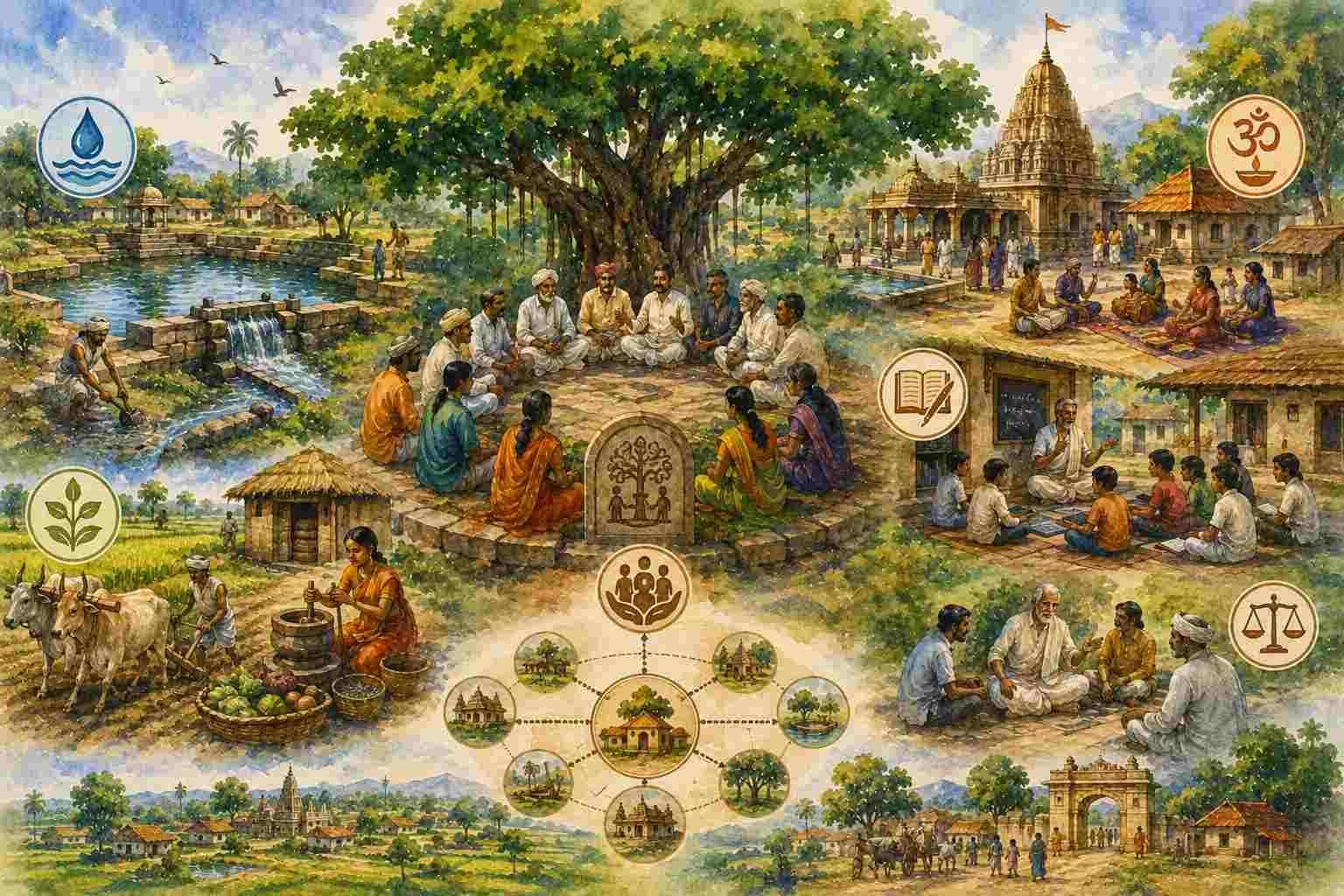
The Village as a Civilizational Institution: Local Autonomy and Self-Governance in Indic Society
The Village as a Civilizational Institution: Local Autonomy and Self-Governance in Indic Society
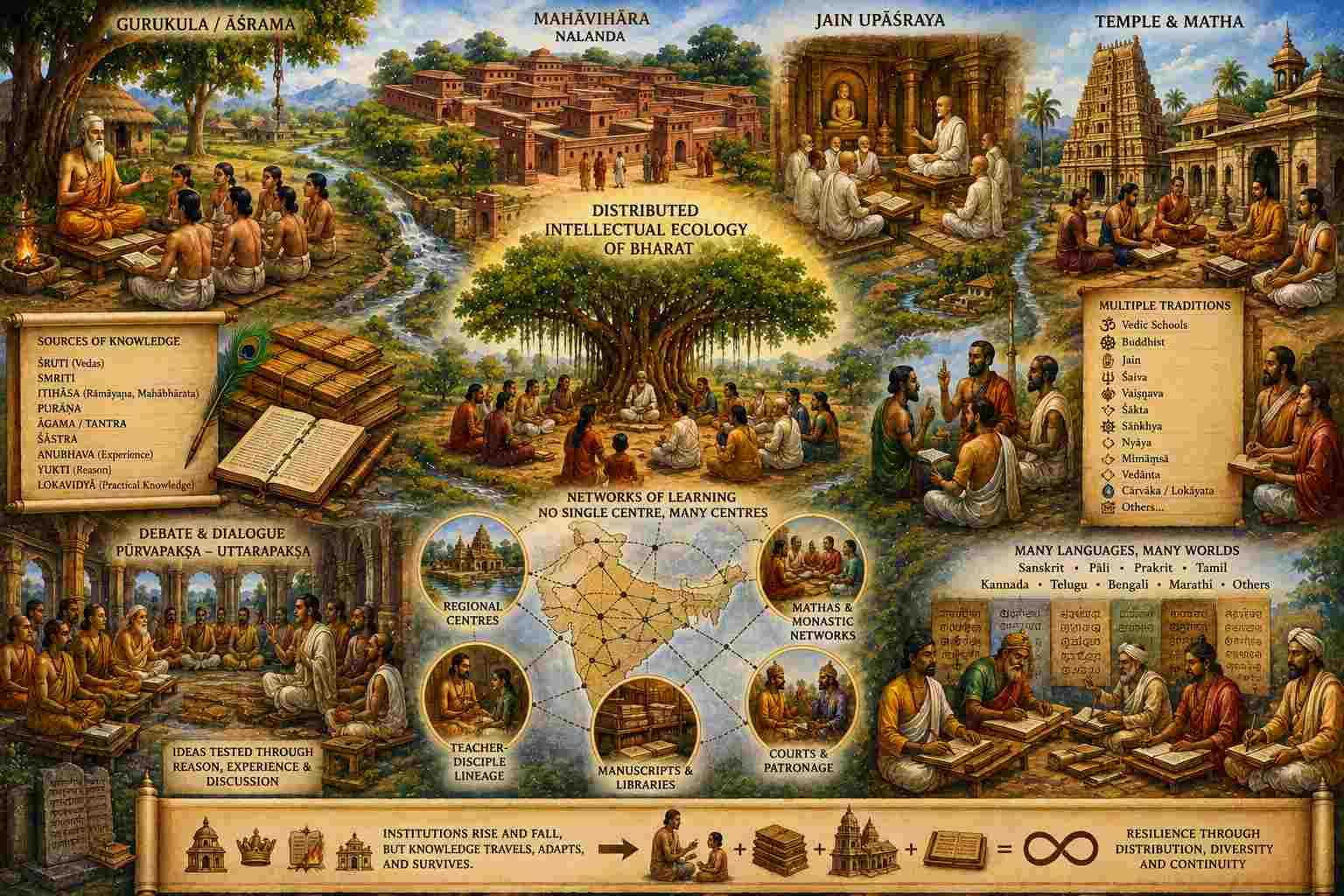
Beyond Centralized Knowledge: The Distributed Intellectual Architecture of Bharat