Indic Frameworks

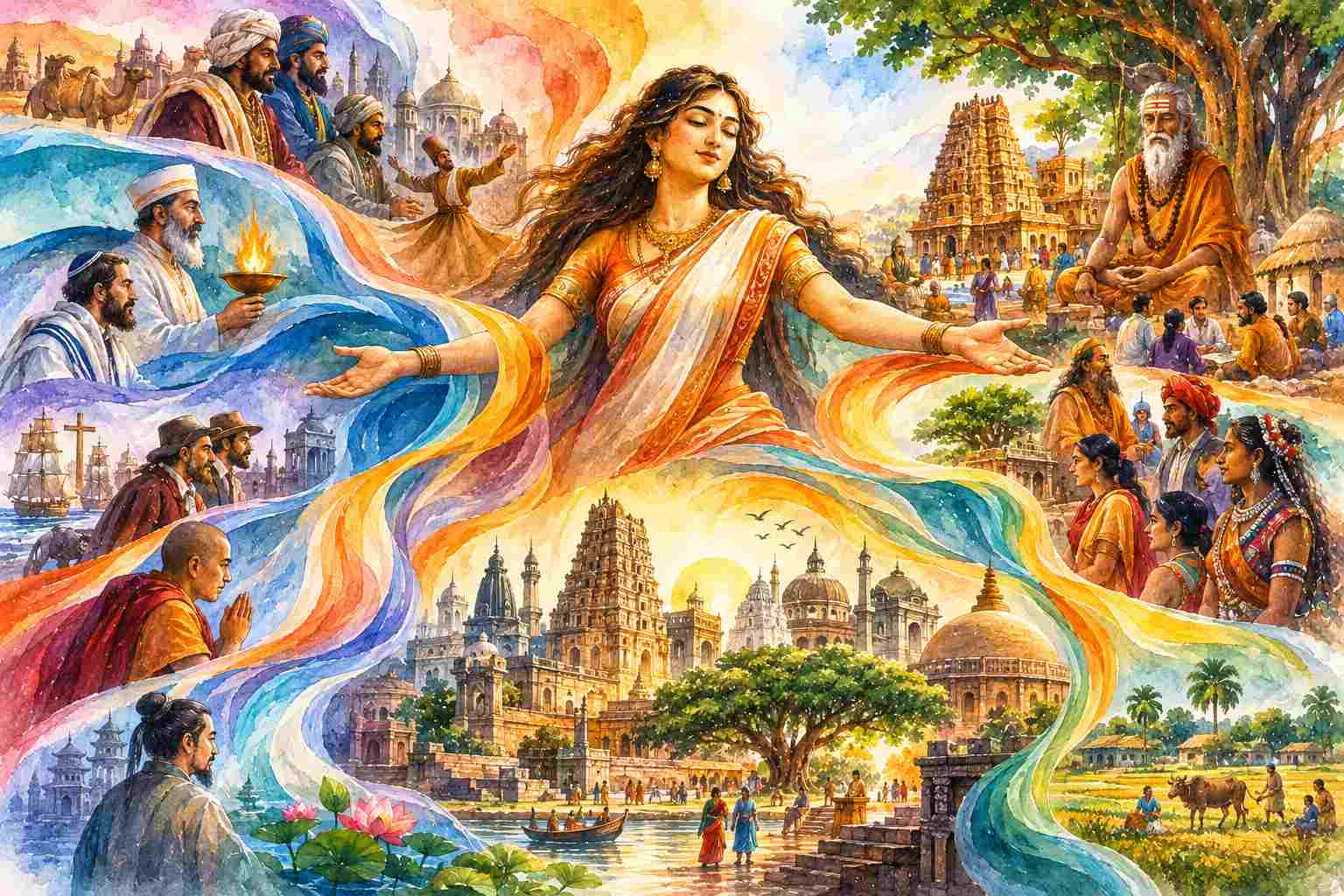
Why does a civilisation as old as ours still breathe with such freshness? Why do kingdoms fall, economies crumble, conquerors arrive, refugees merge, yet the social fabric refuses to tear or loosen? What is this mysterious cohesion that keeps Bharat from collapsing into savagery, even across millennia?

To study Indian society is to study a living civilisation, not a museum specimen. Its politics, economics, kinship, ecology, metaphysics, ritual life, and folk cultures are not isolated compartments, but interwoven strands of a single, pulsating ecosystem spread across a vast landscape and an unparalleled span of time.
Why Indic Frameworks?

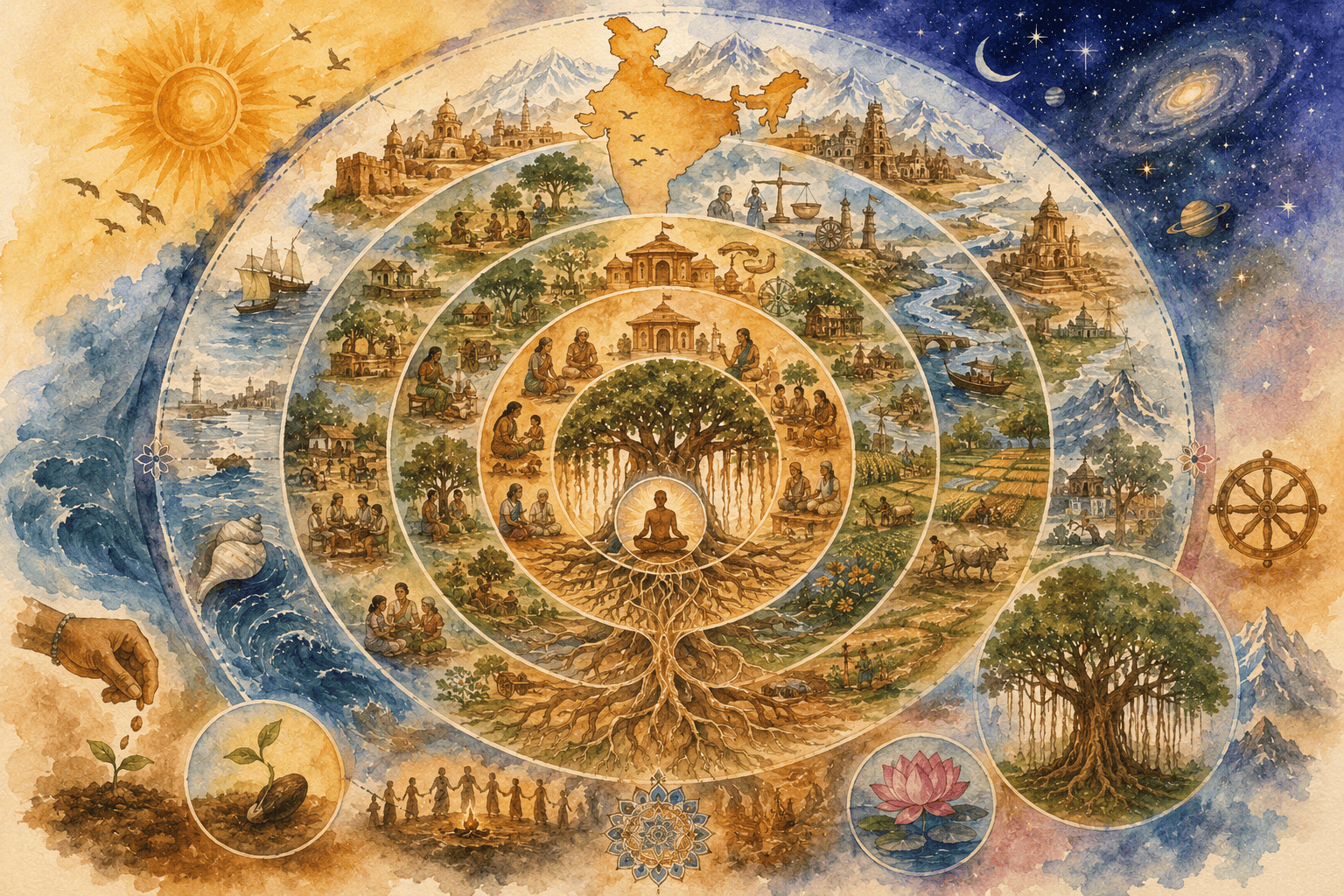
Bharat is one of the world’s oldest living civilizations. Kingdoms have risen and fallen, political boundaries have changed, new communities and ideas have entered its civilizational space, yet many of its social and cultural forms have continued, adapted and regenerated. How do we understand this continuity? Can the categories through which modern societies have understood themselves always explain Bharat’s own historical experience? Indic Frameworks begins with this question.

The objective is not to replace modern knowledge with ancient terminology, nor to romanticise the past. It is to recover, examine and develop analytical frameworks that emerge from the civilizational experience of Bharat and help us understand its social, cultural, political and economic realities more adequately.

These frameworks explore questions that conventional disciplines often study separately. How is society held together? What is the relationship between the individual, family, community and civilization? Is society better understood as a machine or a living system? Can contribution provide an alternative to competition as a principle of social organisation? Must political thought always remain trapped between imported binaries? Can an economy exist independently of society and culture? How does a civilization absorb difference without losing itself?

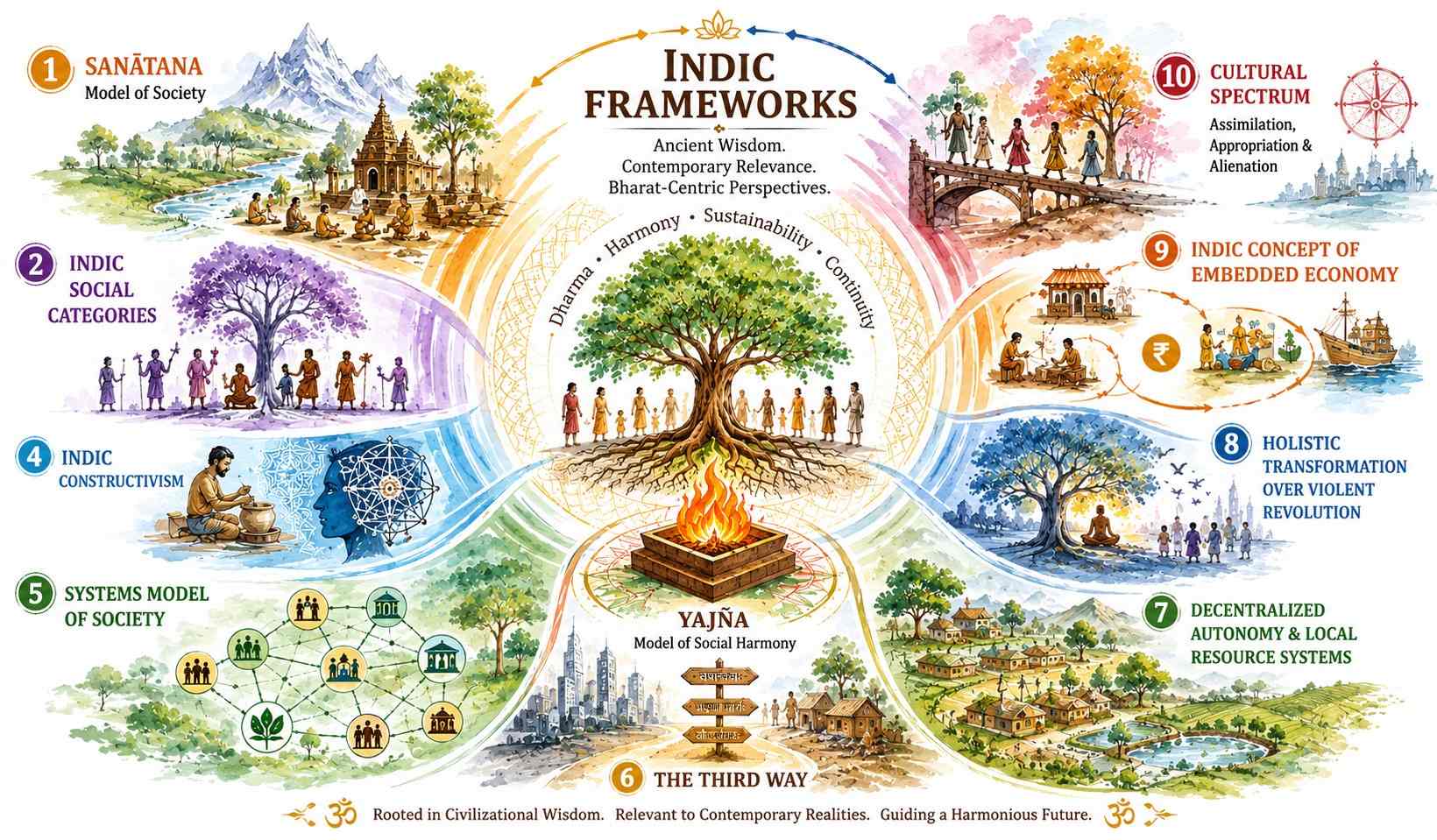
The frameworks presented here are attempts to explore such questions. The Sanatana Model, Yajna Model, Indic Social Categories, Indic Constructivism, Systems Model, Third Way, Decentralization, Holistic Transformation, Embedded Economy and Cultural Spectrum do not claim to be final answers. They are evolving conceptual tools—developed through classical ideas, historical experience and contemporary analysis—that can be used to study Bharat from within its own civilizational context.

Indic Frameworks therefore seeks to build something beyond a collection of ideas: a developing conceptual vocabulary for studying society and civilization. Its purpose is to make Bharat not merely an object to be studied through frameworks created elsewhere, but a source of analytical categories and frameworks capable of contributing to the wider study of human societies.

Sanatana Model
1. ‘Sanātana Model of Society’ – An Introduction

1. ‘Sanātana Model of Society’ – An Introduction

Can a society survive for millennia without remaining politically unified?   History…
July 28, 2026
Yajna Model
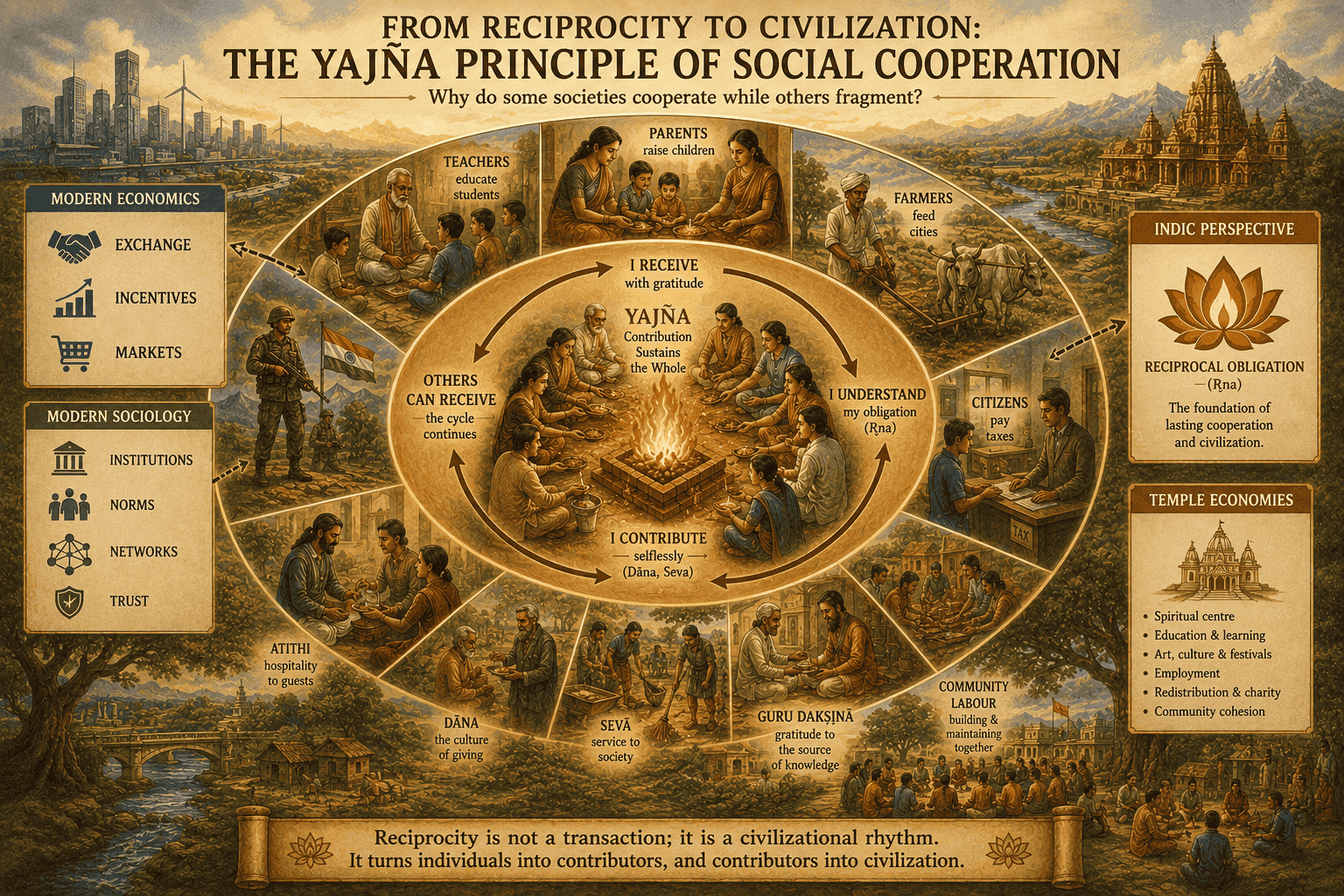
2. Yajna Model of Social Harmony: An Introduction

2. Yajna Model of Social Harmony: An Introduction

What Holds a Society Together — Competition or Contribution? Modern social theory…
July 28, 2026
Indic Social Categories
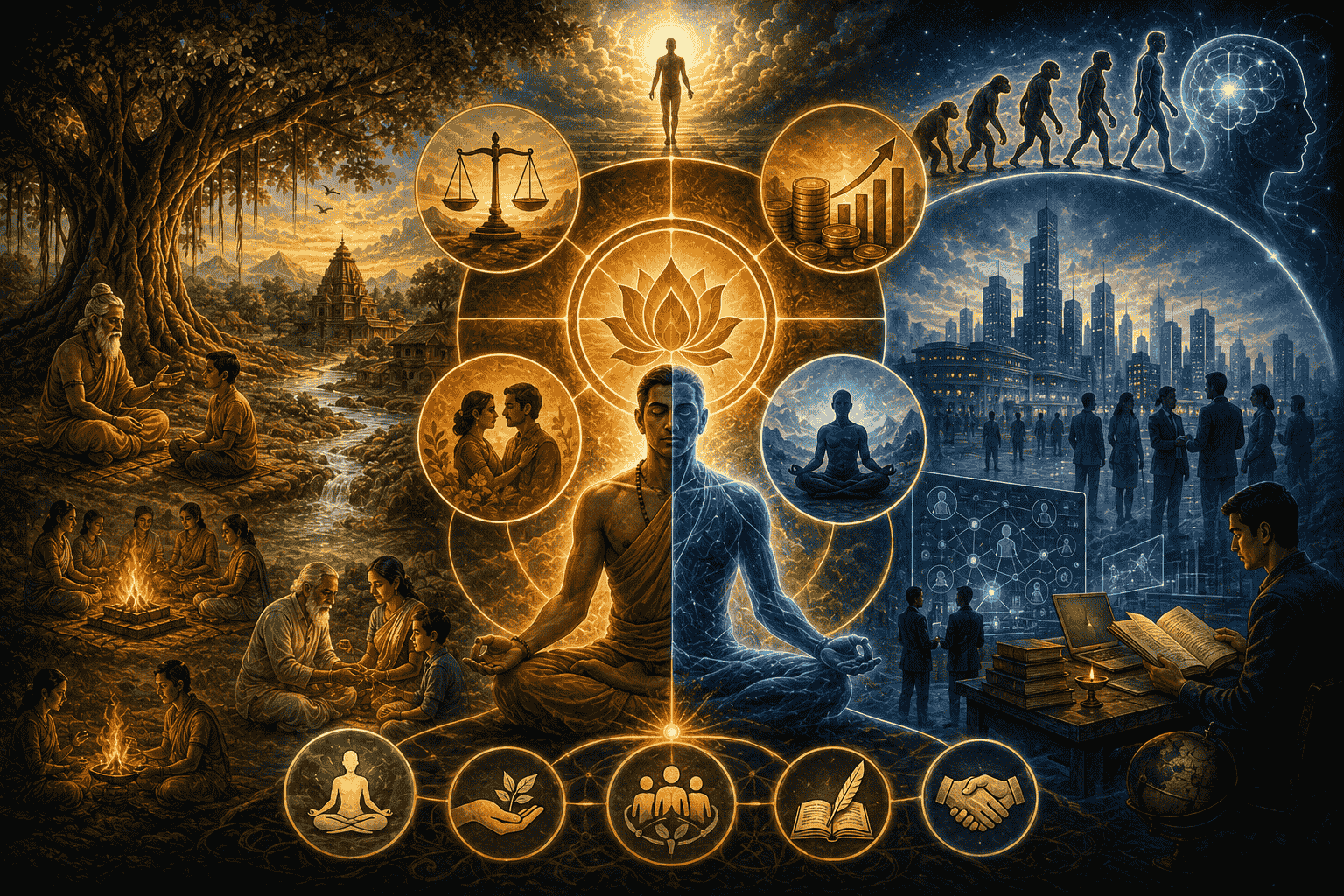
3. Indic Social Categories: An Introduction

3. Indic Social Categories: An Introduction

What is a human being? Before we study society, politics, economics or culture, perhaps we must…
July 28, 2026
Indic Constructivism
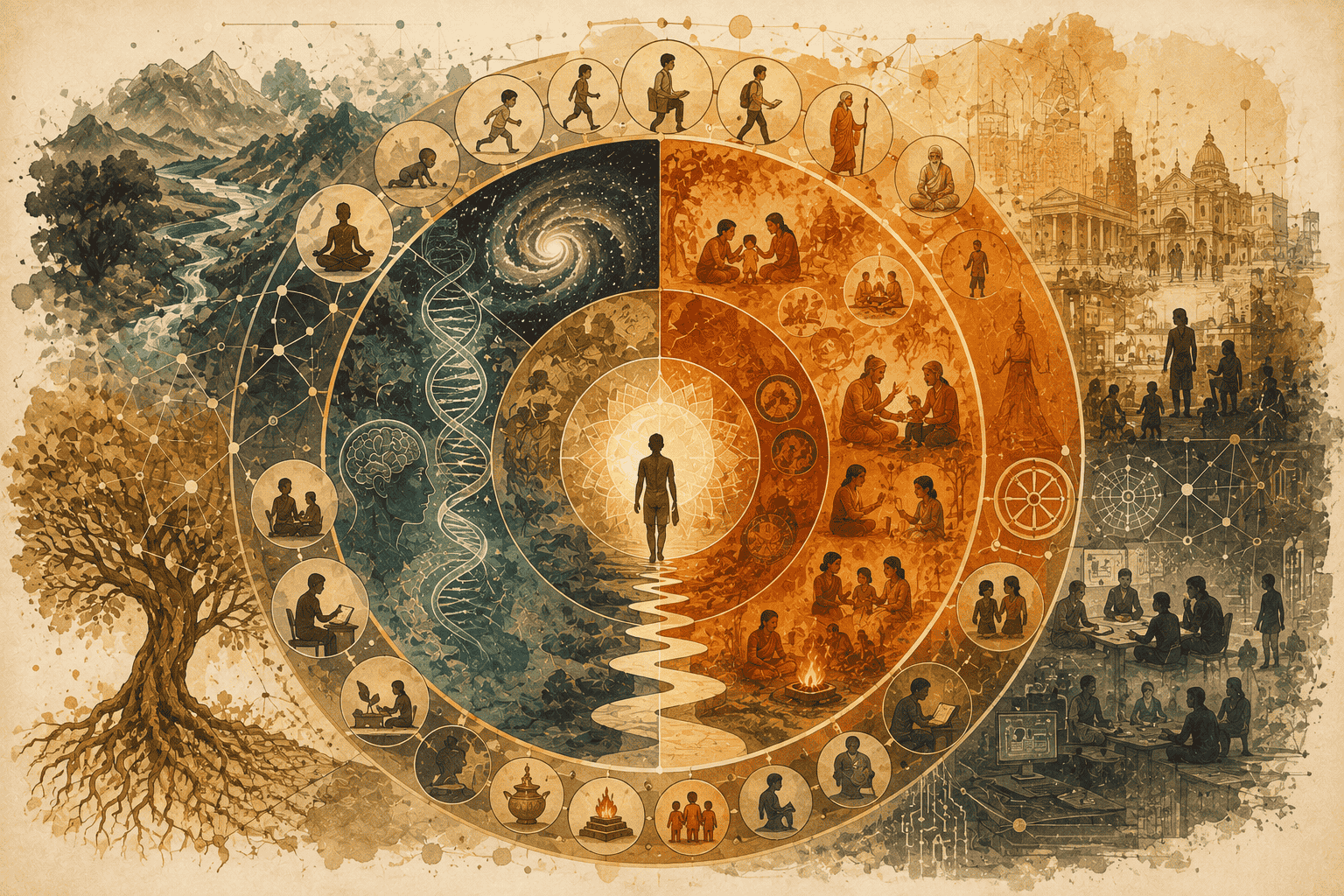
4. Indic Constructivism: An Introduction

4. Indic Constructivism: An Introduction

Shaping Human Behavior through an interplay of Nature (Biological and Psychological traits)…
July 28, 2026
Systems Model
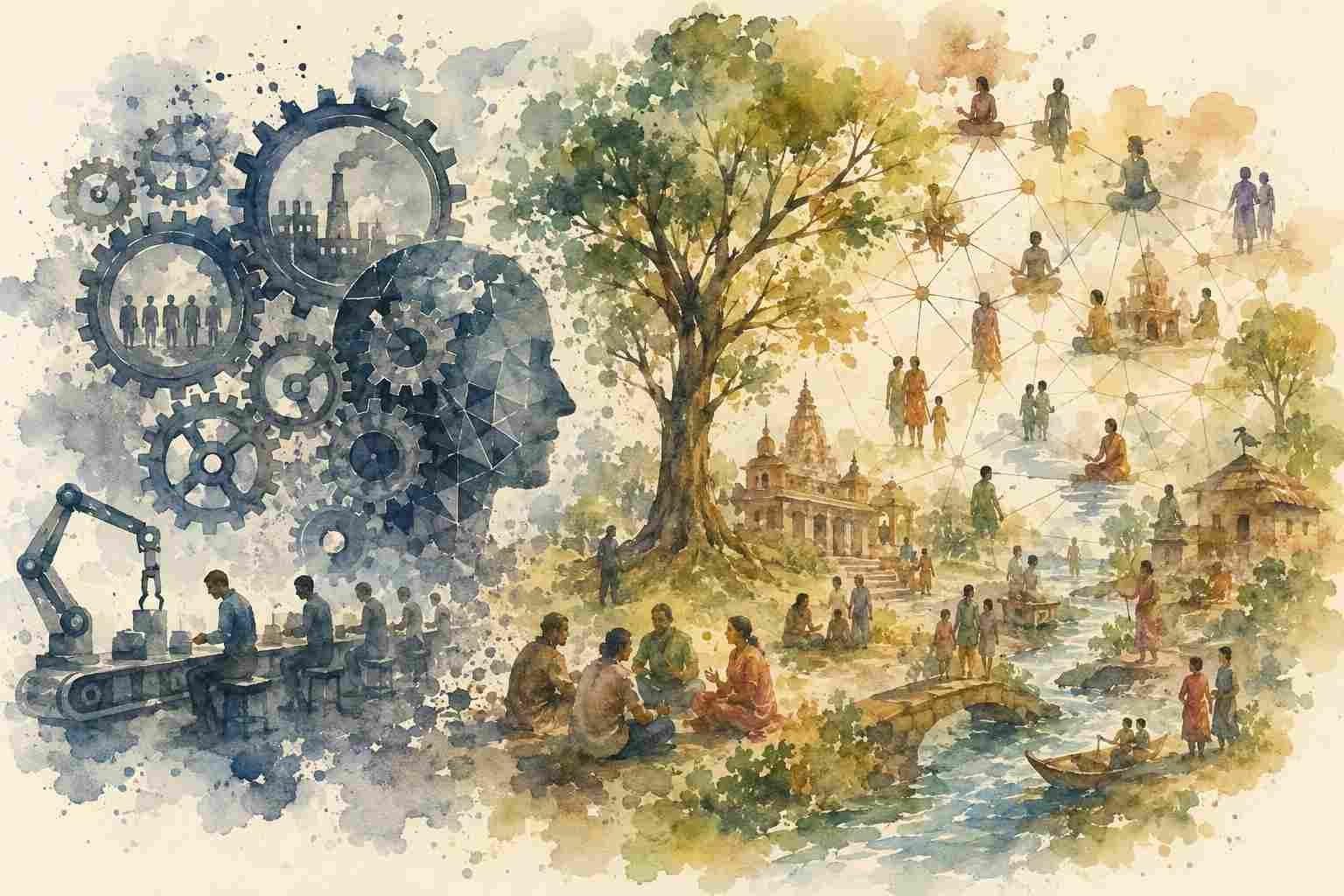
5. Systems Model of Society: An Introduction

5. Systems Model of Society: An Introduction

Is Society a Machine or an Ecosystem? How do we imagine society? As a machine that…
July 28, 2026
The Third Way
6. The Third Way – Beyond the Binaries: An Introduction

6. The Third Way – Beyond the Binaries: An Introduction

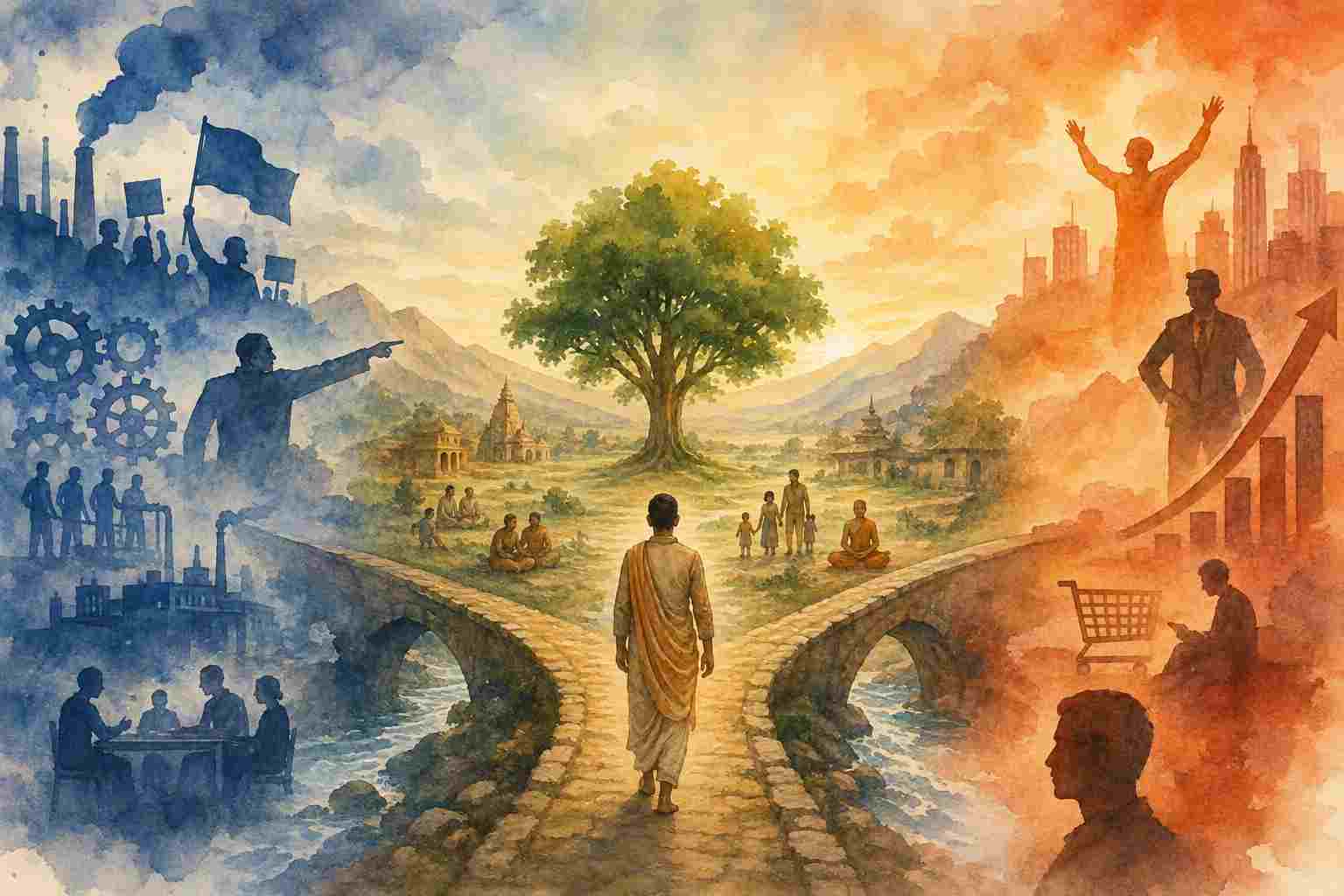
Must Bharat Always Choose? Modern political thought often presents society as a choice between two extremes.…
July 28, 2026
Polycentricism
7. Polycentric Autonomy and Local Resource Systems: An Introduction

7. Polycentric Autonomy and Local Resource Systems: An Introduction

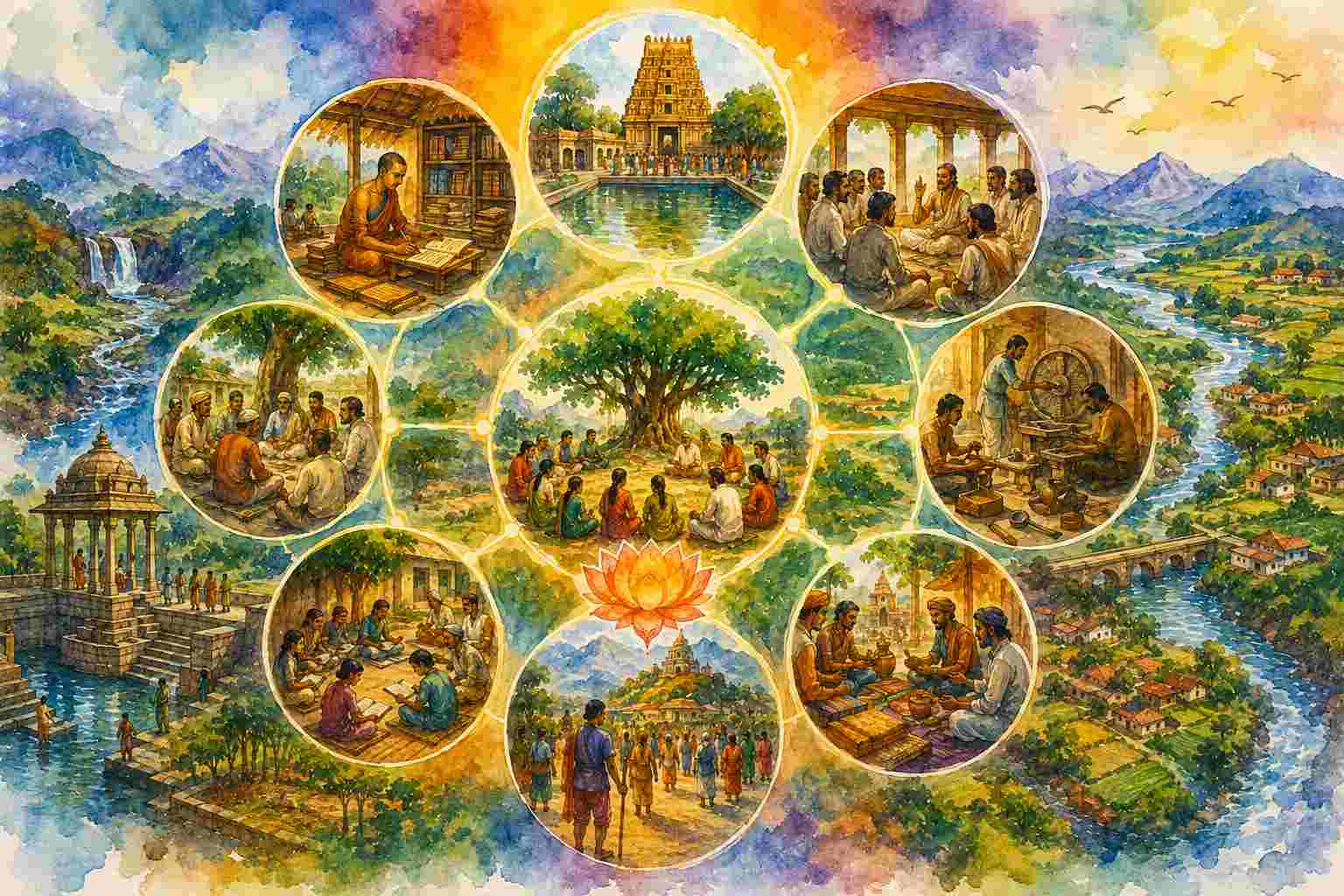
Beyond Centralization: How Bharat Distributed Power, Knowledge and Responsibility Can a civilization…
July 28, 2026
Holistic Transformation
8. Holistic Transformation over Violent Revolution: An Introduction

8. Holistic Transformation over Violent Revolution: An Introduction

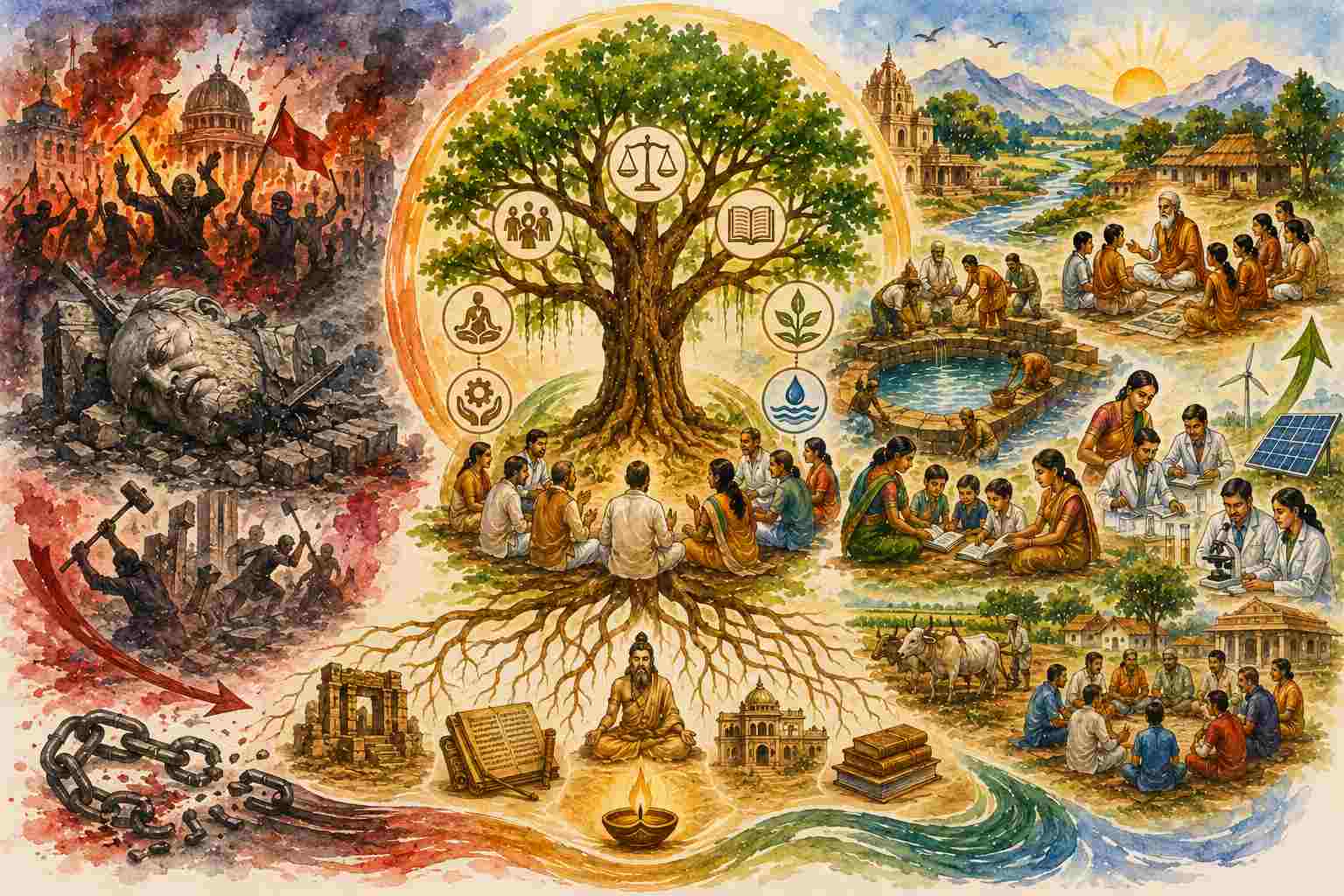
Must Society Be Destroyed Before It Can Be Improved?   Few ideas have shaped modern political imagination as…
July 28, 2026
Embedded Economy
9. Indic Concept of Embedded Economy: An Introduction

9. Indic Concept of Embedded Economy: An Introduction

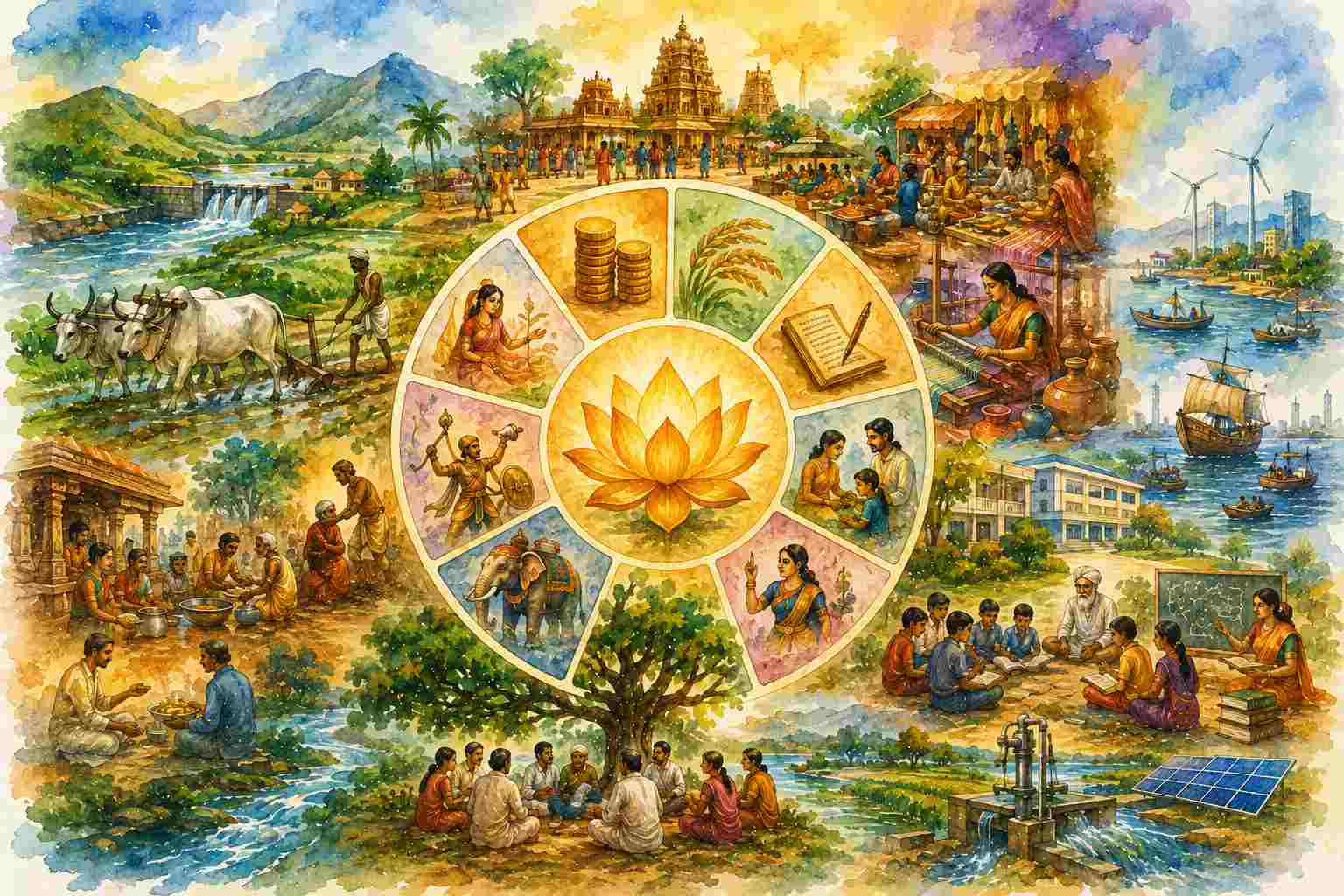
What is the economy, and does it exist outside society?   Modern economics often treats the economy as a distinct sphere of…
July 28, 2026
Cultural Spectrum
10. A Cultural Spectrum- Assimilation, Appropriation and Alienation: An Introduction

10. A Cultural Spectrum- Assimilation, Appropriation and Alienation: An Introduction

How Does a Civilization Encounter the Other?   Every civilization eventually confronts…
July 28, 2026