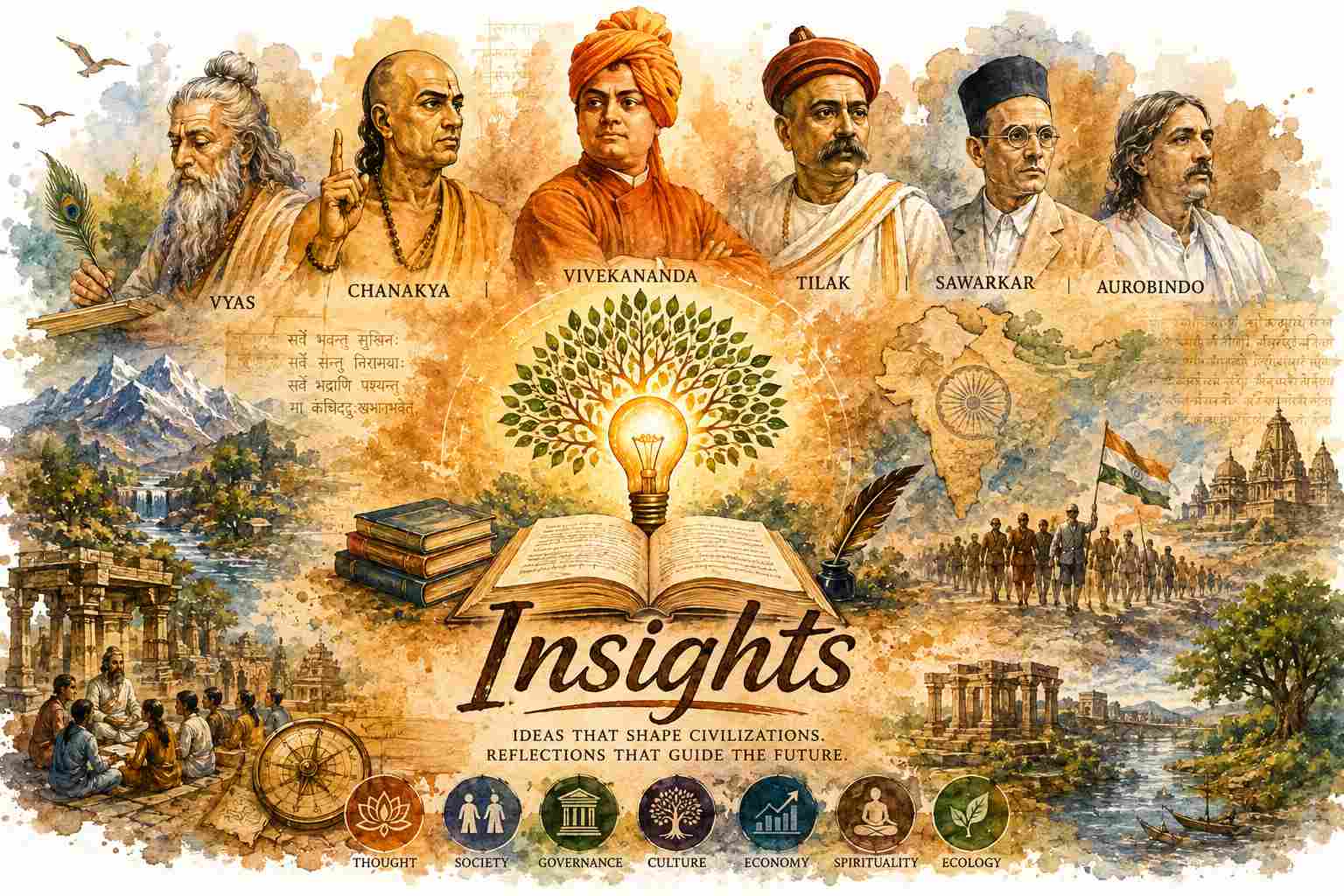
This section brings together carefully curated quotations, textual excerpts, conceptual reflections, and thematic insights from Indic ācāryas, philosophers, saints, social reformers, historians, political thinkers, anthropologists, economists, cultural theorists, and contemporary scholars. These ideas are approached not as isolated quotations, but as windows into larger ways of understanding Dharma, society, governance, identity, ethics, human relationships, culture, and civilization. Particular attention is given to insights that can illuminate contemporary questions of social harmony, cultural continuity, ecological balance, education, decentralization, collective memory, community participation, and national consciousness.
The section seeks to create a dialogue between classical Indic wisdom and contemporary intellectual discourse, examining how thinkers across time have responded to questions of social order, political power, moral responsibility, economic life, cultural resilience, and the future of civilization. Its purpose is therefore not merely to preserve quotations or intellectual heritage, but to make ideas accessible for reflection, research, and public discourse—creating a space where ideas become inquiry, insights become frameworks, and inherited wisdom becomes a living resource for understanding the present and imagining the future.