
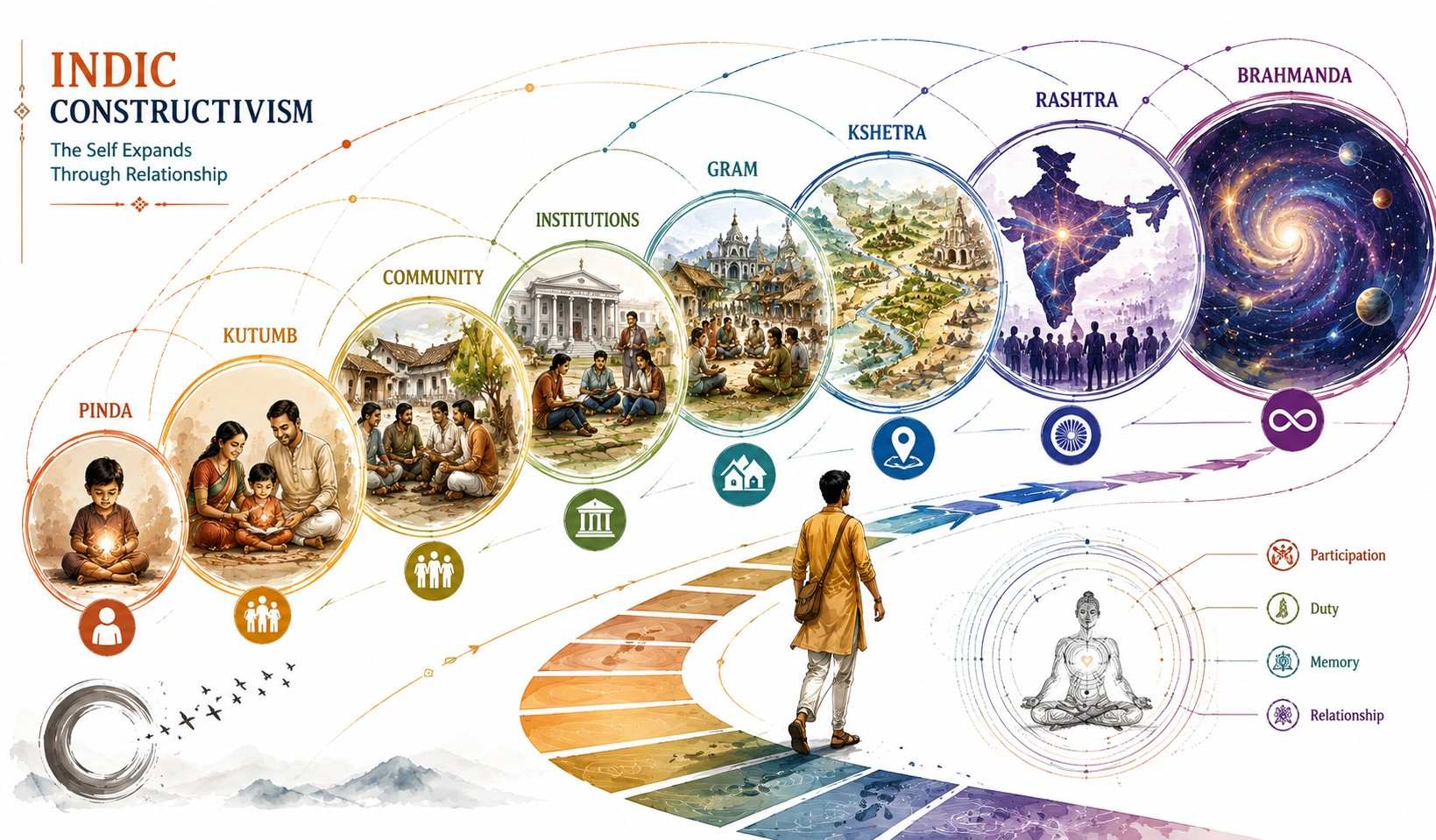
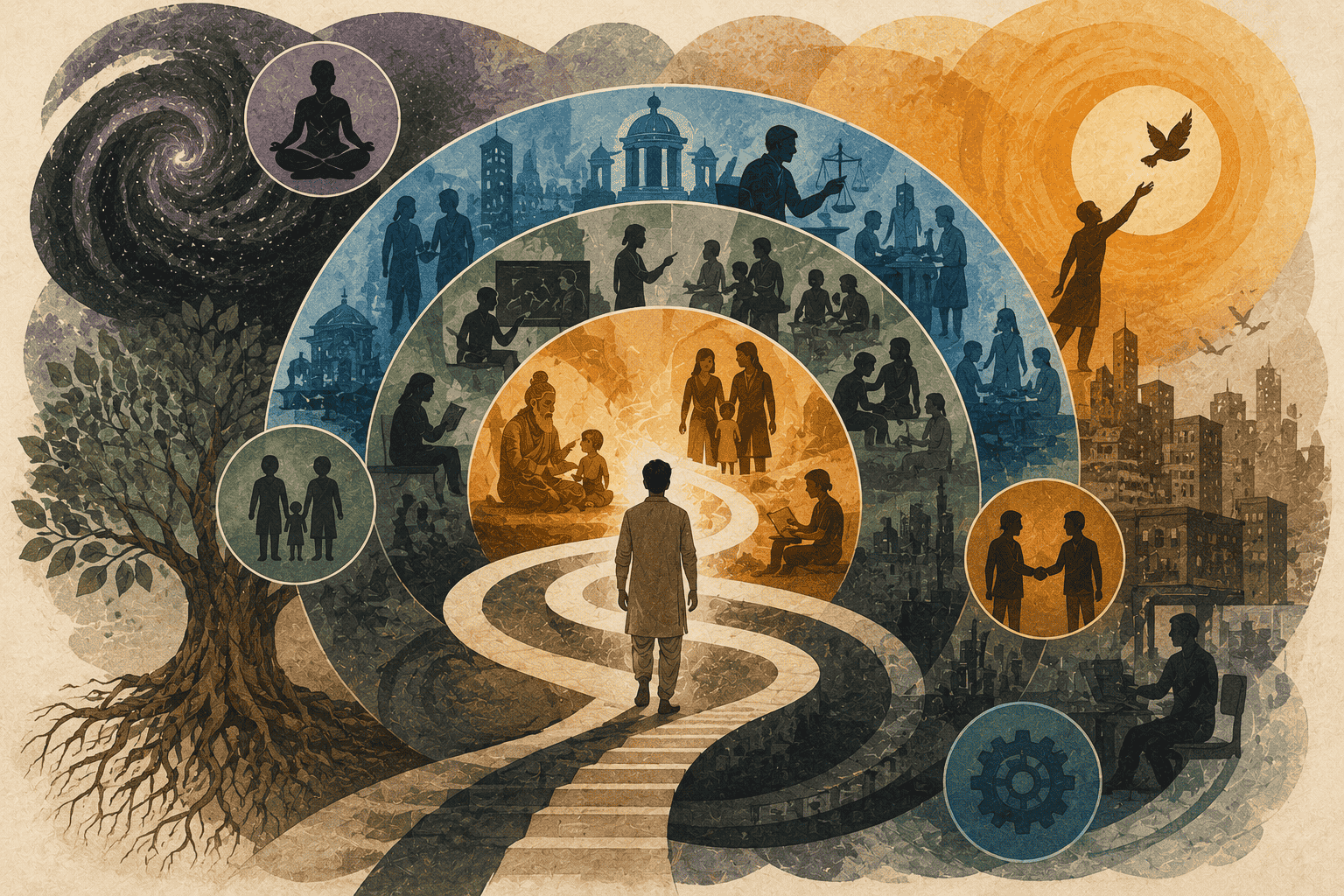
The Indic constructivist model understands the individual not as an isolated unit but as a being gradually formed through relationships and experience. The individual moves from Pinda to Kutumb, Community, Institutions, Gram, Kshetra, Rashtra and Brahmanda, acquiring wider responsibilities at every level. Identity is therefore constructed through participation, duty, memory and social interaction. The self does not disappear within the collective; rather, it expands through successive circles of belonging. An individual who cannot relate to family, community or society cannot easily understand the wider Rashtra. Indic constructivism therefore sees social development as an expanding process of relational consciousness.
Indic Constructivism
Indic Constructivism
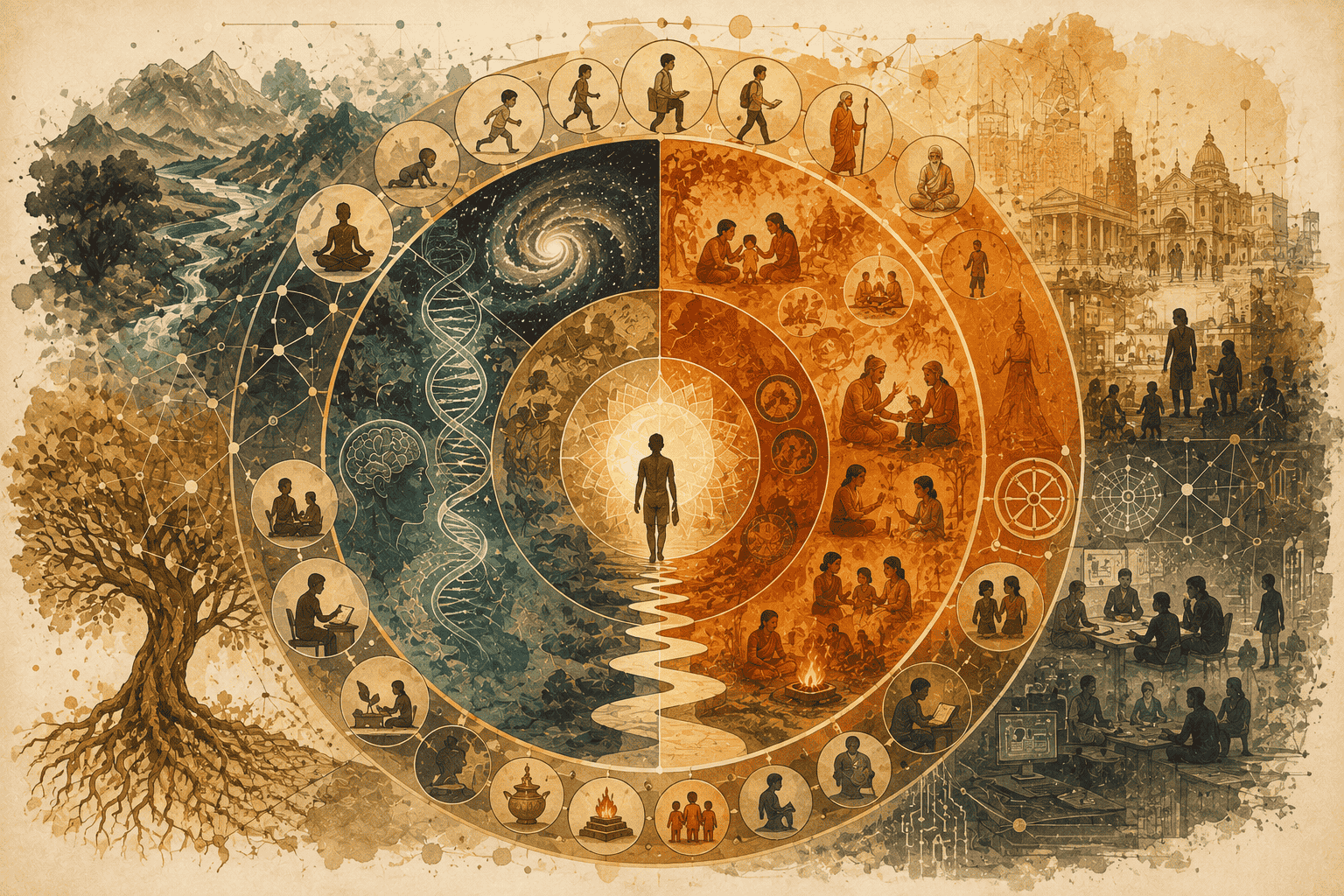
4. Indic Constructivism: An Introduction
4. Indic Constructivism: An Introduction
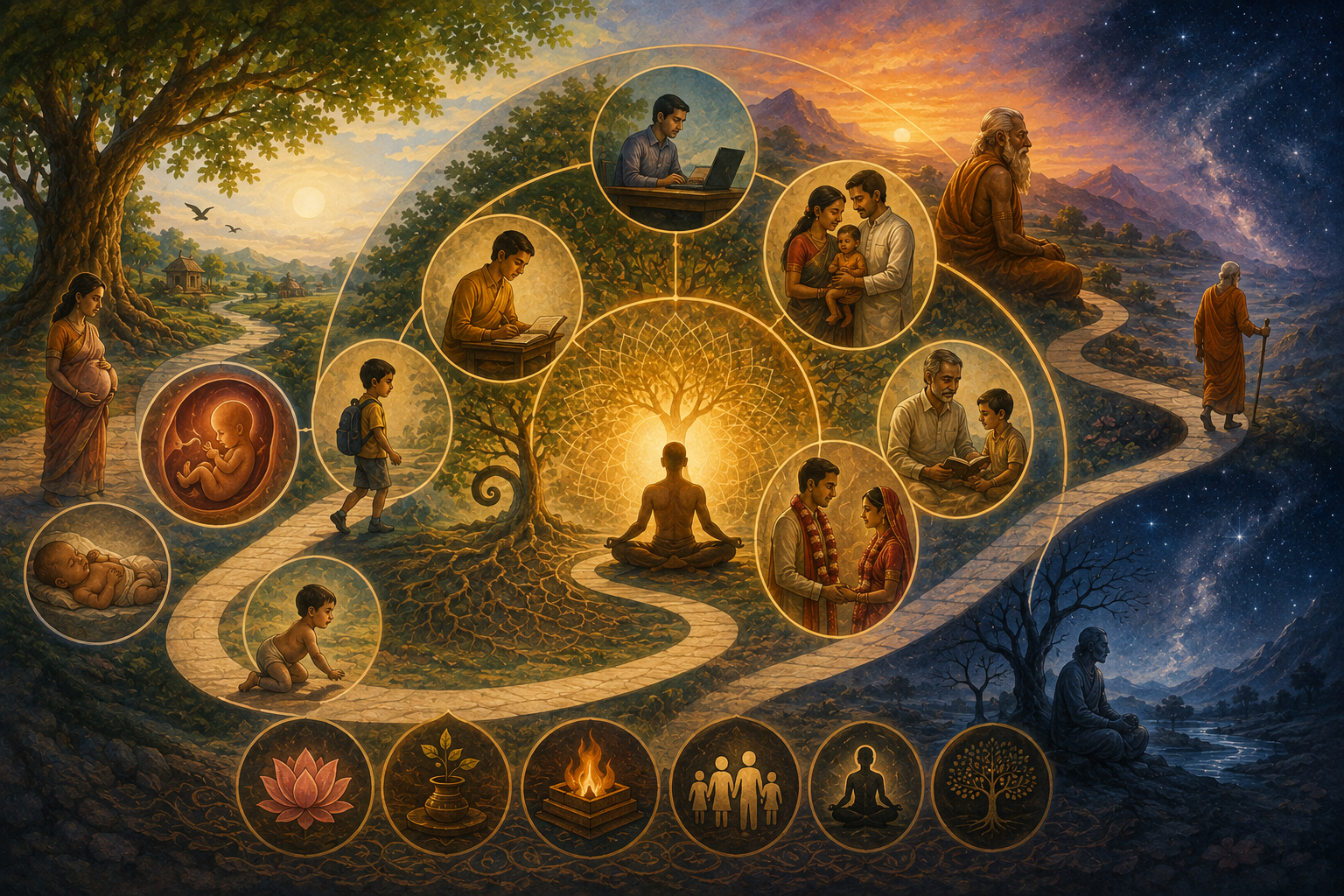
Navigating Society: The Indic Life-Course Model of Human Development
Navigating Society: The Indic Life-Course Model of Human Development
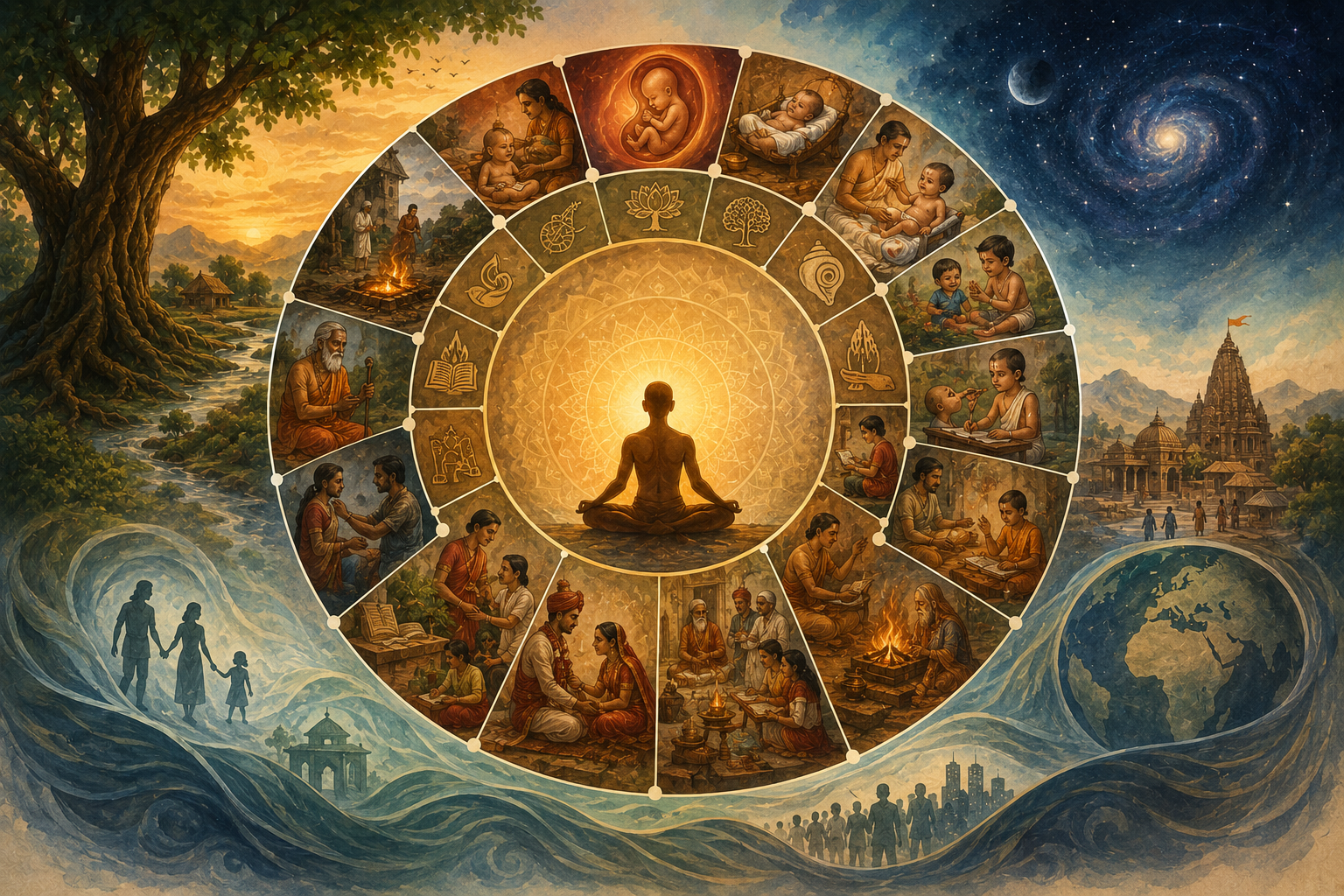
The Sixteen Samskaras as a Civilizational Technology of Human Development
The Sixteen Samskaras as a Civilizational Technology of Human Development
Beyond Nature and Nurture: Towards an Indic Theory of Human Formation