
The Indic social model does not begin with abstract individuals alone. It recognizes that social life is organized through multiple categories of belonging, duty and relationship. Varṇa, Āśrama, Jāti, Kula, Gotra, Sampradāya and Janapada represent different social categories, each functioning at a distinct level. They cannot be reduced to one another or treated as a single hierarchical structure. Some organize occupation, others life stages, lineage, family, knowledge traditions, religious affiliation or territory. Together, they created a decentralized social order in which identity was relational and layered rather than singular. Understanding Indic society requires recovering these categories on their own terms.
Indic Social Categories
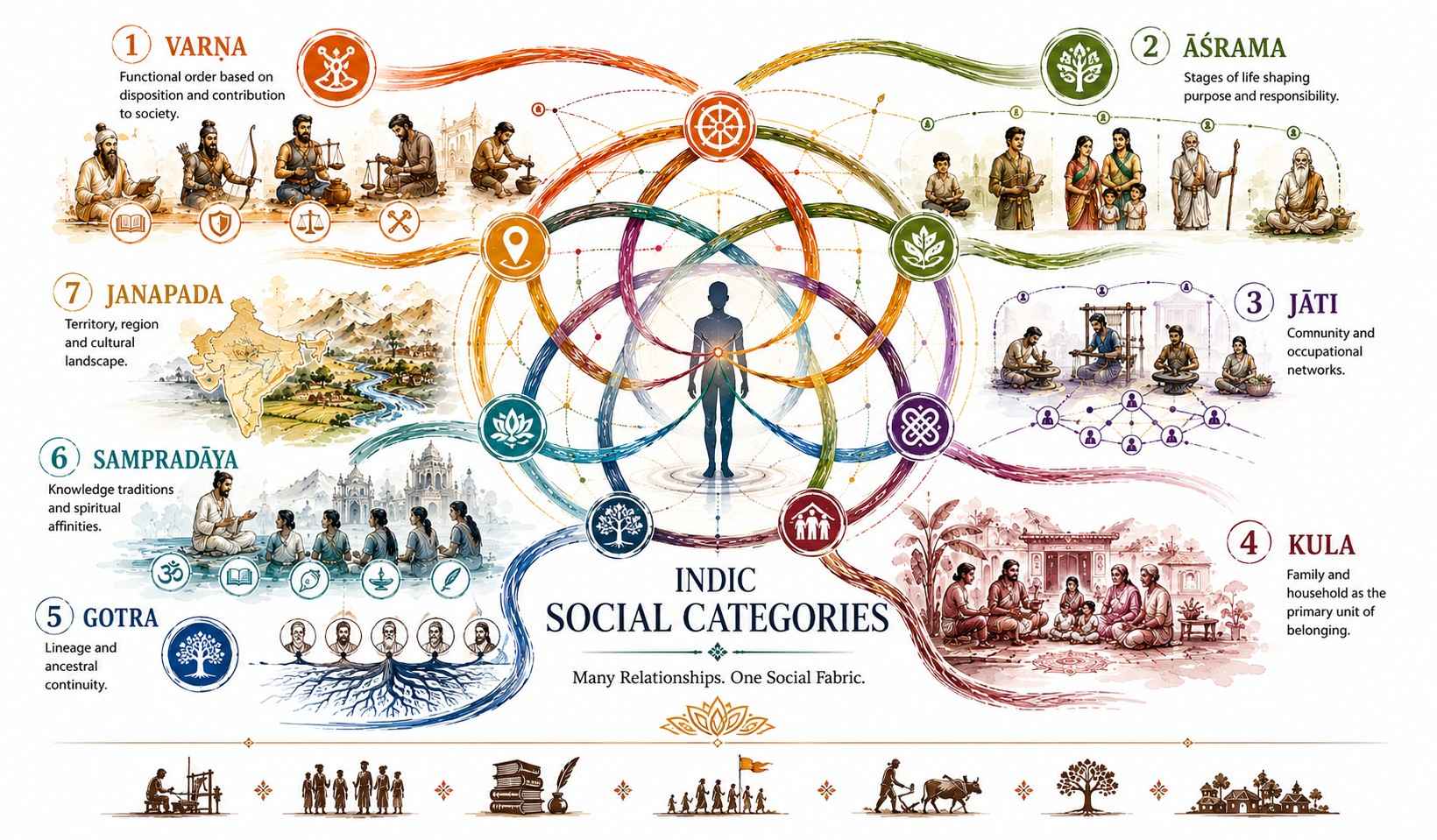
Indic Social Categories
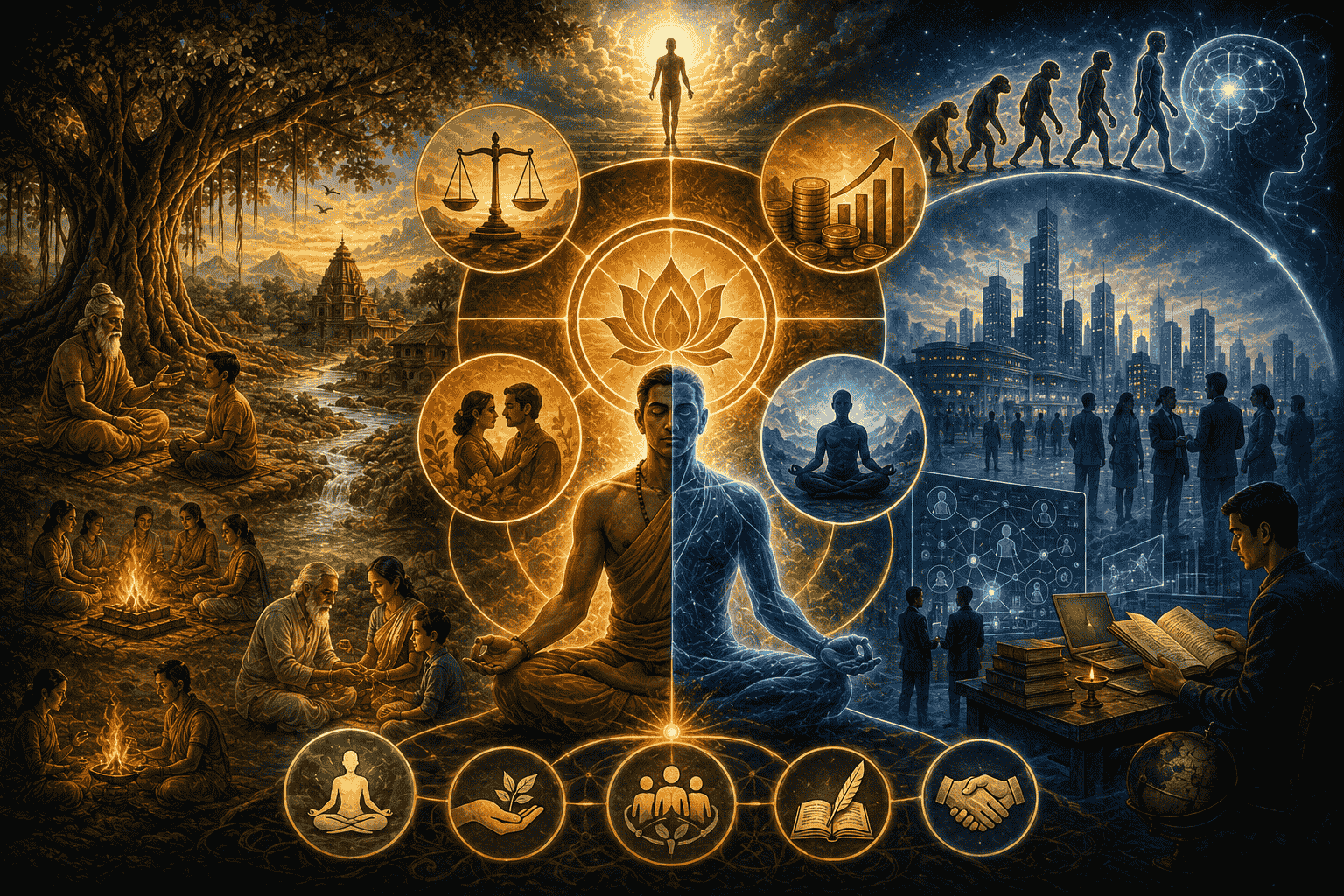
3. Indic Social Categories: An Introduction
3. Indic Social Categories: An Introduction
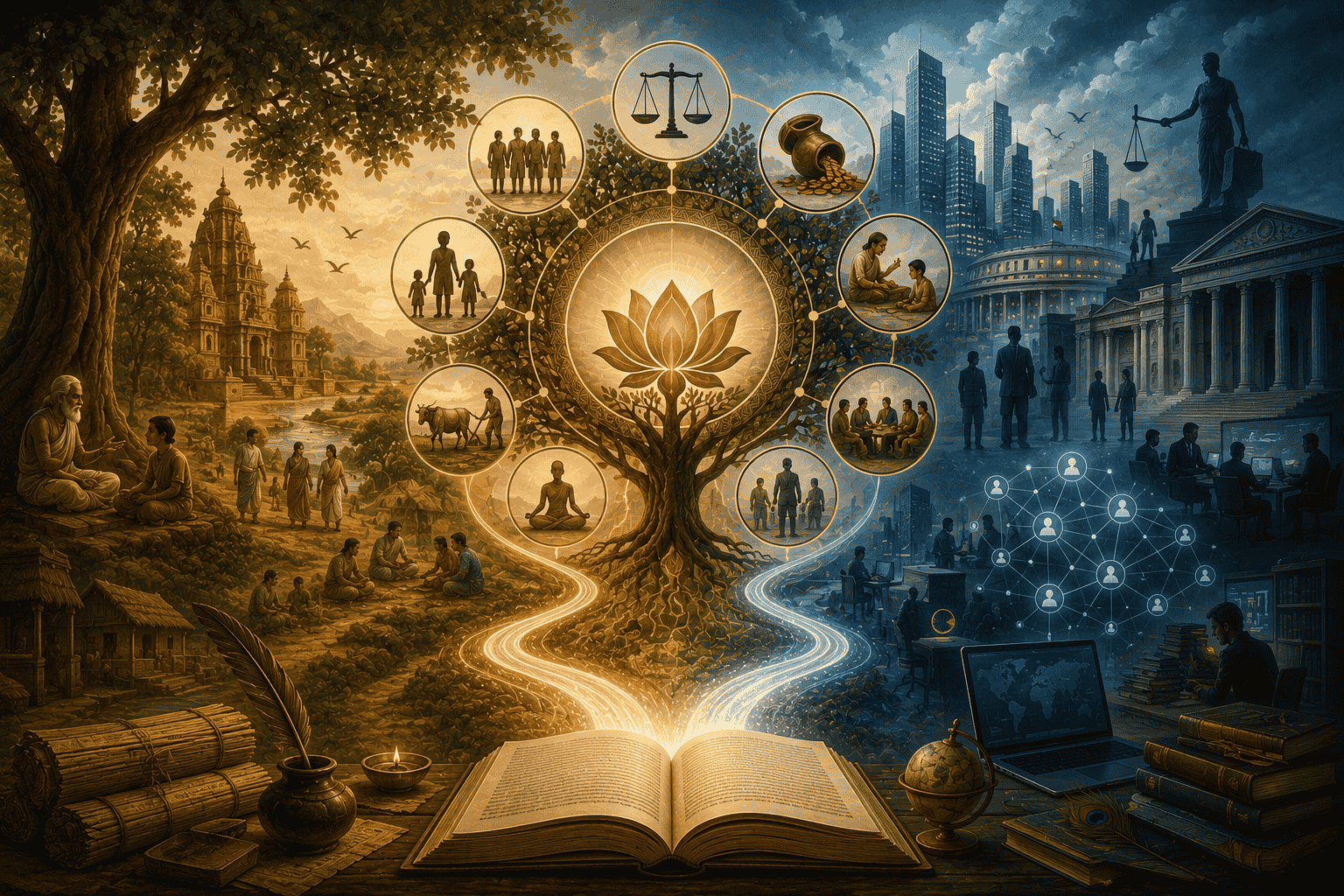
Towards an Indic Lexicon for the Social Studies: Replacing Imported Concepts with Civilizational Categories
Towards an Indic Lexicon for the Social Studies: Replacing Imported Concepts with Civilizational Categories
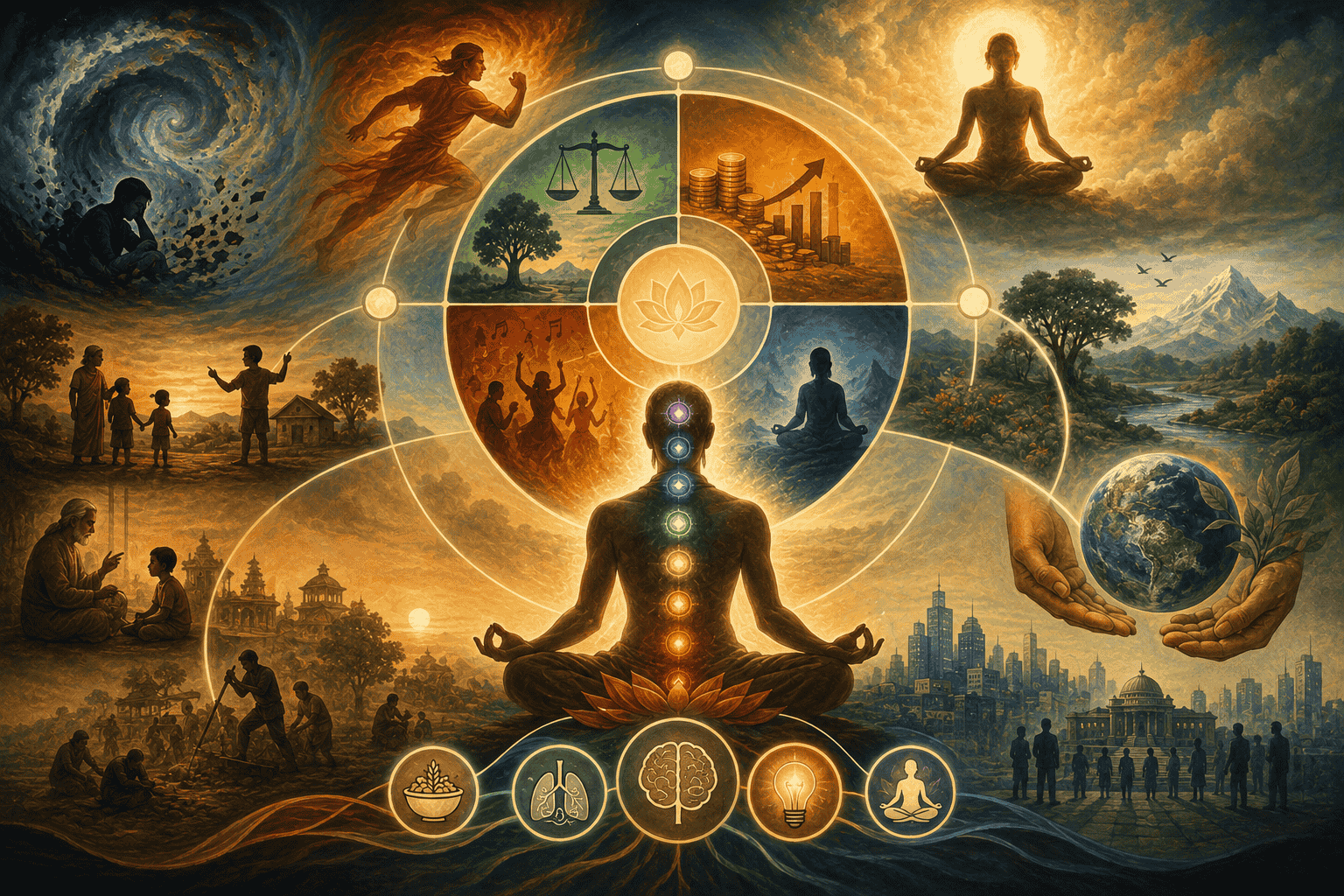
Purushartha, Triguna and Panchakosha: Reconstructing the Indic Theory of Human Behaviour
Purushartha, Triguna and Panchakosha: Reconstructing the Indic Theory of Human Behaviour
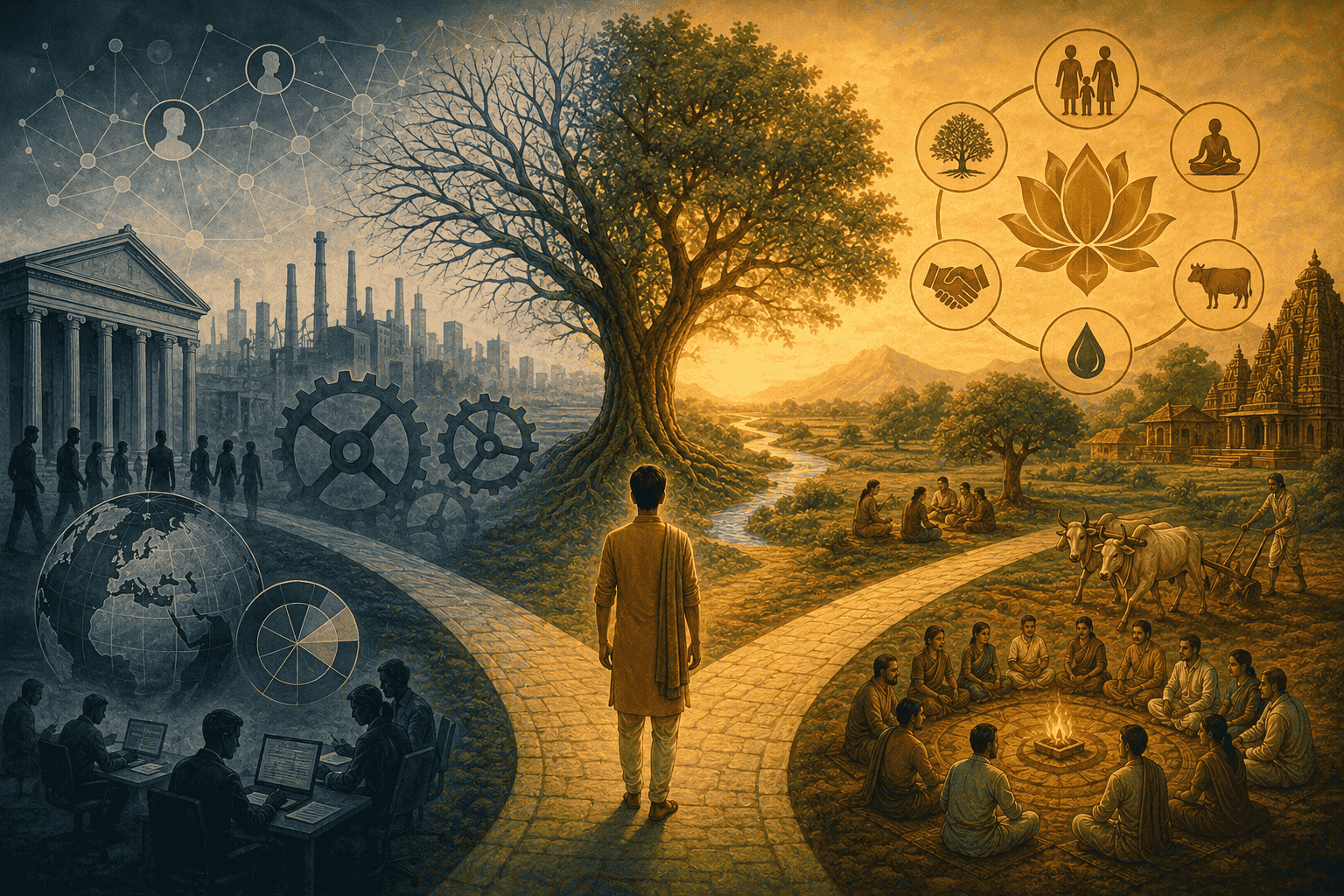
Beyond Borrowed Categories: Why India Needs an Indigenous Conceptual Vocabulary for the Social Studies