
Geography is the study of the relationship between people, places, landscapes, resources, environments, and the spatial processes through which human societies organise themselves. It examines how rivers, mountains, climate, settlements, agriculture, trade routes, resources, migration, and political boundaries shape human life, while also studying how communities transform and give meaning to their environments. An Indic approach to Geography further explores concepts such as Desha, Kshetra, Tirtha, Janapada, sacred geography, rivers, pilgrimage networks, and ecological relationships, understanding space not merely as territory, but as a lived, cultural, economic, and civilizational landscape.
Geography
Interrogating Geography
1. What exactly are we teaching as “Geography” today? Syllabus and analysis of school-level Geography and Social Studies, BA/BSc Geography, MA/MSc Geography, and major geographical subfields
2. Whose theories and frameworks are we using to understand space and place? Indian Geographical Theories and Frameworks, Western Geographical Theories and Frameworks
3. Whose geographers and thinkers are we reading? Indic Geographers and Thinkers, Westernized Geographers and Thinkers
4. What are the sources of our geographical knowledge? Indian Sources of Geographical Knowledge, Western Sources of Geographical Knowledge
5. Whose landscapes, places and geographical experiences are we studying? Indian Landscapes, Regions, Communities and Civilizational Geographies, Western Landscapes, Regions, Communities and Geographical Experiences
6. How are we studying and interpreting space, place and the environment? Indian Approaches to Understanding Geography, Western Geographical Methods and Approaches
Decolonizing Geography
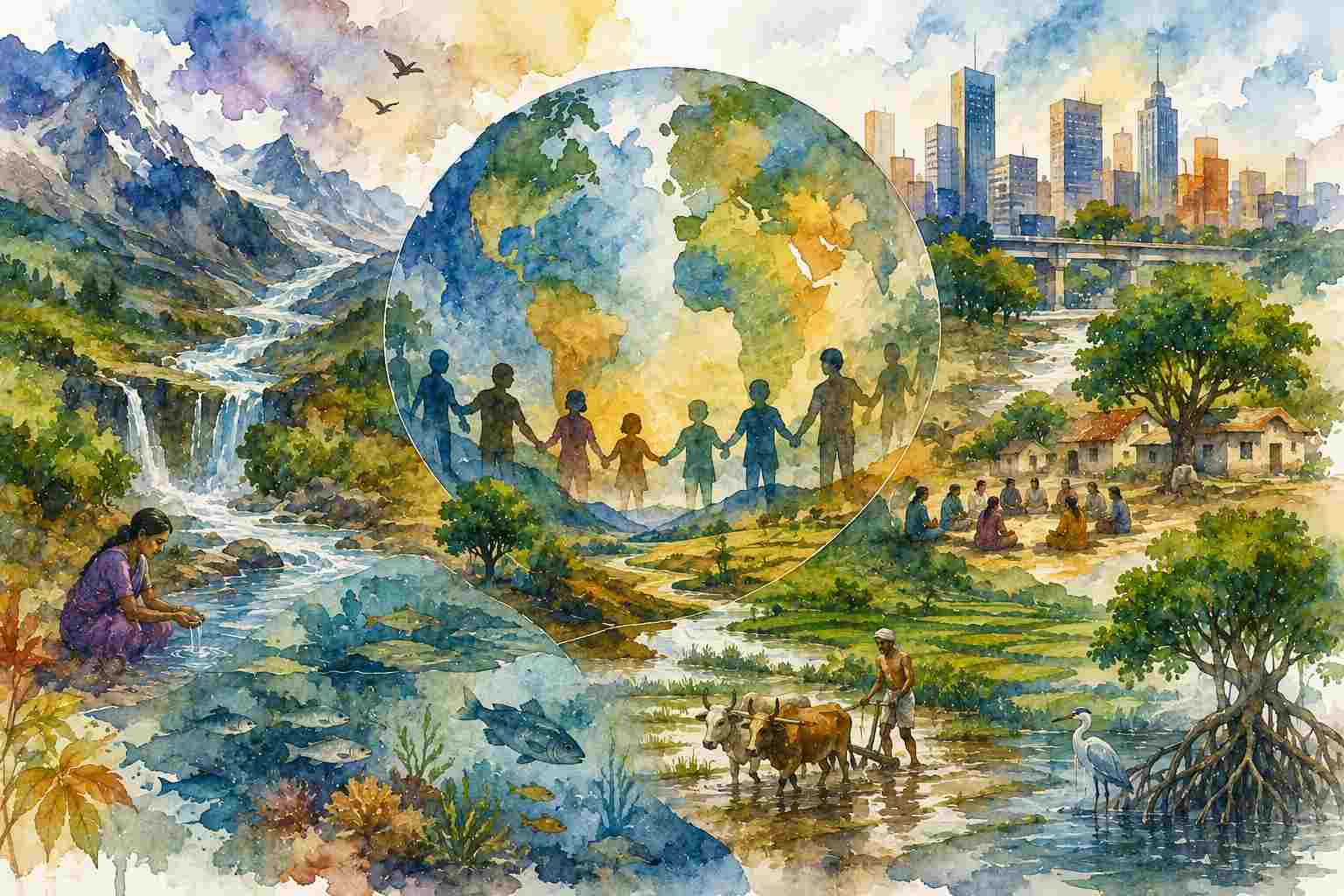
From Resources to Relationships
From Resources to Relationships
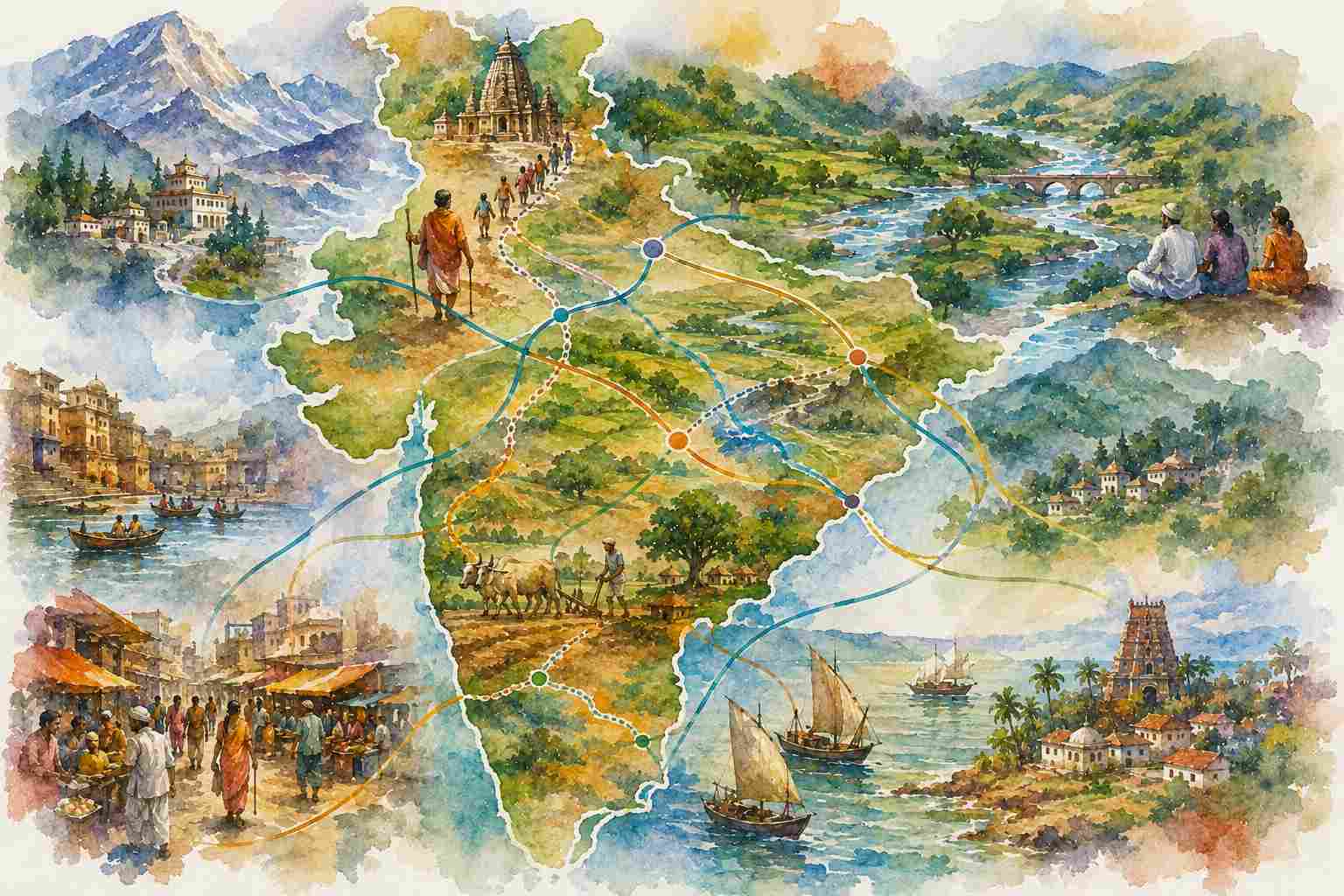
Beyond Territory: Rethinking Place and Region
Beyond Territory: Rethinking Place and Region
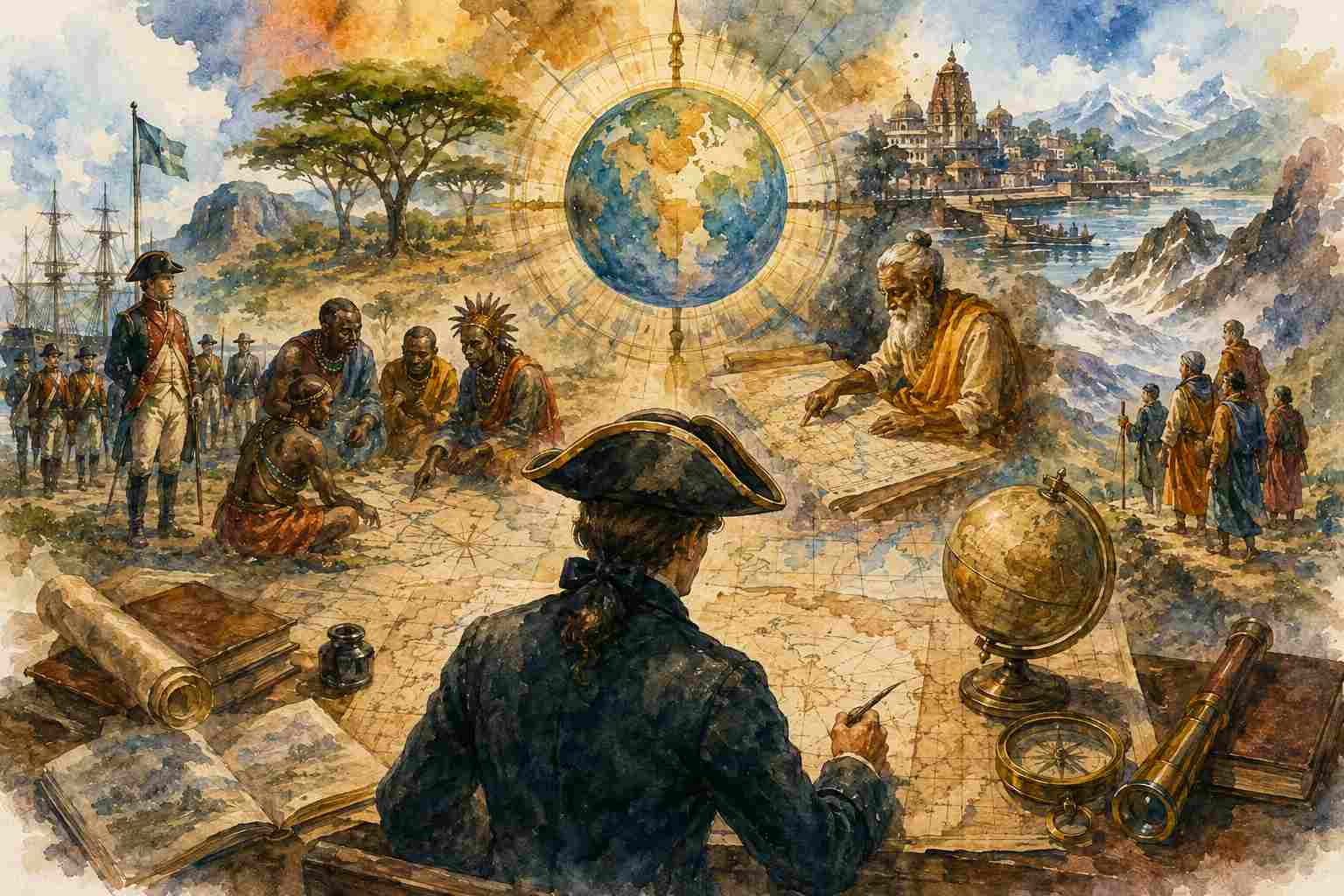
Who Draws the Map?
Who Draws the Map?
Geographic Drishti
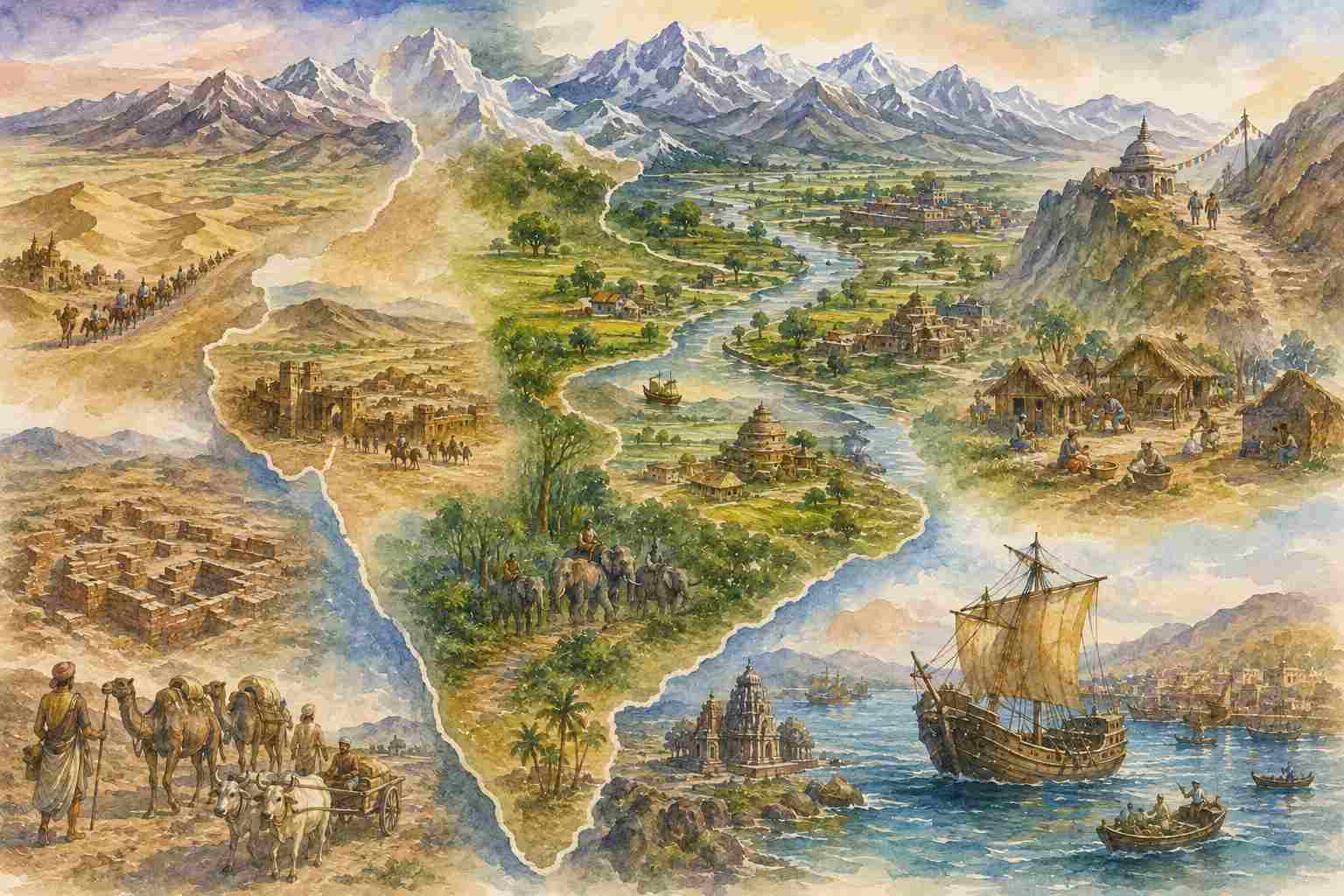
Reading India through Landscape, Region and Movement
Reading India through Landscape, Region and Movement
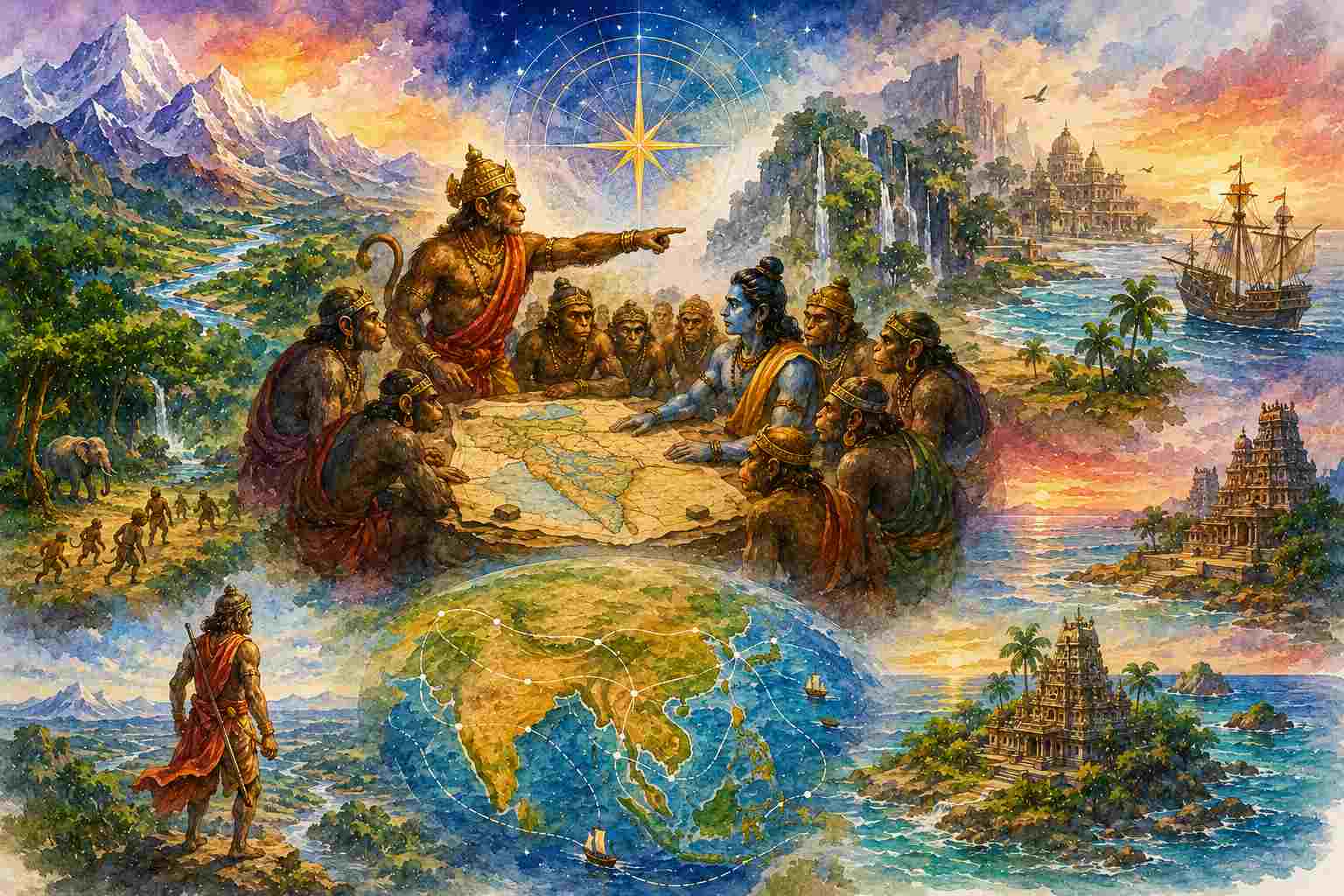
Sugriva’s Atlas: The Day the Ramayana Turned into a Geography Classroom
Sugriva’s Atlas: The Day the Ramayana Turned into a Geography Classroom
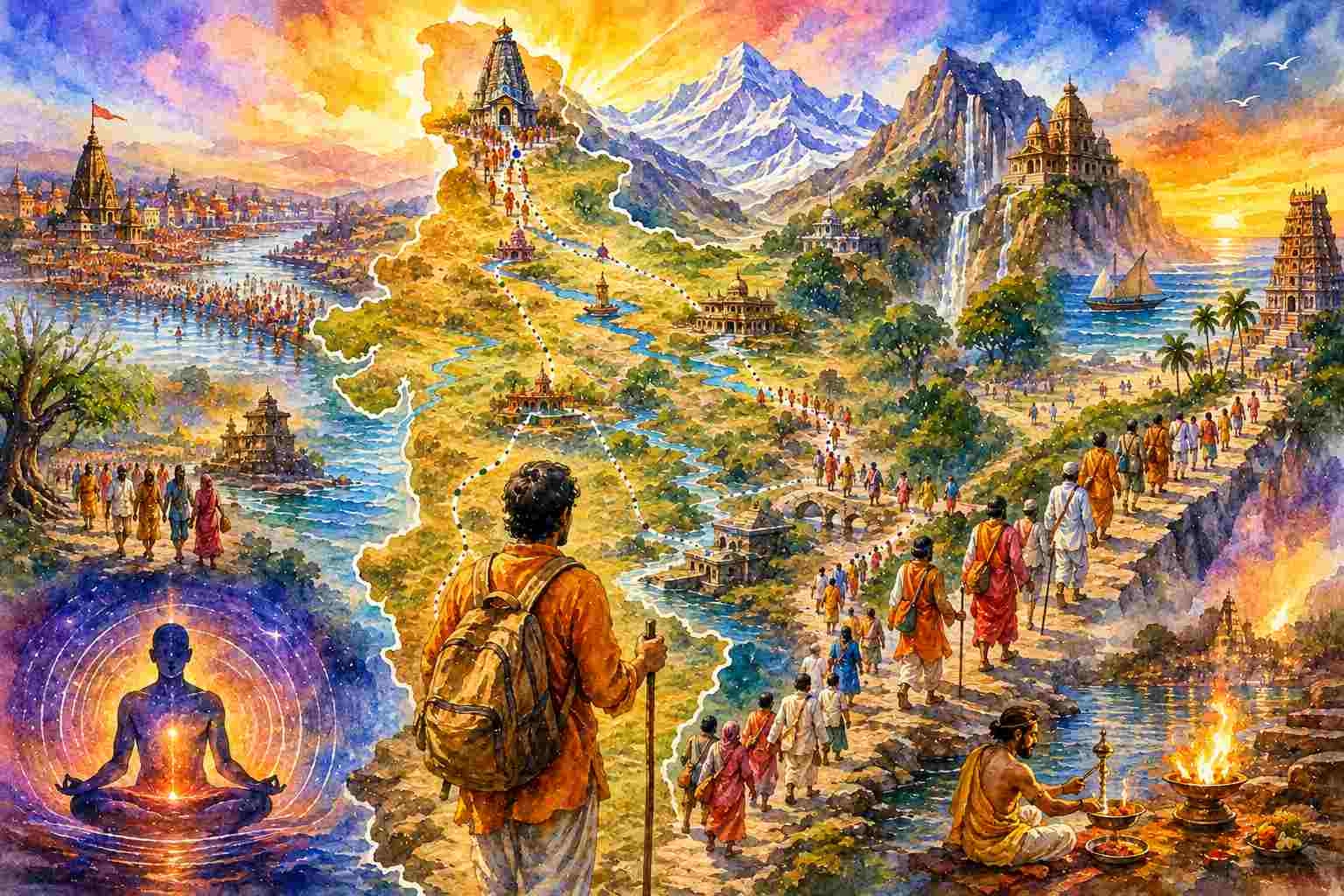
Tirtha: Geography of Movement and Connection