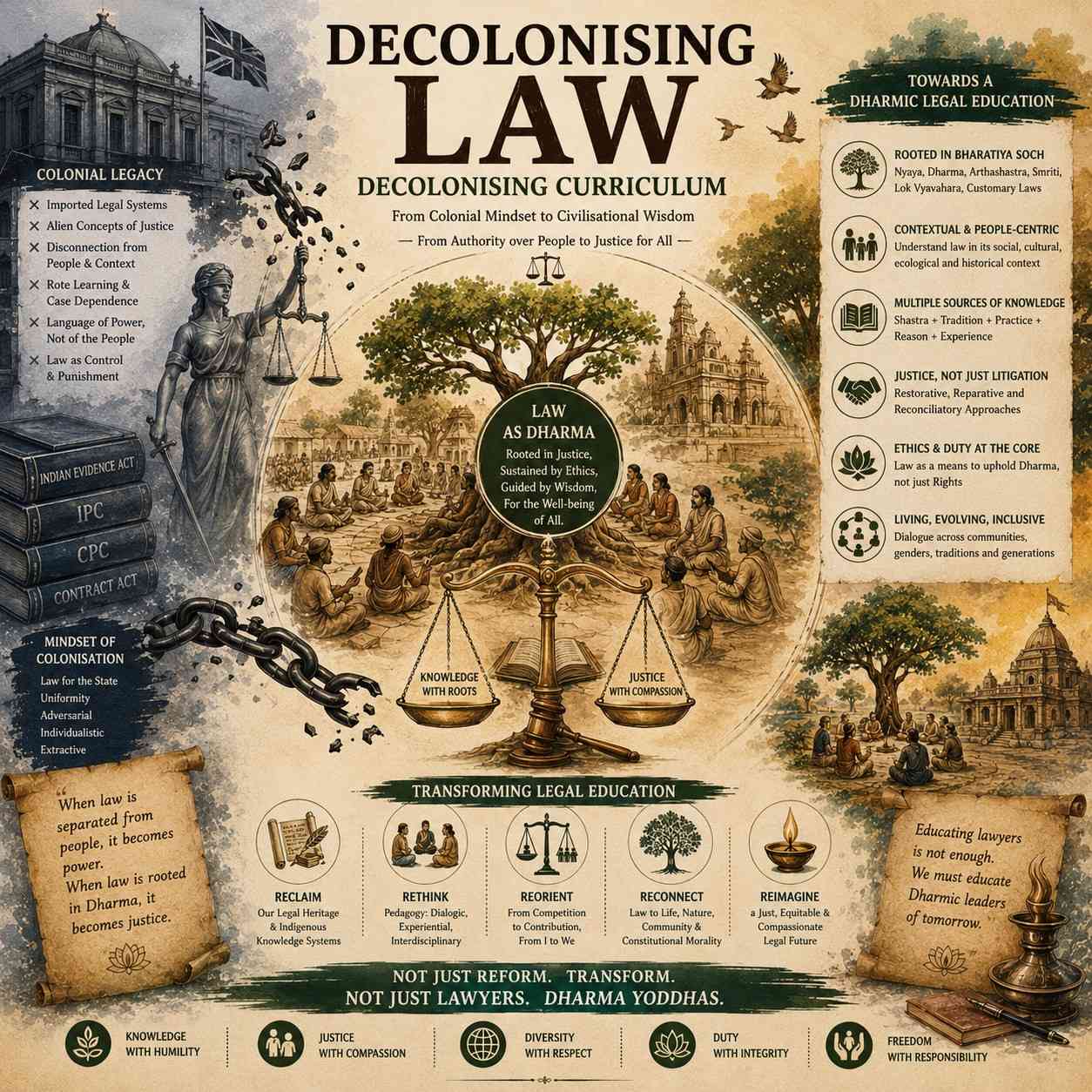
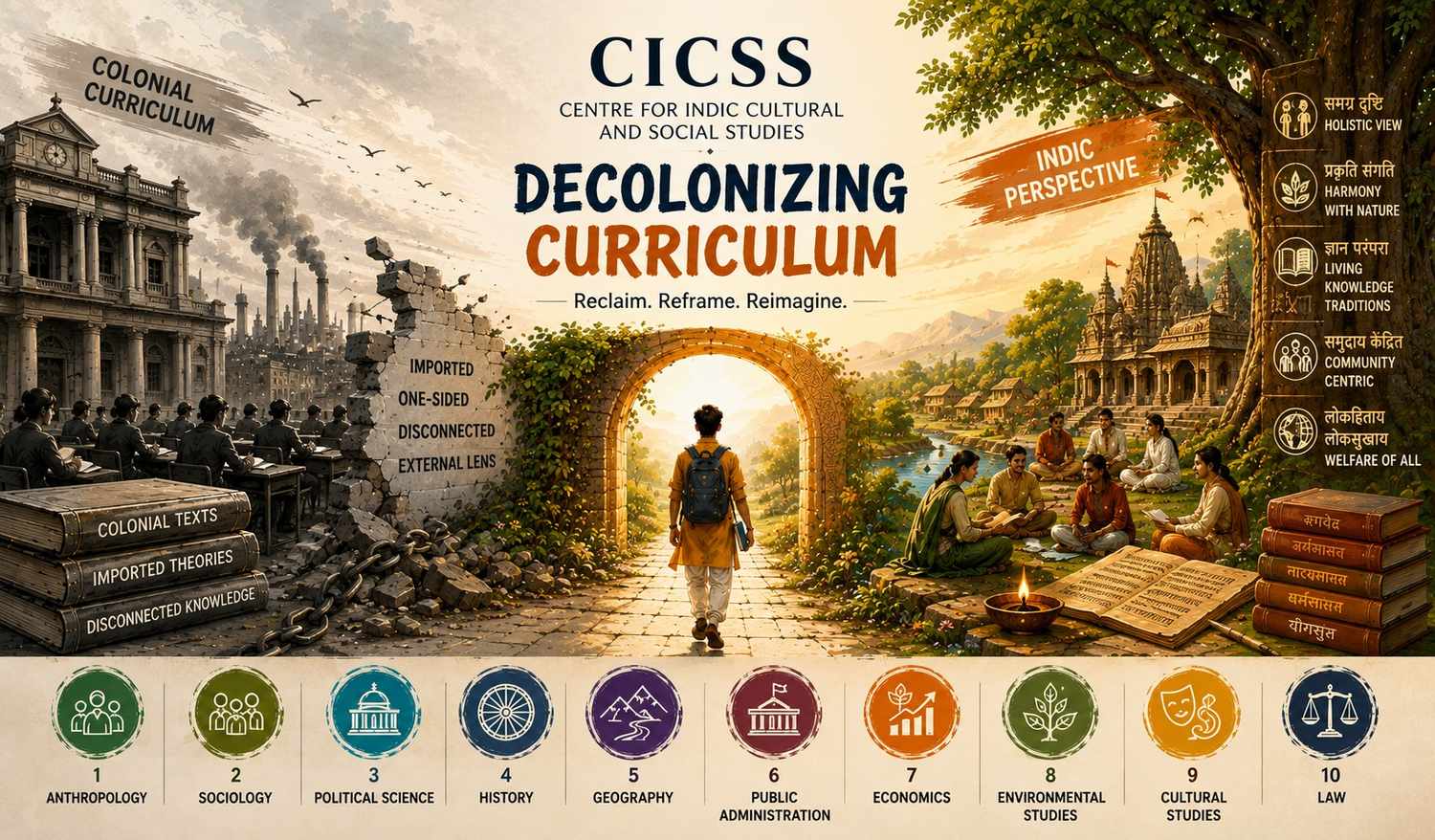
The Decolonizing Curriculum initiative seeks to redesign academic content by integrating Indic knowledge systems, civilizational perspectives, and indigenous intellectual traditions into contemporary education. It promotes curricula that are rooted in Bharatiya categories, concepts, and methodologies, enabling learners to engage with knowledge through a more authentic and contextually relevant framework.
Decolonizing Curriculum
Anthropology
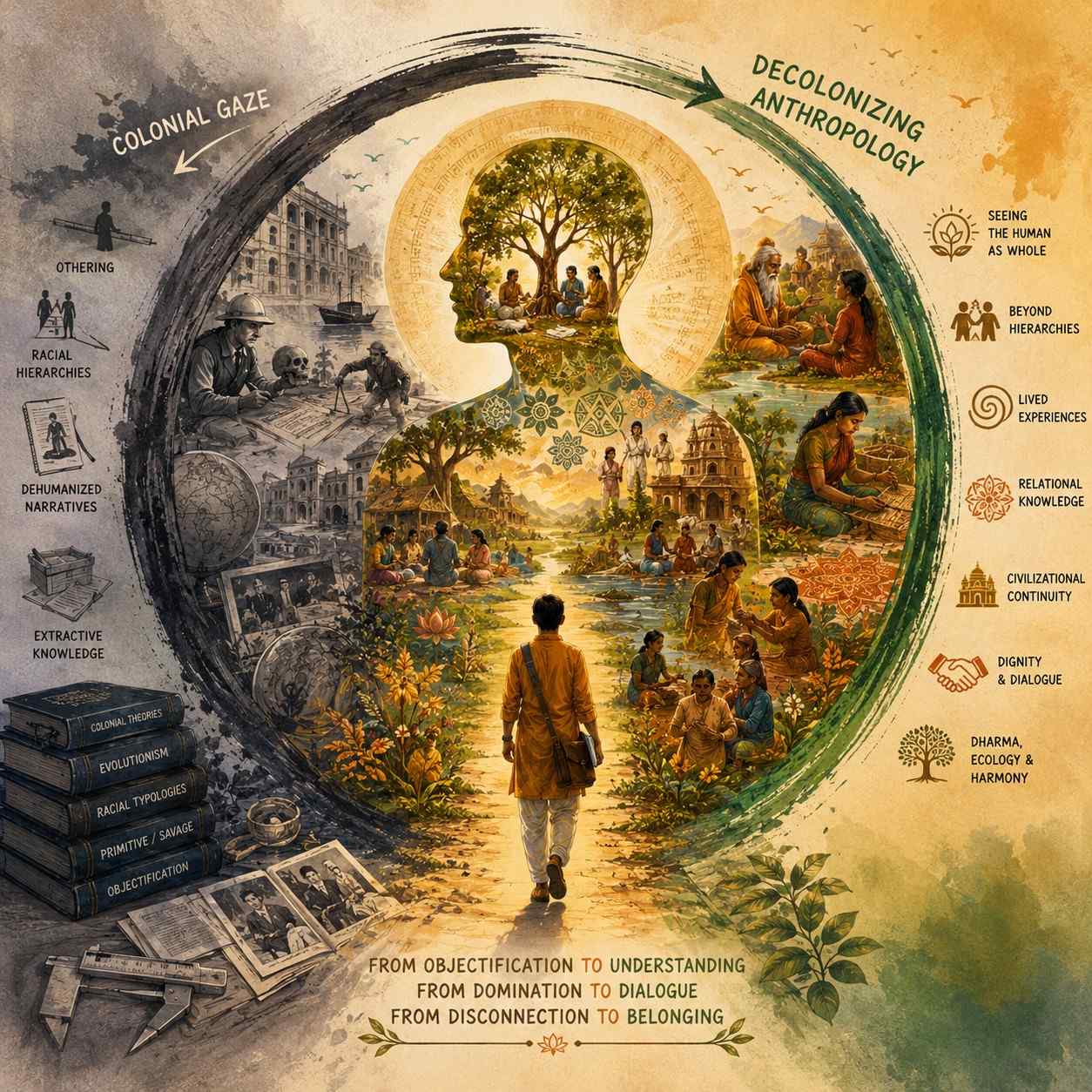
Anthropology is the study of human beings, their societies, cultures, relationships, institutions, beliefs, practices, and ways of adapting to their environments across time and space. It seeks to understand humanity not merely as individuals, but as members of diverse communities shaped by history, culture, ecology, knowledge, and social relationships. An Indic approach to anthropology further asks how human life, community, identity, duty, kinship, tradition, and social order have been understood within Bharatiya civilizational experience, while engaging critically with both classical sources and contemporary field realities.
Sociology
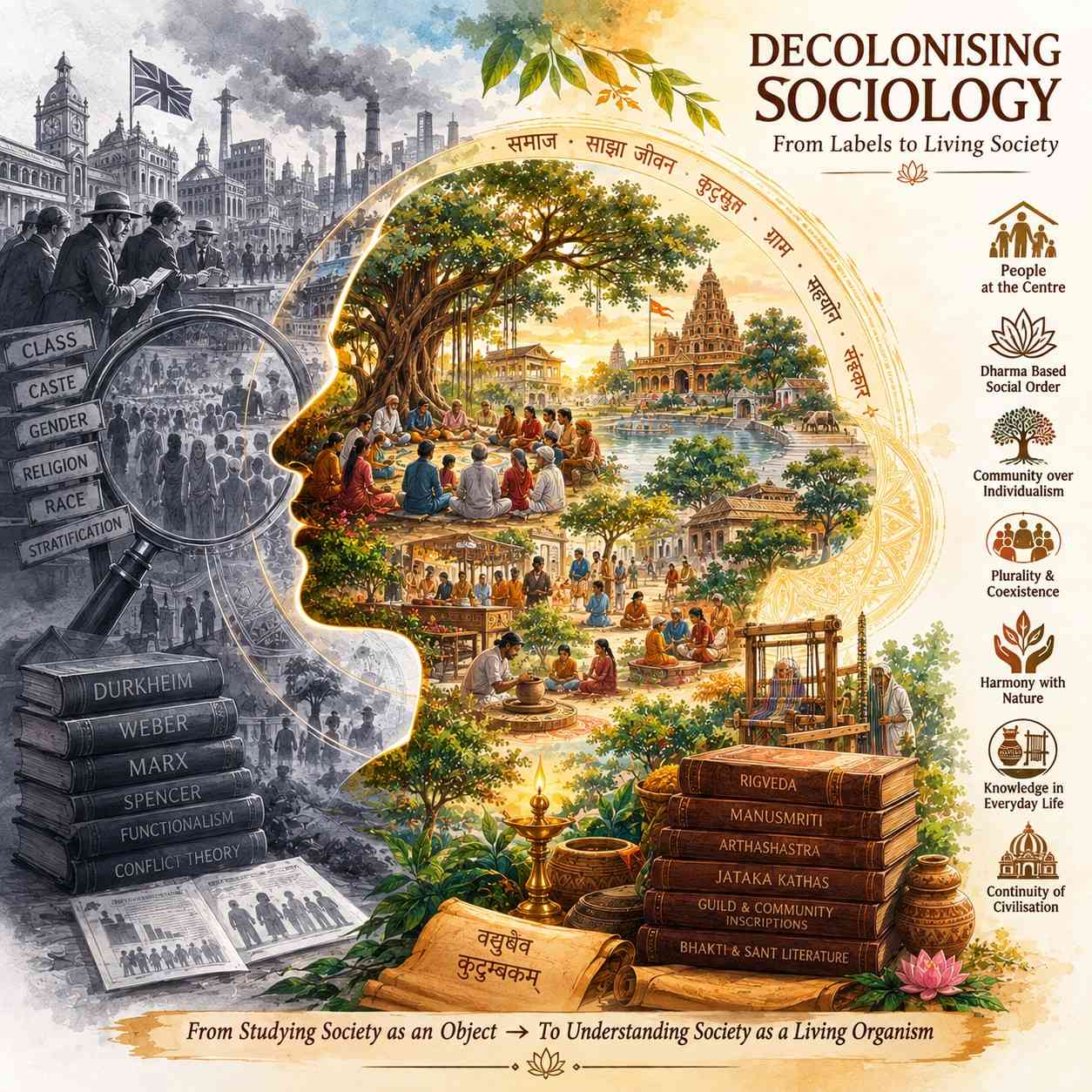
Sociology is the study of society, social relationships, institutions, communities, groups, norms, values, and the processes through which collective life is organised and transformed. It seeks to understand how individuals relate to families, communities, institutions, economies, political structures, and cultural traditions, while examining patterns of continuity, change, cohesion, and conflict. An Indic approach to sociology further asks how social life has been understood through Bharatiya categories, institutions, lived traditions, and relationships between the individual, family, community, society, and wider civilizational order.
Political Science
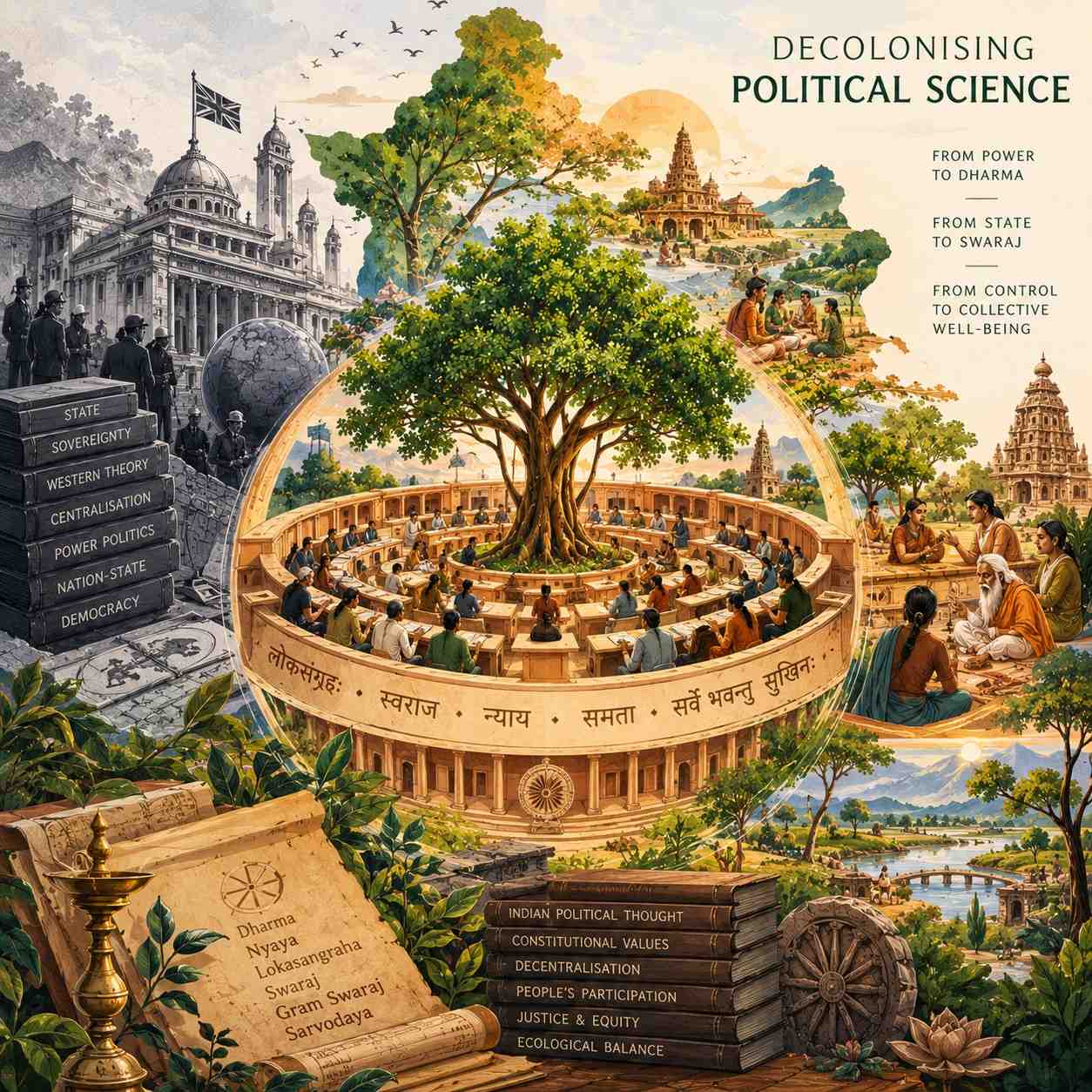
Political Science is the study of power, governance, political institutions, authority, statecraft, citizenship, law, political behaviour, and the relationships through which collective life is governed. It examines how societies organise authority, resolve conflicts, distribute responsibilities, establish institutions, and pursue collective purposes across different historical contexts. An Indic approach to Political Science further explores concepts such as Rajya, Dharma, Dandaniti, Sabha, Samiti, Janapada, Lokasangraha, and Rajadharma, asking how Bharatiya traditions understood governance, political responsibility, sovereignty, justice, and the relationship between the ruler, society, and the larger civilizational order.
History
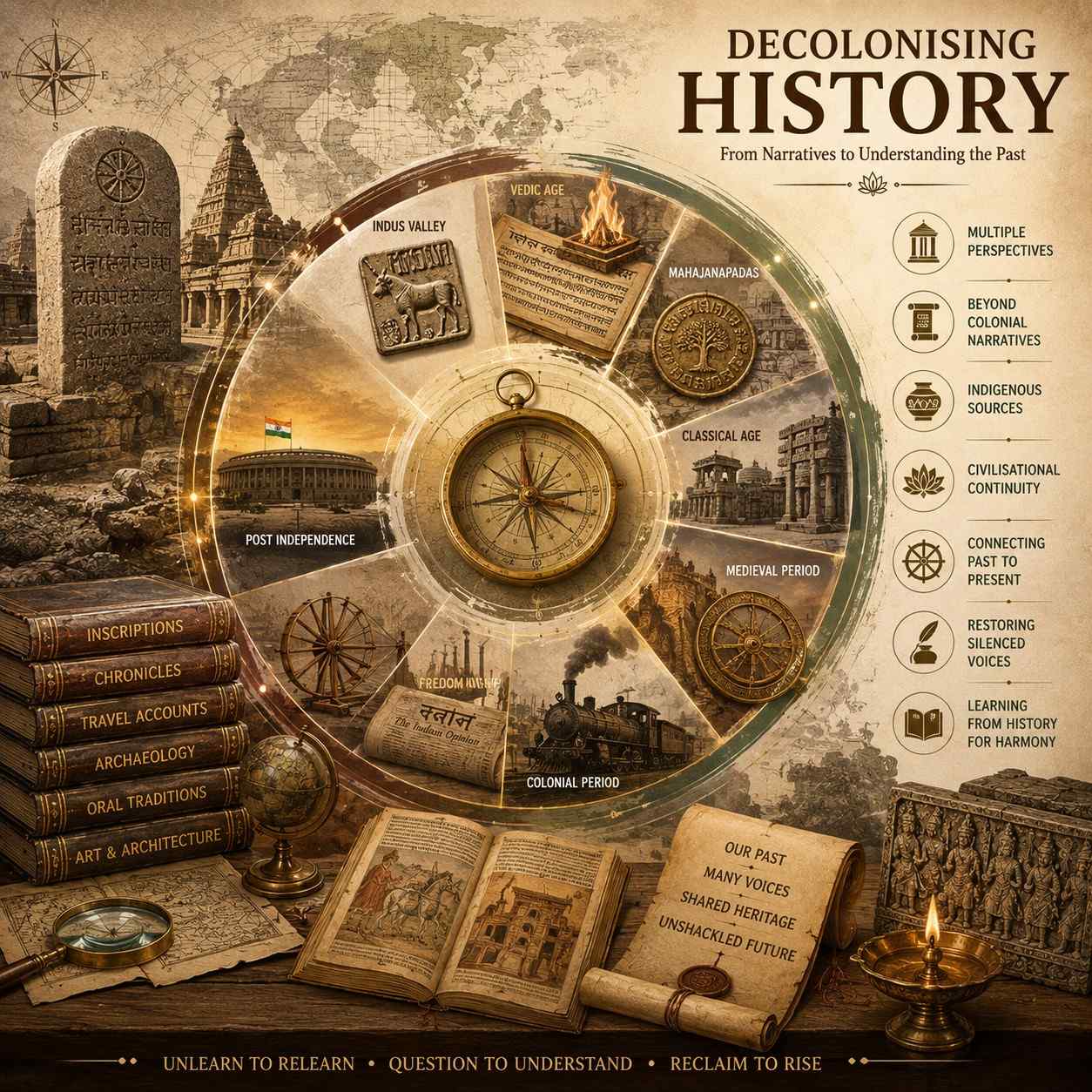
History is the study of human experience across time, examining events, processes, institutions, communities, ideas, conflicts, transformations, and continuities through which societies and civilizations have evolved. It seeks not merely to reconstruct what happened, but to understand why change occurred, how societies remembered their past, and how historical experiences shaped their institutions and collective identities. An Indic approach to History further engages with Itihasa, Purana, Vanshavali, inscriptions, oral traditions, literary sources, material remains, and living memory, exploring the past through Bharatiya understandings of time, continuity, civilization, and historical consciousness.
Geography
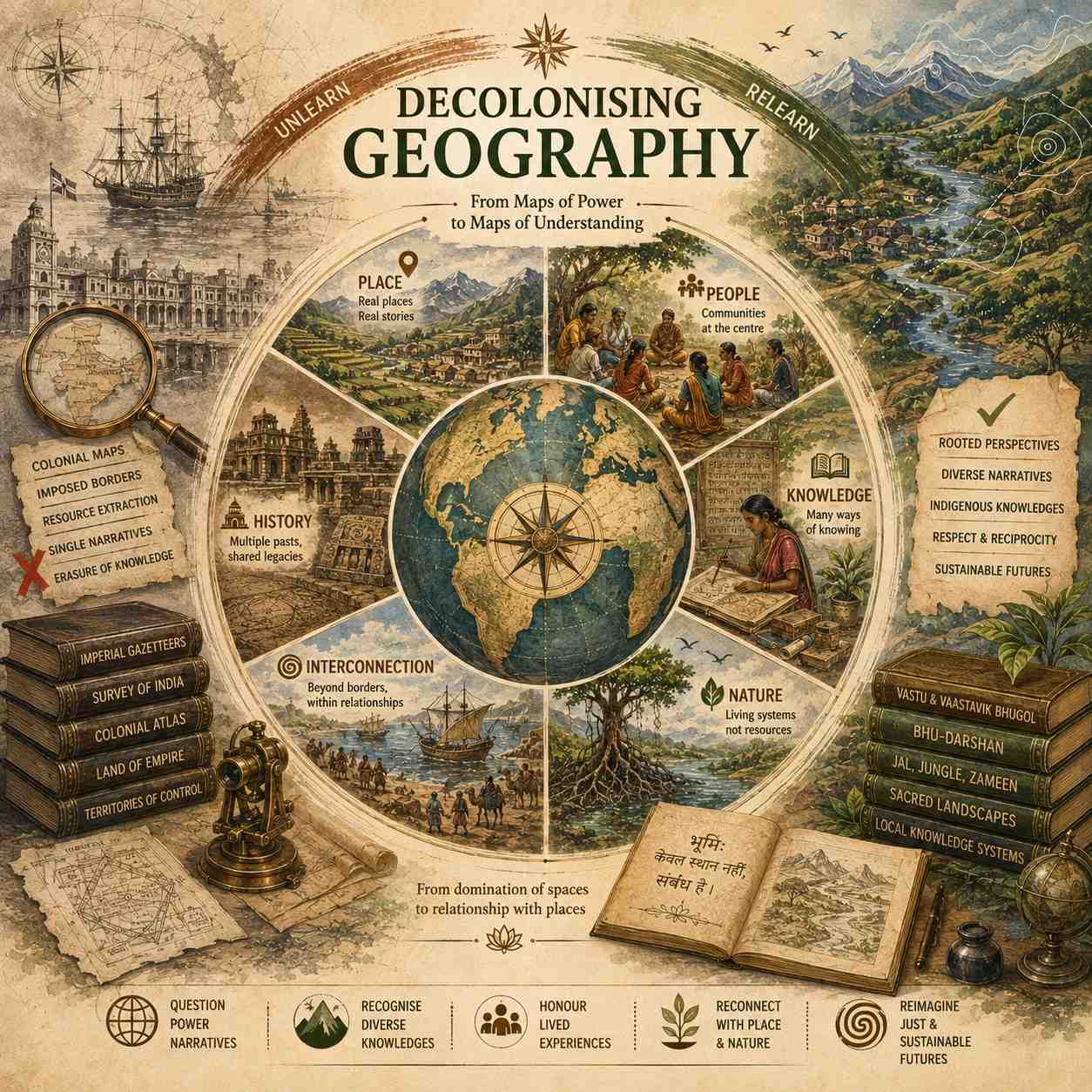
Geography is the study of the relationship between people, places, landscapes, resources, environments, and the spatial processes through which human societies organise themselves. It examines how rivers, mountains, climate, settlements, agriculture, trade routes, resources, migration, and political boundaries shape human life, while also studying how communities transform and give meaning to their environments. An Indic approach to Geography further explores concepts such as Desha, Kshetra, Tirtha, Janapada, sacred geography, rivers, pilgrimage networks, and ecological relationships, understanding space not merely as territory, but as a lived, cultural, economic, and civilizational landscape.
Public Administration
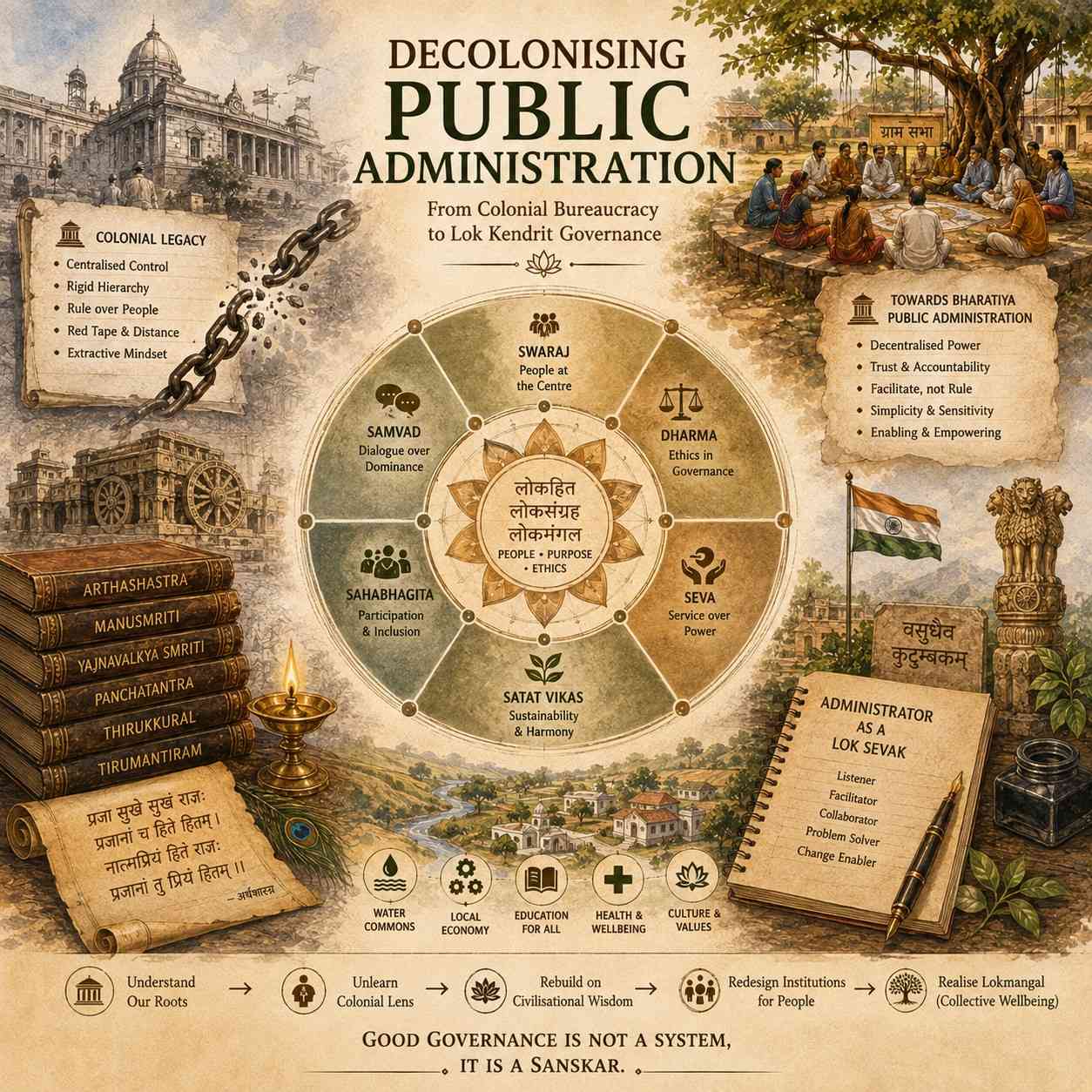
Public Administration is the study of how public institutions organise, implement, and manage collective affairs through systems of governance, administration, public services, laws, resources, and institutional processes. It examines how decisions are translated into action, how institutions respond to social needs, and how administrative systems maintain order, welfare, accountability, and continuity. An Indic approach to Public Administration further explores Rajadharma, Dandaniti, Amatya, Janapada, Sabha, Samiti, Lokasangraha, and the Arthashastra tradition, asking how Bharatiya thought understood the duties of administrators, the relationship between state and society, decentralised governance, public welfare, ethical conduct, and the responsible management of collective resources.
Economics
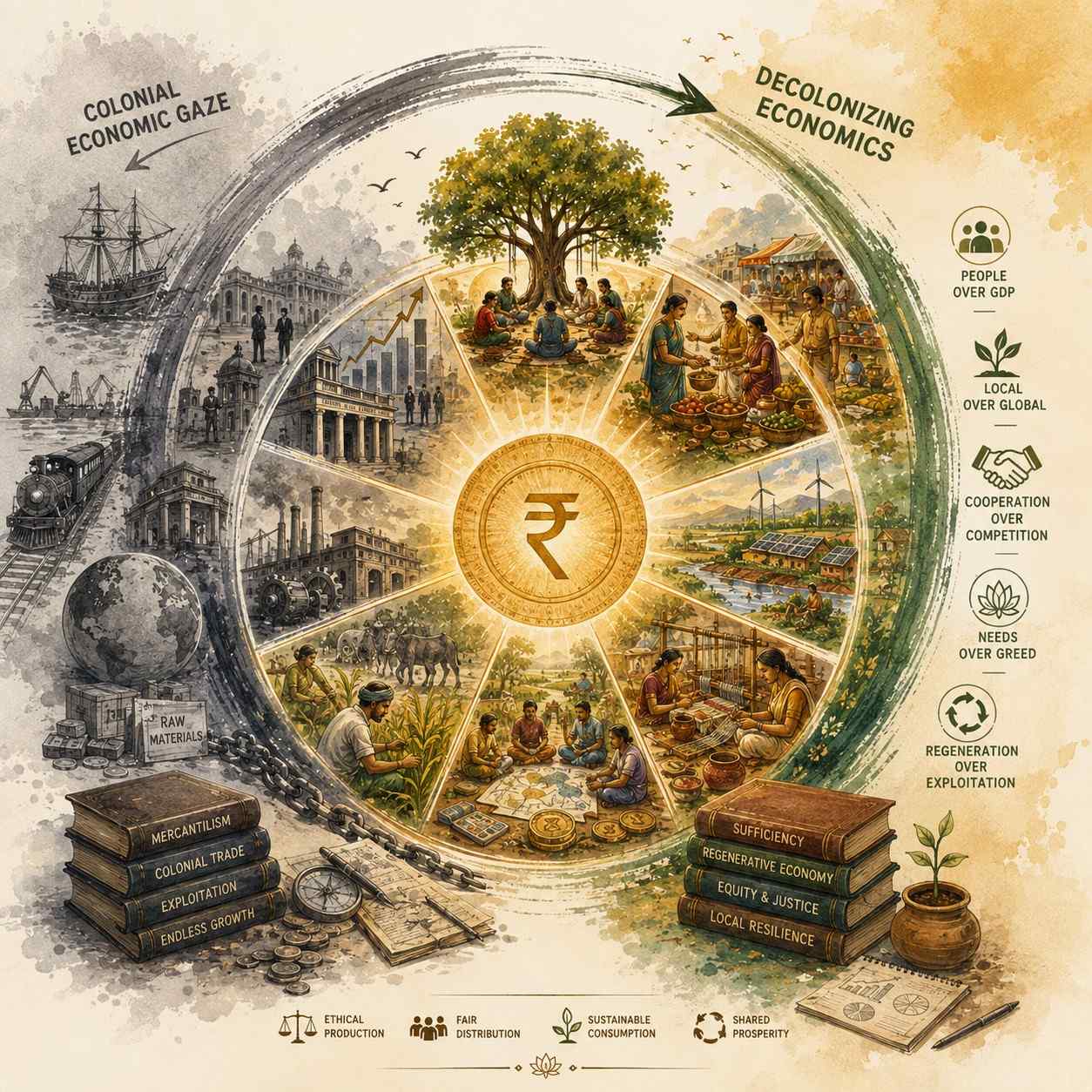
Economics is the study of how individuals, households, communities, institutions, and states organise the production, distribution, exchange, and use of resources to sustain human life and pursue prosperity. It examines markets, labour, wealth, consumption, trade, property, production, institutions, inequality, and the choices through which societies manage material resources. An Indic approach to Economics further asks how Artha, Dharma, Dana, Shreni, Svadeshi, Lokasangraha, and the Purusharthas shaped Bharatiya understandings of wealth, livelihood, exchange, responsibility, prosperity, and the ethical relationship between material well-being and the wider social and civilizational order.
Environmental Studies
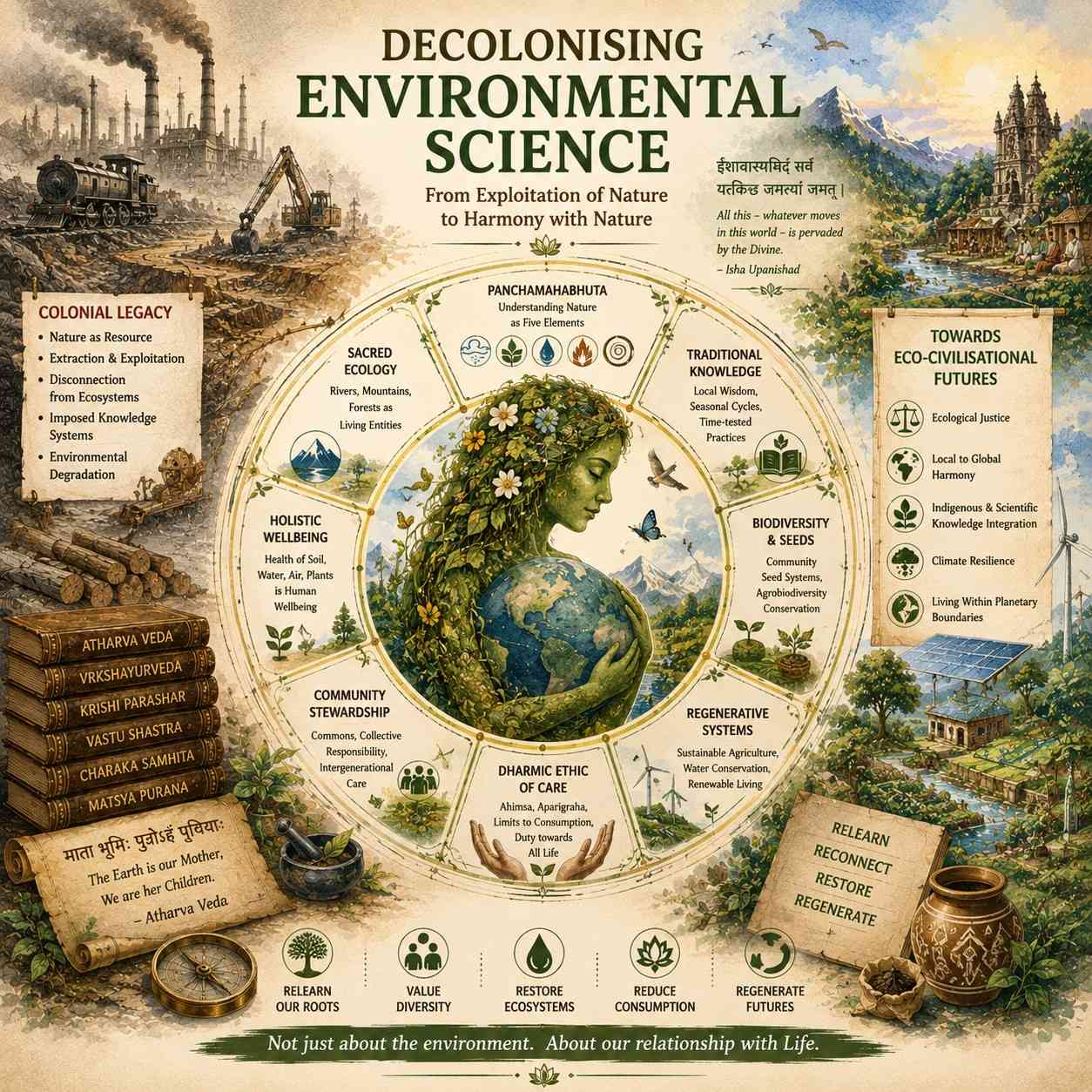
Environmental Studies is the study of the relationship between human societies and the natural world, examining ecosystems, resources, climate, biodiversity, water, land, settlements, and the ways human activity affects ecological systems. It seeks to understand environmental challenges not merely as technical problems, but as questions involving social behaviour, institutions, economy, culture, and patterns of human life. An Indic approach further explores Prakriti, Panchamahabhuta, Rta, Dharma, Vanaspati, Jala, Bhumi, and Lokasangraha, asking how Bharatiya traditions understood ecological interdependence, restraint, stewardship, sacred landscapes, and the responsibilities of human beings towards the larger living world.
Cultural Studies
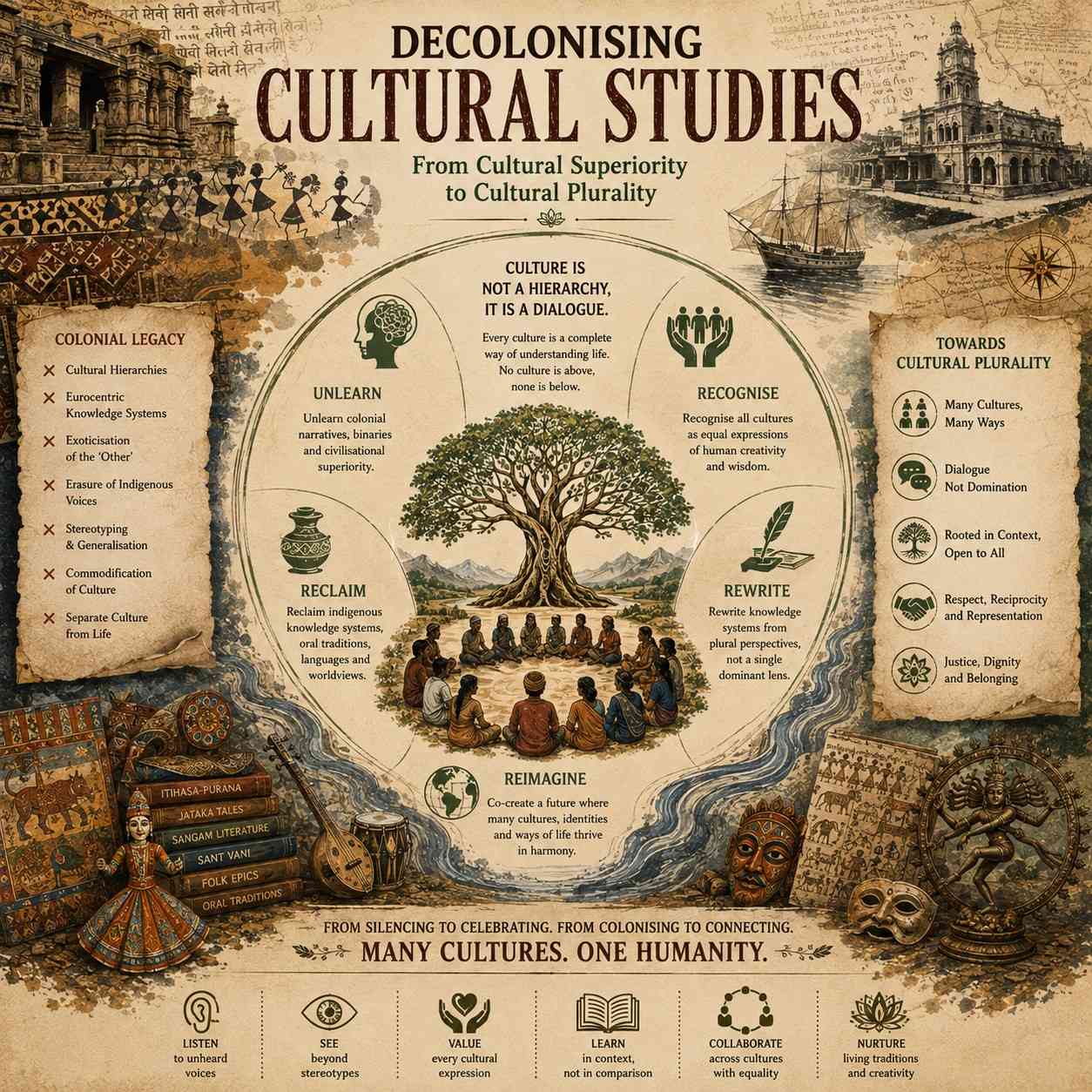
Cultural Studies is the study of the meanings, practices, symbols, traditions, identities, narratives, institutions, and everyday forms through which communities understand and express their collective life. It examines how culture is created, transmitted, transformed, contested, and remembered across generations, while exploring the relationship between culture, power, society, language, media, and identity. An Indic approach to Cultural Studies further engages with Samskara, Parampara, Smriti, Shruti, Kala, Utsava, Tirtha, and Lokachara, exploring culture as a living process through which knowledge, values, memory, practices, and civilizational consciousness are transmitted.
Law
Law is the study of the principles, rules, institutions, and practices through which societies establish justice, regulate conduct, resolve disputes, protect rights, and maintain social order. It examines the relationship between law, authority, institutions, individuals, communities, and the state, while considering how legal systems evolve in response to changing social conditions. An Indic approach to Law further explores Dharma, Nyaya, Vyavahara, Rajadharma, Dandaniti, Smriti traditions, and customary practices, asking how Bharatiya traditions understood justice, duty, rights, obligations, dispute resolution, punishment, and the relationship between law and the ethical order of society.