Public Administration is the study of how public institutions organise, implement, and manage collective affairs through systems of governance, administration, public services, laws, resources, and institutional processes. It examines how decisions are translated into action, how institutions respond to social needs, and how administrative systems maintain order, welfare, accountability, and continuity. An Indic approach to Public Administration further explores Rajadharma, Dandaniti, Amatya, Janapada, Sabha, Samiti, Lokasangraha, and the Arthashastra tradition, asking how Bharatiya thought understood the duties of administrators, the relationship between state and society, decentralised governance, public welfare, ethical conduct, and the responsible management of collective resources.
Public Administration
Interrogating Public Administration
1. What exactly are we teaching as “Public Administration” today? Syllabus and analysis of school-level Civics and Social Studies, BA/BSW/Political Science programmes, MA Public Administration, and major areas and subfields of public administration
2. Whose theories and frameworks are we using to understand governance and administration? Indian Theories of Public Administration and Governance, Western Theories of Public Administration and Governance
3. Whose administrators, scholars and thinkers are we reading? Indic Public Administration Thinkers, Westernized Public Administration Thinkers
4. What are the sources of our administrative knowledge? Indian Sources of Administrative Knowledge, Western Sources of Administrative Knowledge
5. Whose institutions and experiences of governance are we studying? Indian Administrative, Institutional and Governance Experiences, Western Administrative and Governance Experiences
6. How are we studying and understanding administration and governance? Indian Approaches to Public Administration and Governance, Western Public Administration Methods and Approaches
Decolonizing Public Administration
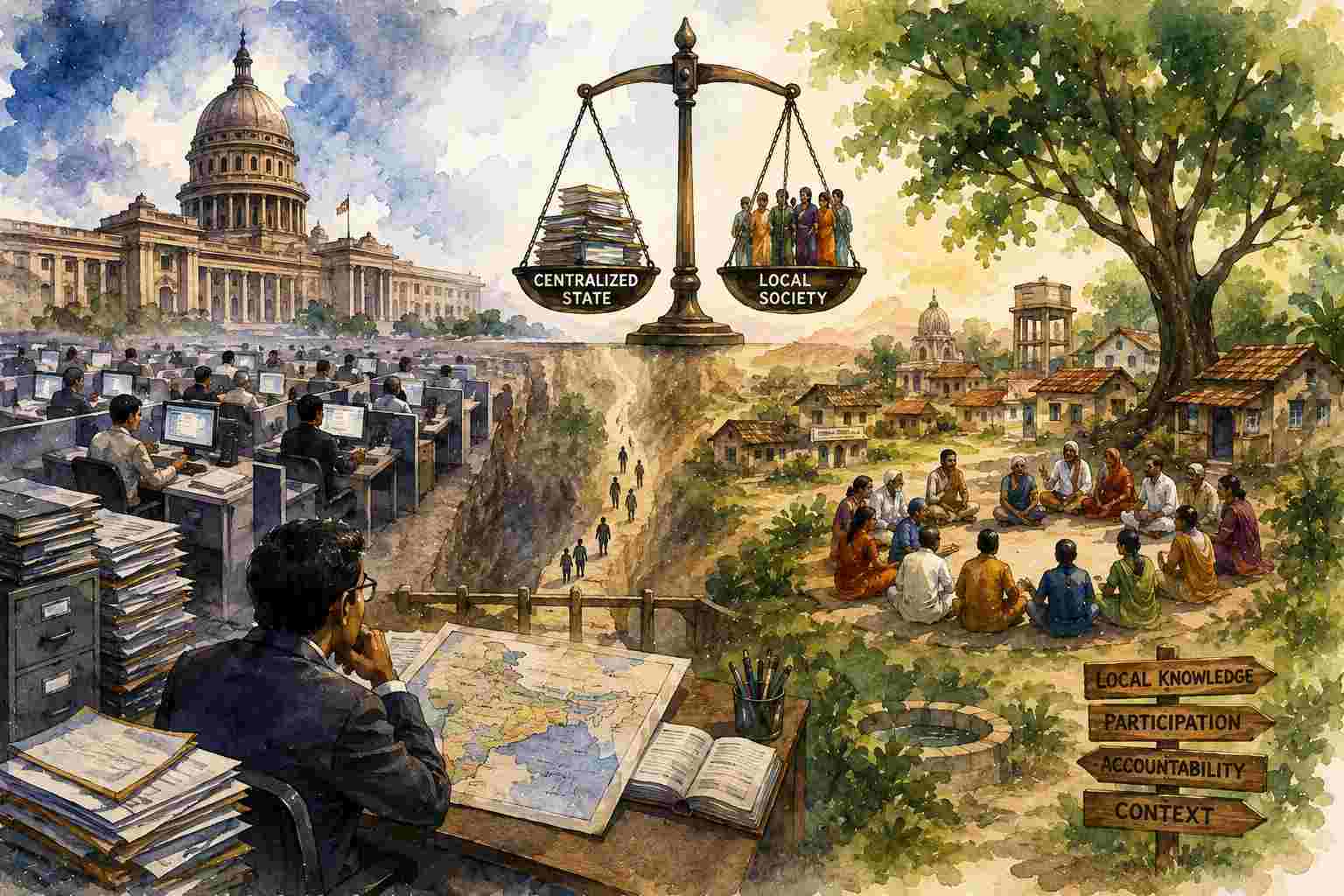
Centralized State, Local Society
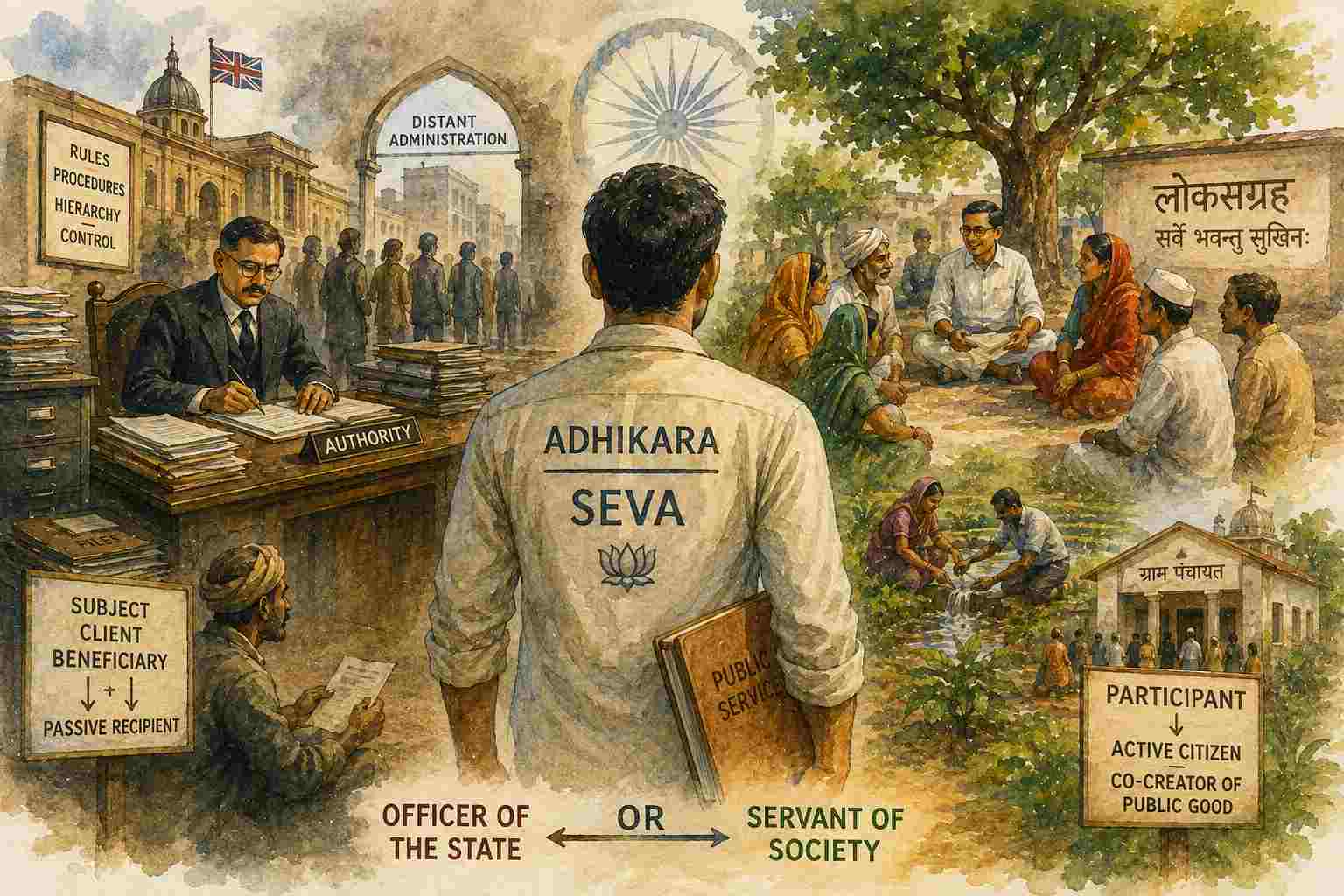
Who Is the Public Servant?
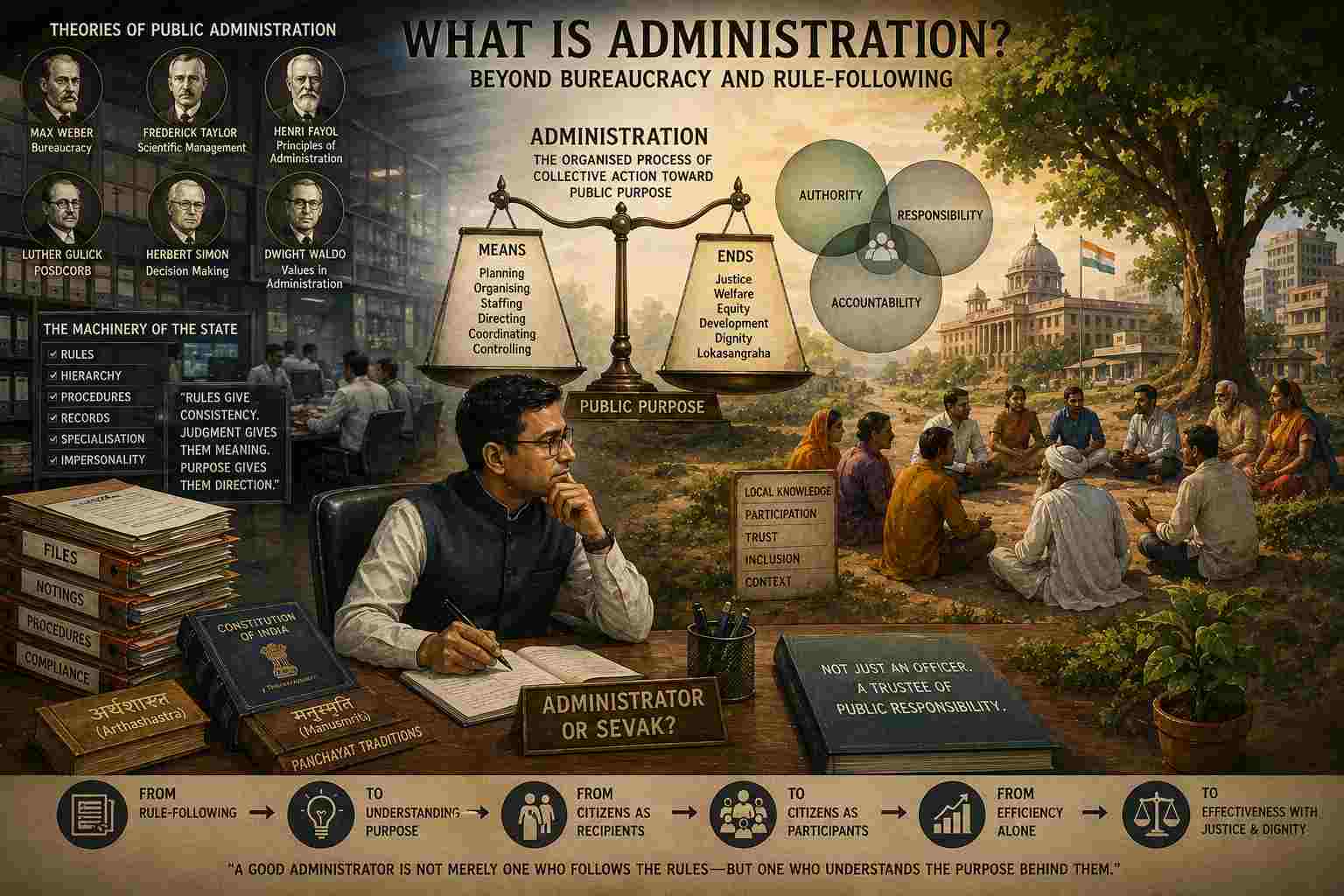
What Is Administration?
Administrative Drishti
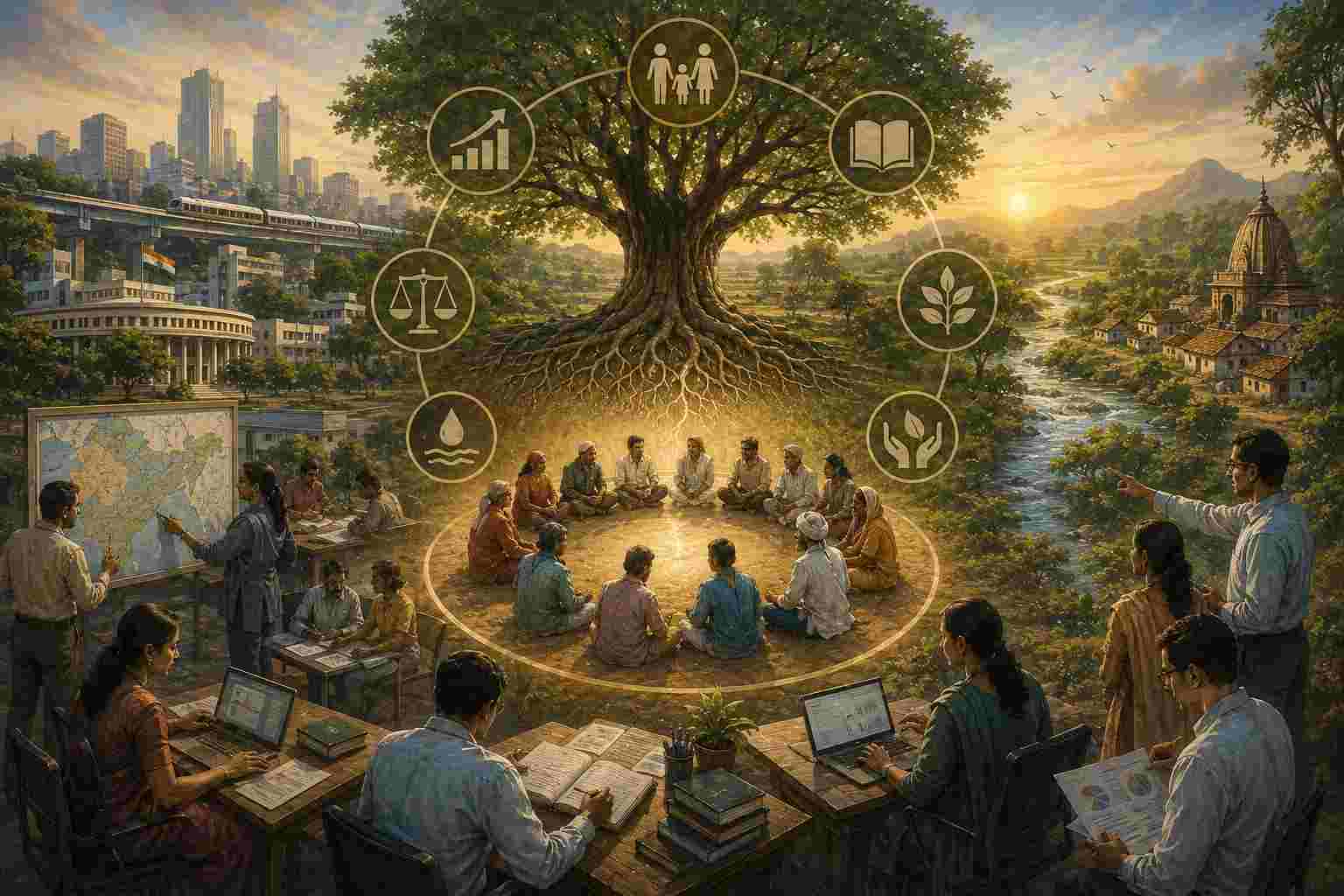
Lokakalyana: What Makes Administration Good?
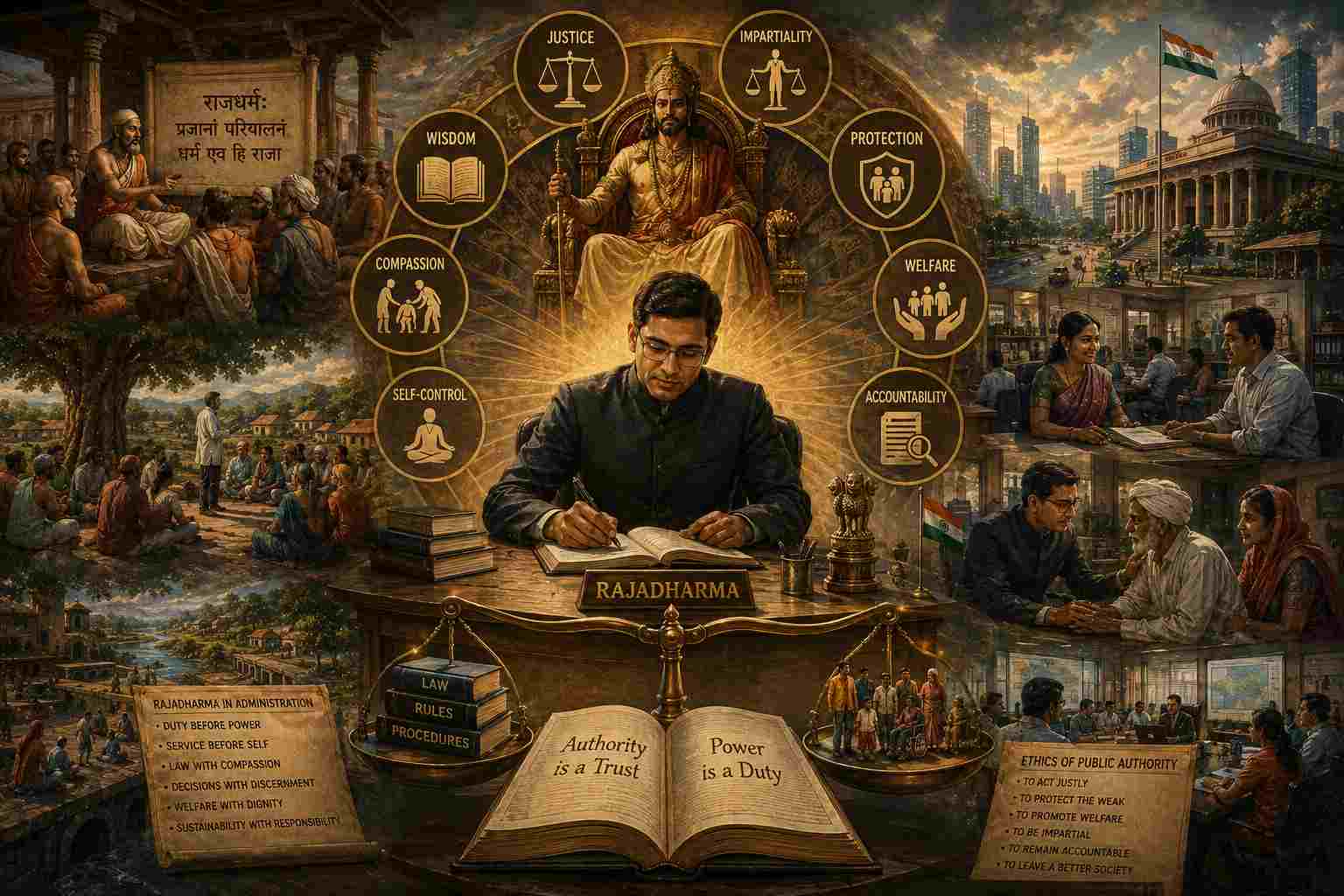
Rajadharma: The Ethics of Administration