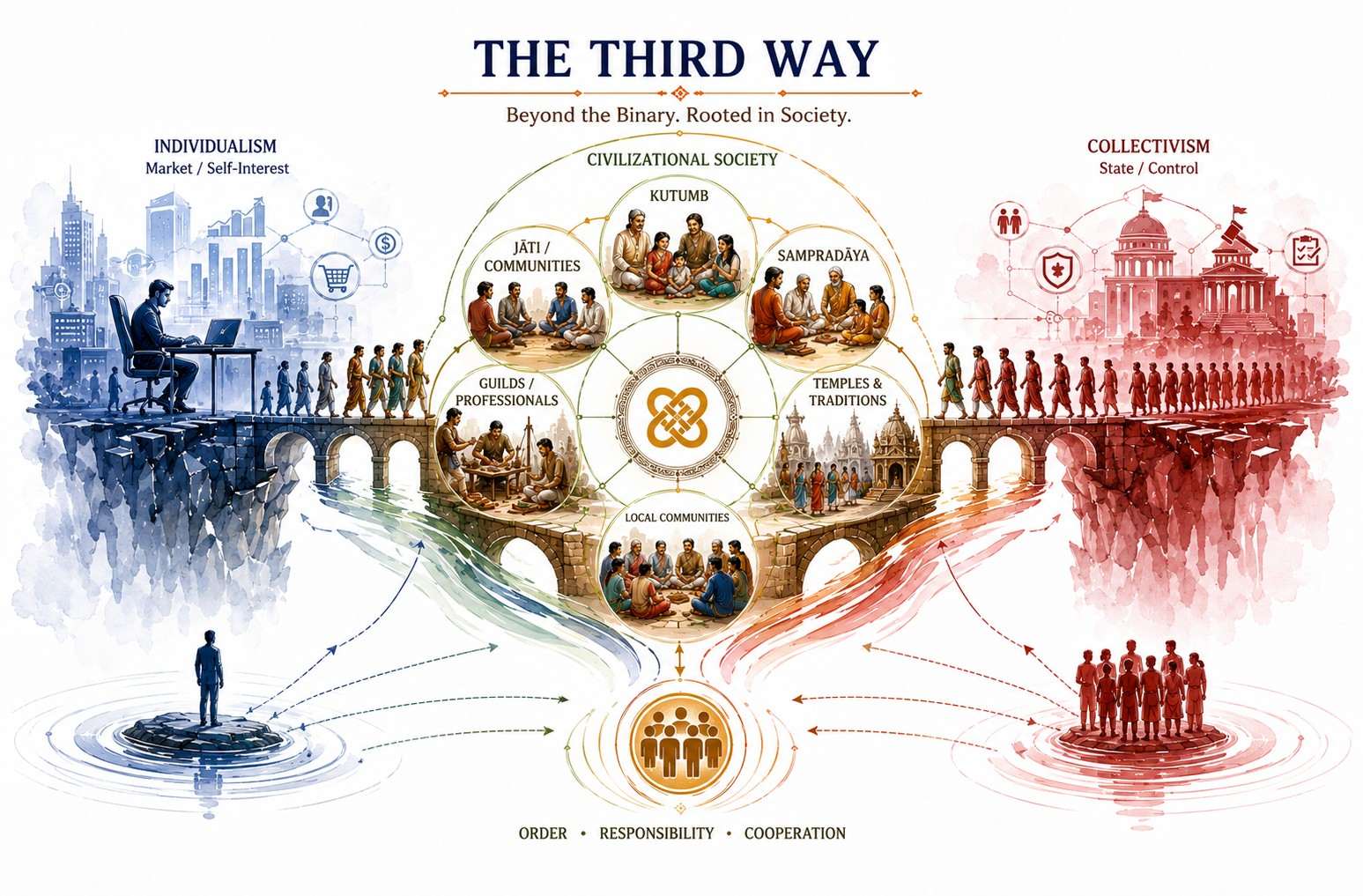
The Third Way recognizes that Indic society cannot be understood through the simple binary of individual versus collective, state versus market, or capitalism versus socialism. It operates through intermediate institutions—Kutumb, Jāti, Sampradāya, guilds, temples and local communities—which historically organized economic, social and cultural life. The individual was neither completely isolated nor absorbed by the state. Society possessed its own autonomous institutions and obligations. This creates a third analytical space between individualism and collectivism: the sphere of civilizational society. The Third Way therefore studies how social institutions can generate order, responsibility and cooperation without complete dependence on either state power or individual self-interest.
The Third Way
The Third Way
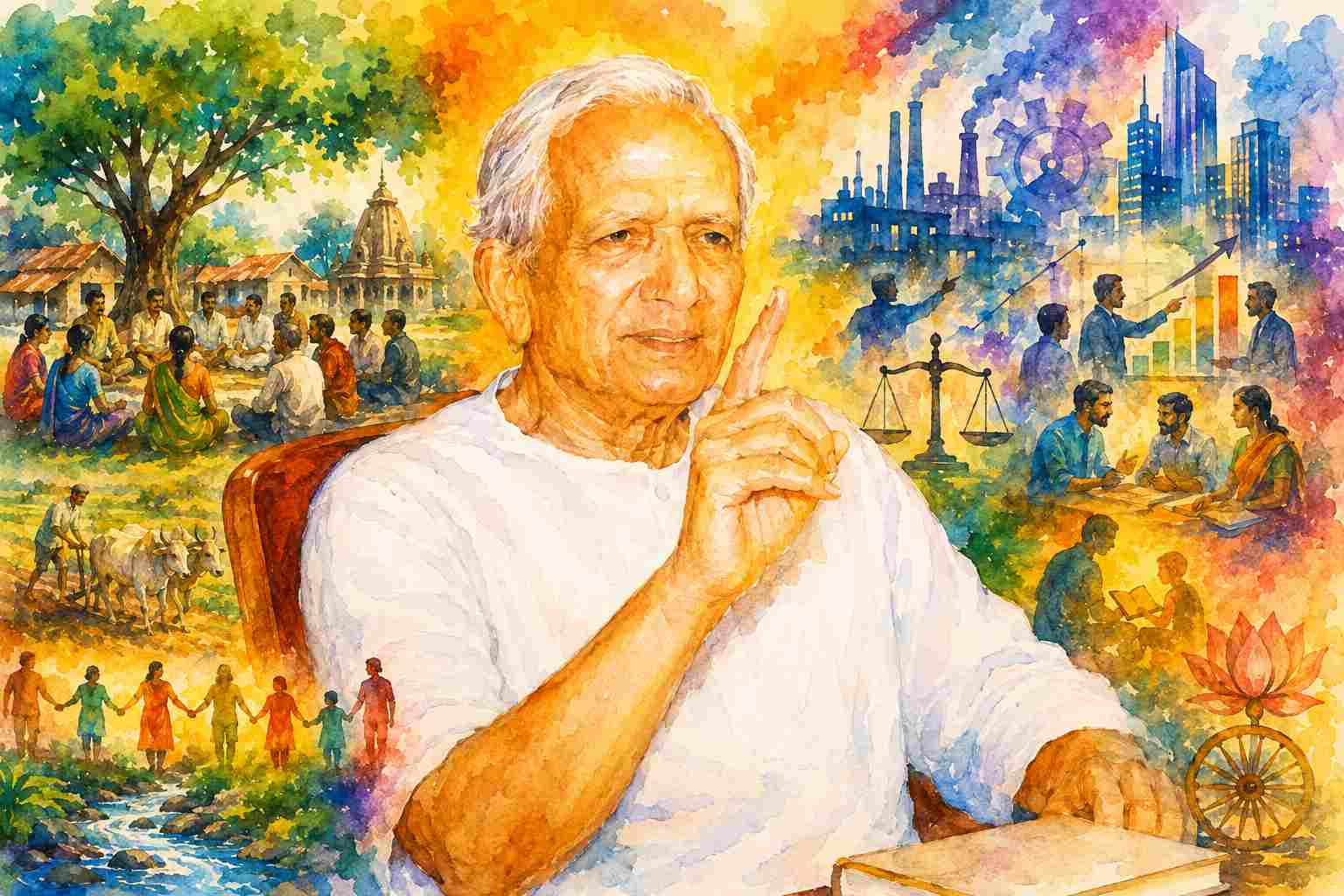
Dattopant Thengadi ji and ‘The Third Way’
Dattopant Thengadi ji and ‘The Third Way’
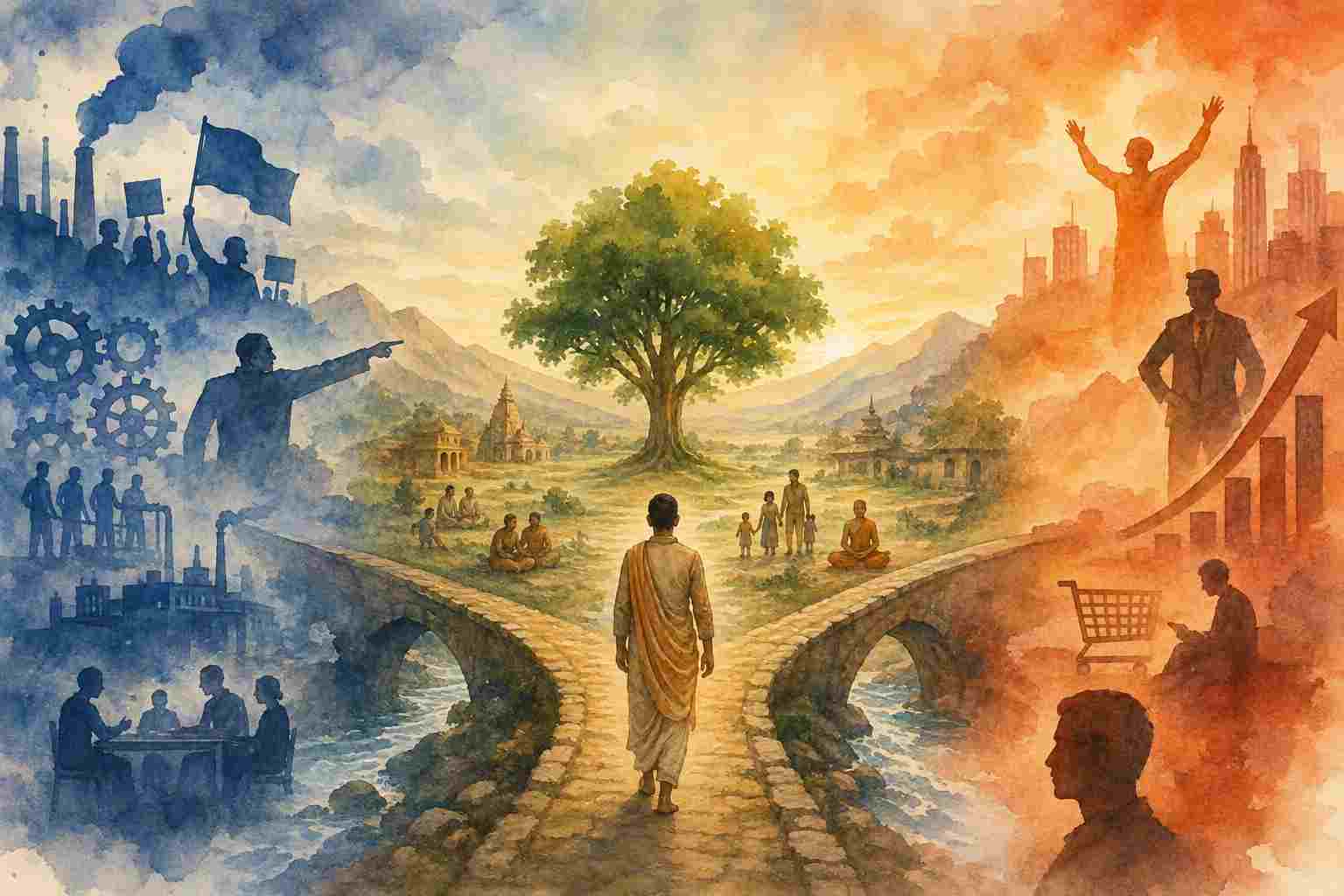
6. The Third Way – Beyond the Binaries: An Introduction
6. The Third Way – Beyond the Binaries: An Introduction
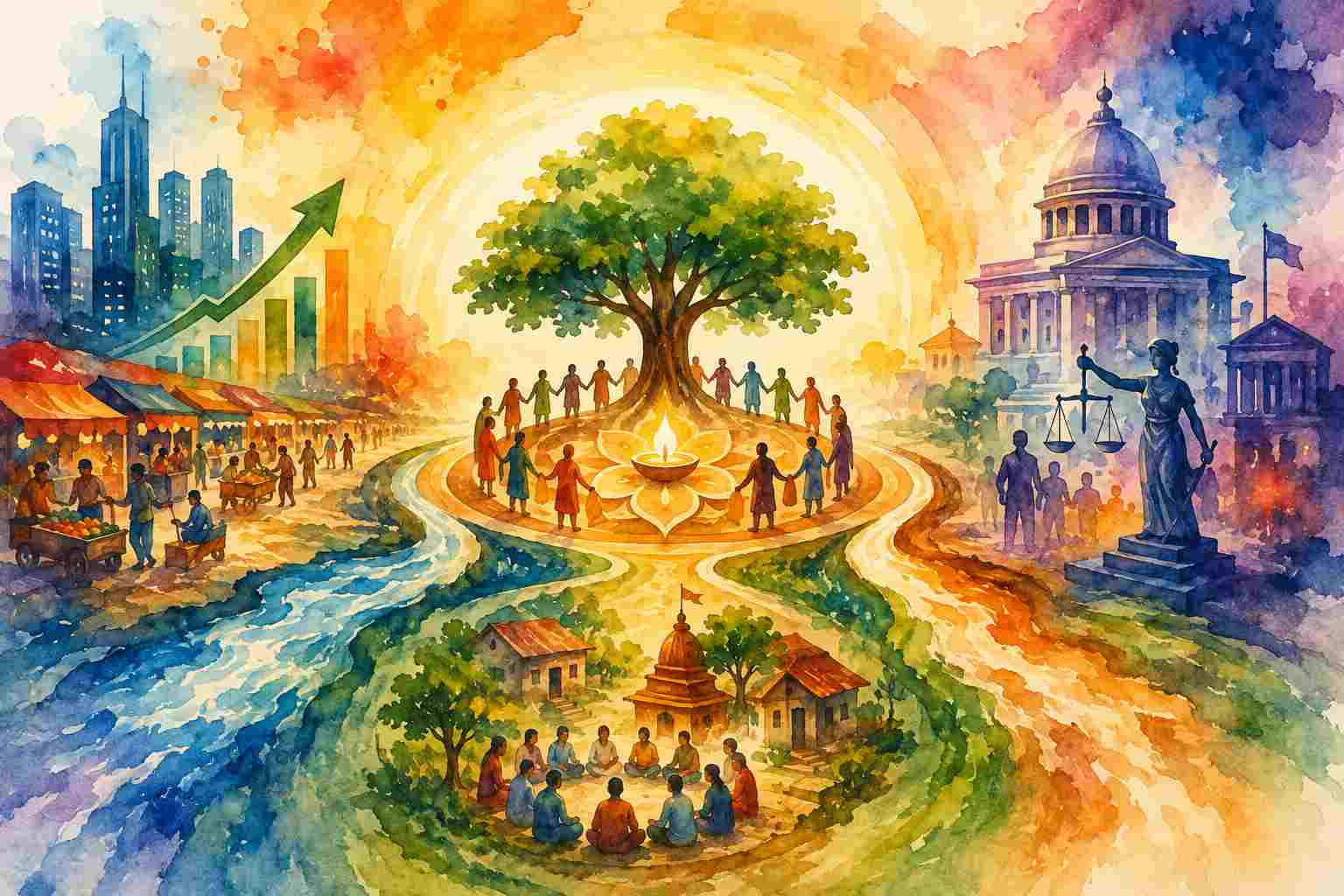
The Indic Third Way: Reimagining Economy, Society and Governance Beyond Ideological Binaries
The Indic Third Way: Reimagining Economy, Society and Governance Beyond Ideological Binaries
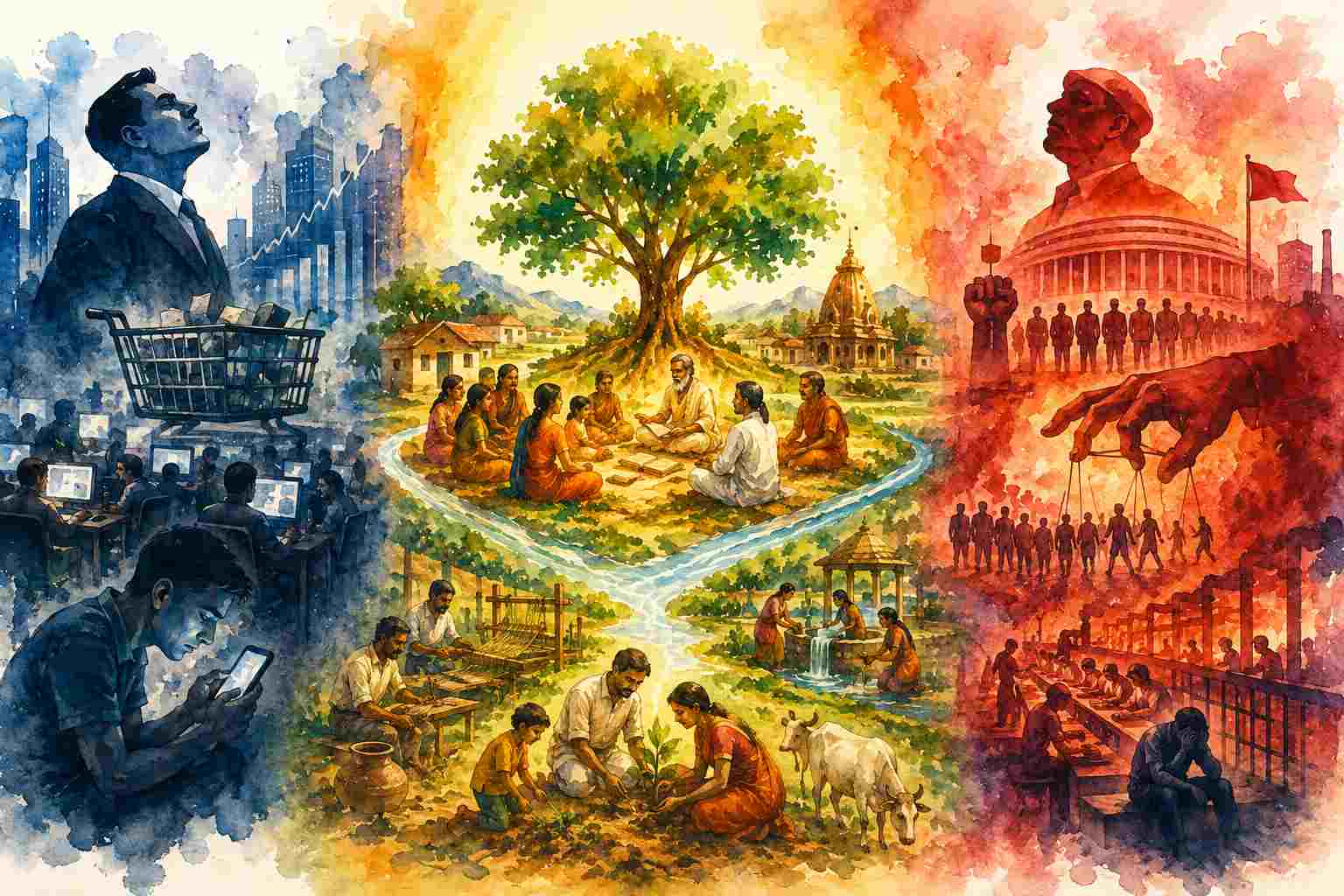
Beyond Rights and Equality: Dharma as an Alternative Organizing Principle
Beyond Rights and Equality: Dharma as an Alternative Organizing Principle
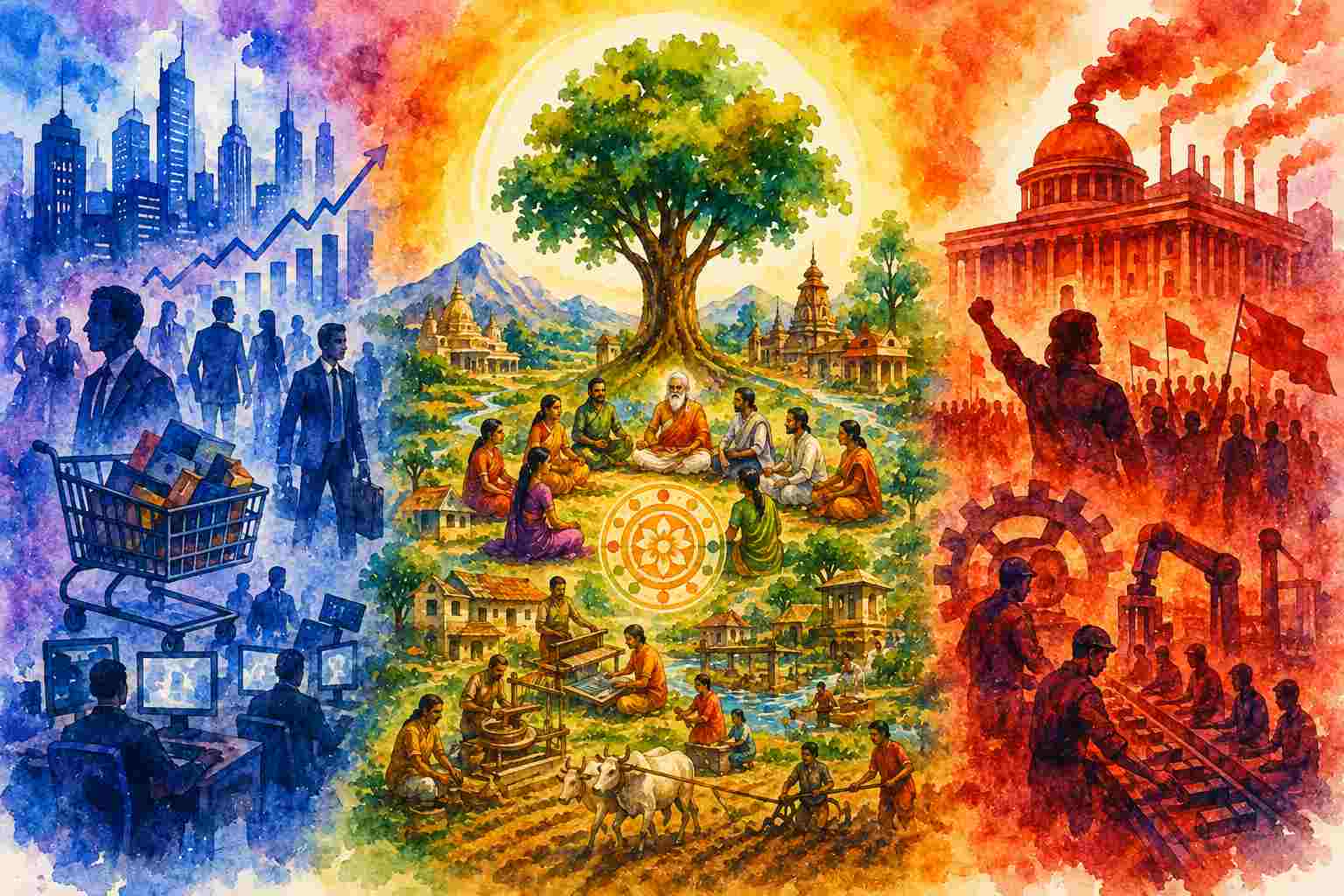
Beyond Left and Right: Why Indic Civilization Defies Modern Political Categories