Beyond the Modern Nation-State

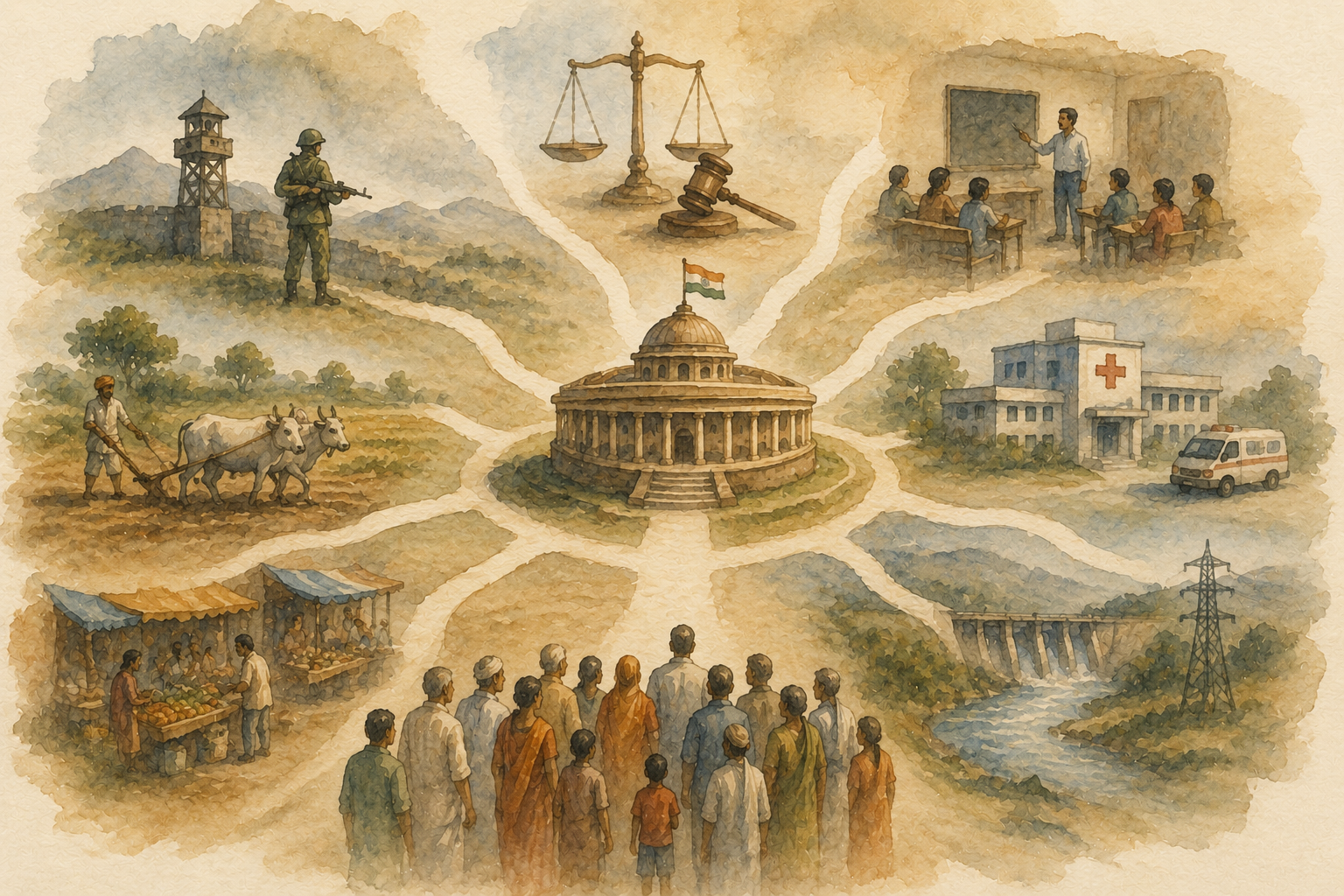
  • The modern state is often treated as the natural and universal unit of political analysis.
  • State, nation, rashtra, rajya and community are not necessarily the same thing.
  • How did the European experience shape the modern concept of the state?
  • What different forms of political organization existed in Bharat?
  • How did authority operate across the ruler, village, community and other institutions?

Central idea: The state is one form of political organization—not necessarily the only way human societies have organized collective life.

Sameer Pande

Sameer Pande is a political science researcher associated as a lecturer at the Centre for Indic Studies and serves as Chief Reviewer of JOSD (Journal of Sanatan Dharma). His primary academic focus is Dandanīti and its relevance to global social science frameworks. Working broadly across the social sciences, he engages with research methodology, Indian Knowledge Systems, and comparative civilizational perspectives. He is involved in teaching, curriculum development and has published multiple research papers on Indic political thought and governance.