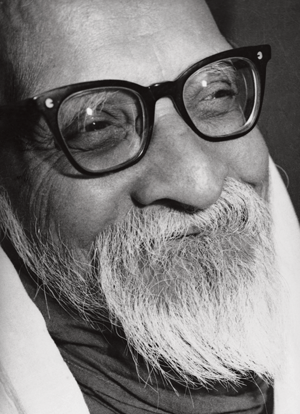
Who was Vinoba Bhave?
Acharya Vinoba Bhave was one of modern India’s foremost philosophers, social reformers, spiritual teachers, educationists, and practitioners of non-violent social transformation. Widely regarded as the spiritual successor of Mahatma Gandhi, Vinoba dedicated his life to translating Gandhian ideals into practical programmes for social justice, rural reconstruction, and ethical living. While Gandhi mobilized India for political freedom, Vinoba devoted himself to building the moral and social foundations of an independent nation.
Born as Vinayak Narahari Bhave on 11 September 1895 in Gagode, Maharashtra, he displayed an extraordinary inclination towards spirituality, Sanskrit learning, and the study of Indian scriptures from an early age. Deeply influenced by the Bhagavad Gita, the Upanishads, and the teachings of saints such as Jnaneshwar and Tukaram, he later joined Mahatma Gandhi’s Sabarmati Ashram in 1916, becoming one of Gandhi’s closest associates and one of the most respected intellectuals within the Gandhian movement.
Following India’s independence, Vinoba turned his attention from political struggle to the reconstruction of Indian society. In 1951, he initiated the historic Bhoodan (Land Gift) Movement, beginning in Pochampally, Telangana, where landowners voluntarily donated land for redistribution among the landless. What began as a single act of generosity evolved into one of the world’s largest voluntary land reform movements. Over the following decades, Vinoba walked more than 80,000 kilometres across India, inspiring the donation of millions of acres of land through persuasion rather than legislation or coercion.
His vision gradually expanded from Bhoodan to Gramdan (Village Gift), advocating that entire villages collectively assume responsibility for land, resources, and decision-making. Vinoba believed that lasting social harmony could not be achieved merely through legal reforms or state intervention; it required the voluntary transformation of human consciousness, guided by compassion, self-restraint, and a sense of shared responsibility.
An accomplished scholar of Sanskrit and comparative religion, Vinoba possessed remarkable command over numerous Indian languages and was equally at ease discussing the Vedas, the Upanishads, the Bhagavad Gita, Jain philosophy, Buddhism, Islam, Christianity, and modern social thought. His celebrated Talks on the Gita (Gita Pravachane) remains one of the most accessible and influential modern interpretations of the Bhagavad Gita, emphasizing Karma-Yoga, inner discipline, and selfless service.
Unlike many modern political thinkers, Vinoba developed a philosophy centered on Sarvodaya (the welfare of all), Lokniti (people-centered governance), Gram Swaraj, and spiritual democracy. He envisioned a decentralized society where moral authority emerged from self-discipline rather than coercive power, and where villages functioned as self-governing communities rooted in cooperation, simplicity, and social responsibility.
Awarded the Bharat Ratna posthumously in 1983, Vinoba Bhave remains one of India’s most original thinkers on non-violence, rural development, ethical economics, education, and the relationship between spirituality and social organization. His life demonstrated that profound social change could emerge through dialogue, trust, and voluntary action rather than conflict or compulsion.
Major Works
Vinoba Bhave’s writings encompass spirituality, philosophy, education, social reform, governance, and Gandhian thought. His principal works include:
- Talks on the Gita (Gita Pravachane)
- Swarajya Shastra
- The Essence of the Quran
- The Essence of the Upanishads
- The Essence of Christianity
- Bhoodan Yajna
- The Third Power (Lokniti)
- Thoughts on Education
- Vinoba Vani
- Collected Works of Vinoba Bhave
Areas of Thought
- Sarvodaya (Welfare of All)
- Bhoodan Movement
- Gramdan Movement
- Gram Swaraj
- Spiritual Democracy
- Decentralized Society
- Gandhian Philosophy
- Karma Yoga
- Social Harmony
- Rural Reconstruction
- Education and Character Formation
- Comparative Religion
- Non-violent Social Change
- Ethical Economics
- Community Self-Governance
Selected Quotations
On Love
“Love is the highest and strongest force in the world.”
On Service
“Service without humility becomes another form of domination.”
On Land
“The land belongs to God; man is only its trustee.”
A foundational principle of the Bhoodan Movement.
On Society
“The welfare of the individual lies in the welfare of all.”
Reflecting the central philosophy of Sarvodaya.
On Non-violence
“Non-violence is not merely the absence of violence; it is active goodwill towards all.”
On the Gita
“The Gita is not merely a book to be read but a life to be lived.”
From Talks on the Gita.
On Education
“Education should awaken both wisdom and compassion.”
On Freedom
“True freedom begins with self-discipline.”
On Simplicity
“Simple living is not poverty; it is freedom from unnecessary wants.”
On Leadership
“The leader is one who walks first, not one who commands from behind.”
On Democracy
“Politics should ultimately give way to Lokniti—the rule of awakened people rather than the rule of power.”
One of Vinoba’s most original contributions to political thought.
On Spirituality
“Religion is not for dividing humanity but for discovering its unity.”
Legacy
Vinoba Bhave transformed Gandhian ideals into a practical programme for rebuilding society after independence. Through the Bhoodan and Gramdan movements, he demonstrated that voluntary cooperation, moral persuasion, and community participation could become powerful instruments of social reform. His philosophy of Sarvodaya, Lokniti, and Gram Swaraj offered an alternative to both centralized state control and unrestrained individualism, envisioning a society grounded in ethical responsibility, decentralization, and spiritual democracy.
