Recovering the Constitutional Traditions of Ancient Bharat
A Short Biography
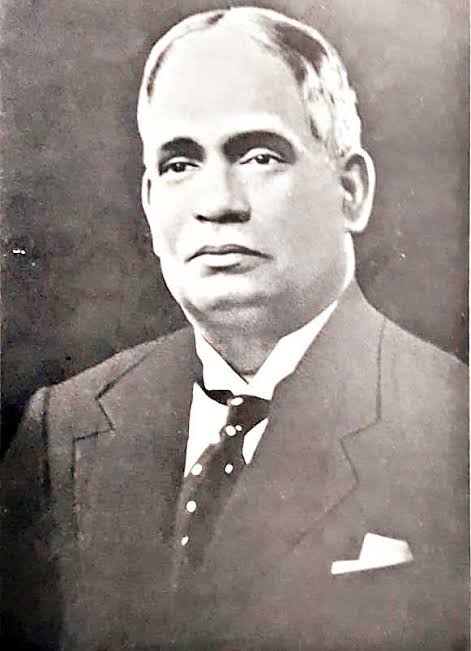
Kashi Prasad Jayaswal was a historian, lawyer, epigraphist and one of the most important figures in the early twentieth-century reconstruction of ancient Indian political history. Born in Mirzapur in 1881, he studied at Allahabad and later went to Oxford, where he pursued ancient Indian history before qualifying for the Bar. Returning to India, he practised law but increasingly devoted himself to historical research, archaeology, inscriptions and ancient Indian political institutions. He was closely associated with the Bihar and Orissa Research Society, founded in 1914, and played an important role in developing organised research into the history and culture of Bihar and ancient India. His political associations and nationalist commitments also brought him into conflict with the colonial establishment.
Jayaswal’s significance lies particularly in his attempt to reconstruct Indian political history from Indian sources themselves. His most influential work, Hindu Polity: A Constitutional History of India in Hindu Times, first published in the early twentieth century and subsequently expanded, examined Vedic assemblies, Sabha, Samiti, Gaṇa, Saṅgha, kingship, councils, Janapada, taxation and imperial organisation. His later History of India, 150 A.D. to 350 A.D. attempted to reconstruct a period that had often been treated as historically obscure, drawing upon literary, inscriptional, numismatic and other evidence.
What makes Jayaswal particularly relevant to Indic Cultural and Social Studies is the question he was trying to answer: was political organisation in ancient India really as despotic and institutionally undeveloped as colonial historiography frequently suggested, or did India possess its own constitutional traditions, representative institutions and forms of collective political decision-making?
Major Works
- Hindu Polity: A Constitutional History of India in Hindu Times
- History of India, 150 A.D. to 350 A.D.
- The Brahmanical Government in Ancient India
- Studies on ancient Indian inscriptions and chronology
- Research on the Hathigumpha and other inscriptions
- Numerous articles in the Journal of the Bihar and Orissa Research Society and Indian Antiquary.
Some Important Insights
“The sources of our information extend over the vast field of Hindu literature—Vedic, Classical and Prākrita and also the inscriptional and numismatic records of the country.”
— K. P. Jayaswal, Hindu Polity, Preface.
This sentence captures something fundamental about Jayaswal’s method. He did not want the political history of India to be reconstructed merely from the accounts of foreign travellers or from European interpretations of Indian society; he wanted to bring together Vedic and classical literature, Prākrit sources, inscriptions and coins, and reconstruct political institutions from the evidence available within the civilization itself.
For an Indic approach to Social Studies, this methodological instinct is important. Before asking whether an institution resembles a modern institution, we should first ask what evidence exists for the institution, what did it call itself, how did it function, and what political vocabulary did the people who participated in it use?
“The constitutional progress made by the Hindus has probably not been equalled, much less surpassed, by any polity of antiquity.”
— K. P. Jayaswal, Hindu Polity.
This is perhaps Jayaswal’s most famous and provocative claim, and it needs to be read in the context in which he was writing. Colonial political thought frequently represented India as a civilisation of despotism, incapable of constitutional or representative government. Jayaswal’s work challenged this assumption by examining Sabha, Samiti, Gaṇa, Saṅgha, councils and other political institutions, arguing that ancient India possessed sophisticated traditions of collective political organisation.
At the same time, this is precisely where contemporary researchers should read Jayaswal critically. His interpretation of ancient Indian republics sometimes pushed the evidence towards a modern conception of democracy, whereas later scholarship has pointed out that ancient gaṇas and saṅghas cannot simply be equated with modern universal democracy.
That distinction is important because recovering indigenous institutions does not require forcing them into modern categories. The more interesting question is perhaps not, “Was ancient India democratic in the modern sense?” but:
“What forms of collective decision-making, representation, consultation and political participation existed in ancient India, and how did they actually function?”
That is a much more productive research question.
“The test of a polity is its capacity to live and develop, and its contribution to the culture and happiness of humanity.”
— K. P. Jayaswal, Hindu Polity.
This is arguably more valuable today than his more provocative claims about the comparative superiority of ancient Indian constitutionalism. Jayaswal is suggesting that a political system should not be judged merely by its formal institutional structure, but by its capacity to sustain life, enable development and contribute to human flourishing.
That opens a civilizational question that goes well beyond the history of political institutions: what is the purpose of a polity? Is the success of a state simply its ability to collect revenue, maintain armies and control territory, or should political institutions ultimately be evaluated by the kind of society and human life they enable? For a Centre concerned with Indic Cultural and Social Studies, this is an especially fruitful question because it allows political institutions to be studied not in isolation, but in relation to Dharma, social order, prosperity, welfare and collective flourishing.
Jayaswal and the Indian Republics
Perhaps Jayaswal’s most lasting contribution was his systematic attention to India’s Gaṇa–Saṅgha traditions. Drawing upon Buddhist literature, Pāṇini, the Mahābhārata, the Arthaśāstra, Greek accounts, inscriptions and other sources, he argued that republican forms of political organisation existed in ancient India alongside monarchy. His work identified numerous republican communities and examined their assemblies, procedures and political structures.
This was intellectually significant because it disturbed a very convenient historical binary: Europe as the home of political liberty and Asia as the home of despotism.
Yet the deeper value of Jayaswal’s research is not simply that it gives us an ancient Indian “democracy” to celebrate. It is that it forces us to recognise that political modernity cannot be assumed to have one geographical origin.
The history of political institutions is more complicated than that.
Ancient societies experimented with monarchy, oligarchy, republics, assemblies, councils, federations and different combinations of these forms. India participated in this history in its own ways, using its own political vocabulary and institutional structures.
Reading Jayaswal
Jayaswal’s scholarship emerged during a period when Indian intellectuals were confronting a colonial narrative that frequently denied Indians a history of political self-government. His research therefore had an unmistakable nationalist dimension, and this sometimes influenced the extent to which he interpreted ancient institutions as evidence of constitutional progress. Later historians have criticised this tendency, particularly his treatment of ancient republics as almost equivalent to modern democratic institutions.
But this criticism should not lead us to dismiss him. Indeed, it gives us a more interesting way to read him.
Jayaswal’s greatest contribution may not be that every conclusion he reached was correct; it is that he changed the questions that could be asked about ancient Indian political history.
He demonstrated the importance of combining textual, epigraphic and numismatic evidence, challenged the assumption that ancient India lacked constitutional traditions, brought Gaṇa–Saṅgha institutions into serious historical discussion, and insisted that Indian political history had to be reconstructed through a much wider body of indigenous evidence. His work on the Nāga–Vākāṭaka period similarly challenged the tendency to treat the centuries between the Kushanas and Guptas as a mere historical “dark period.”
For researchers today, therefore, Jayaswal offers a particularly useful lesson:
Do not inherit the question merely because you inherited the textbook.
Ask what the sources actually contain. Ask what categories the historical actors themselves used. Ask whether the absence of a modern term means the absence of an institution. Ask whether an Indian political institution must resemble Athens, Rome, Westminster or Washington before it can be recognised as politically significant. And, perhaps most importantly, study the institution before assigning it a modern label.
That is why K. P. Jayaswal remains important to Indic Cultural and Social Studies. His work invites us to recover India’s political past not simply to prove that India had “democracy”, but to discover the many forms through which Indians historically imagined authority, consultation, representation, sovereignty, law, duty and collective political life.
His real legacy, then, is not merely the claim that ancient India possessed republics. It is the much larger proposition that Indian political thought and institutions deserve to be studied on their own historical and conceptual terms before they are measured against someone else’s political experience.
