A Short Biography
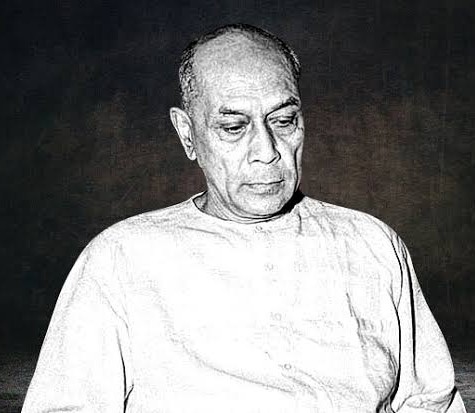
Nirmal Kumar Bose was among the most important Indian anthropologists of the twentieth century, but to describe him simply as an anthropologist would miss the larger intellectual journey of his life. Born in 1901, Bose combined academic anthropology with archaeology, geography, architecture, social reconstruction and the study of Indian civilization, and his intellectual trajectory was deeply influenced by Mahatma Gandhi. During the 1930s he left his university career to participate in the freedom movement and later became closely associated with Gandhi, serving as his secretary during 1946–47, including during Gandhi’s peace mission in Noakhali. He subsequently served as Director of the Anthropological Survey of India and held important responsibilities concerning tribal affairs and Scheduled Castes and Scheduled Tribes.
What makes Bose particularly significant for Indic Cultural and Social Studies is his refusal to confine Indian society within a single disciplinary boundary. His work moved between anthropology, culture, tribal life, architecture, caste, village society, nationalism and civilization, and he repeatedly attempted to understand the relationships connecting India’s extraordinary diversity.
Major Works
- Cultural Anthropology (1929)
- The Structure of Indian Society (1949)
- Peasant Life in India (1961)
- Culture and Society in India (1967)
- Problems of National Integration (1967)
- Gandhi in Indian Politics (1967)
- The Structure of Hindu Society (1975)
- My Days with Gandhi (1953)
- “The Hindu Method of Tribal Absorption” (1941; later included in Culture and Society in India)
Some of His Important Insights
“Today the problem of establishing democratic society in India has become a pressing one.”
Bose immediately connected this political question with the need to understand the actual structure of Indian society, arguing that differences among social groups had to be scientifically studied before the country could build a genuinely unified political community. This is from his 1941 Indian Science Congress lecture, “The Hindu Method of Tribal Absorption,” later reproduced in Culture and Society in India (1953/1967 editions).
What is important here is the sequence of Bose’s reasoning: understand society first, then attempt social and political reconstruction. This is remarkably relevant to contemporary Social Studies, where political categories are sometimes imposed upon society before the society itself has been adequately understood.
“The same jati may be found practising many different trades if it finds the prescribed hereditary occupations no longer economically satisfactory.”
— Nirmal Kumar Bose, “The Hindu Method of Tribal Absorption,” originally presented at the Indian Science Congress, 1941; reproduced in Culture and Society in India.
This observation is particularly interesting because Bose was not describing society as completely static. His field observations led him to examine how occupational groups could respond when inherited economic arrangements became unsuitable, thereby drawing attention to adaptation within social structure rather than simply assuming that traditional institutions were frozen systems.
“One person, two persons, one family, two families came into contact with their Hindu neighbours; and in course of time became attached to the Hindu economic system, and then were absorbed partially within the social fold also.”
— Nirmal Kumar Bose, discussion of tribal-Hindu cultural contact, associated with his work on the Juang and his formulation of the “Hindu Method of Tribal Absorption.”
This passage captures one of Bose’s most important anthropological observations: social integration could occur through slow, local and everyday interaction, rather than necessarily through a single political act or formal conversion. He observed processes through which economic relations, cultural practices, religious traditions and social relationships gradually interacted.
At the same time, this is an area where Bose’s work must be read critically rather than canonised. Later anthropologists have questioned the empirical basis and conceptual assumptions of his “Hindu Method of Tribal Absorption,” particularly because much of the original formulation drew upon relatively limited fieldwork among the Juang. This makes Bose even more valuable for a research-oriented platform: an intellectual tradition becomes stronger when its thinkers can be read, appreciated, challenged and re-examined rather than simply celebrated.
Why Nirmal Kumar Bose Matters for Indic Cultural and Social Studies
Bose offers an important methodological possibility for the study of Indian society: the civilizational cannot be separated completely from the empirical. One can study villages, tribes, occupations, temples, festivals, architecture and communities through fieldwork while still asking what larger patterns of Indian civilization connect them. His Culture and Society in India, for instance, moved across geographical regions, culture zones, history, temples, festivals, occupations, tribal communities and social institutions rather than treating each as an isolated object of study.
This is precisely where Bose becomes relevant to the Centre’s project. He reminds us that the study of Bharat requires both close observation and a larger civilizational imagination. His anthropology attempted to understand unity without reducing diversity to uniformity, while his engagement with Gandhi demonstrated that scholarship for him was not entirely detached from questions of social reconstruction. IGNCA’s assessment is particularly revealing: Bose used anthropology to demonstrate India’s unity in the diversity of its cultures, while remaining deeply concerned with social reconstruction rather than merely constructing abstract sociological theories.
For researchers today, Bose therefore offers neither a finished theory nor an unquestionable model. He offers something perhaps more useful: a way of asking how India’s cultural diversity, social institutions and civilizational unity interact in actual lived society. His work invites us to enter the field, examine the institution, listen to the community, study the historical process, and then ask the larger civilizational question—what holds together a society that is so diverse, and how does that unity change over time?
That question remains open, and that is precisely why Nirmal Kumar Bose remains worth reading.
