
The Yajña Model explains society through the principle of participatory interdependence. Yajña is not merely ritual worship; it represents three simultaneous processes: Sangatikaraṇa, Maitrikaraṇa and Devapūjana. Sangatikaraṇa brings individuals together into collective action. Maitrikaraṇa transforms coexistence into cooperation and mutual obligation. Devapūjana places this collective activity within a larger order of values, ideals and the sacred. Society, therefore, is not sustained merely through contracts or institutions. It survives when individuals come together, establish reciprocal relationships and recognize responsibilities greater than personal interest. The Yajña Model thus understands social life as continuous participation, cooperation and contribution.
Yajna Model
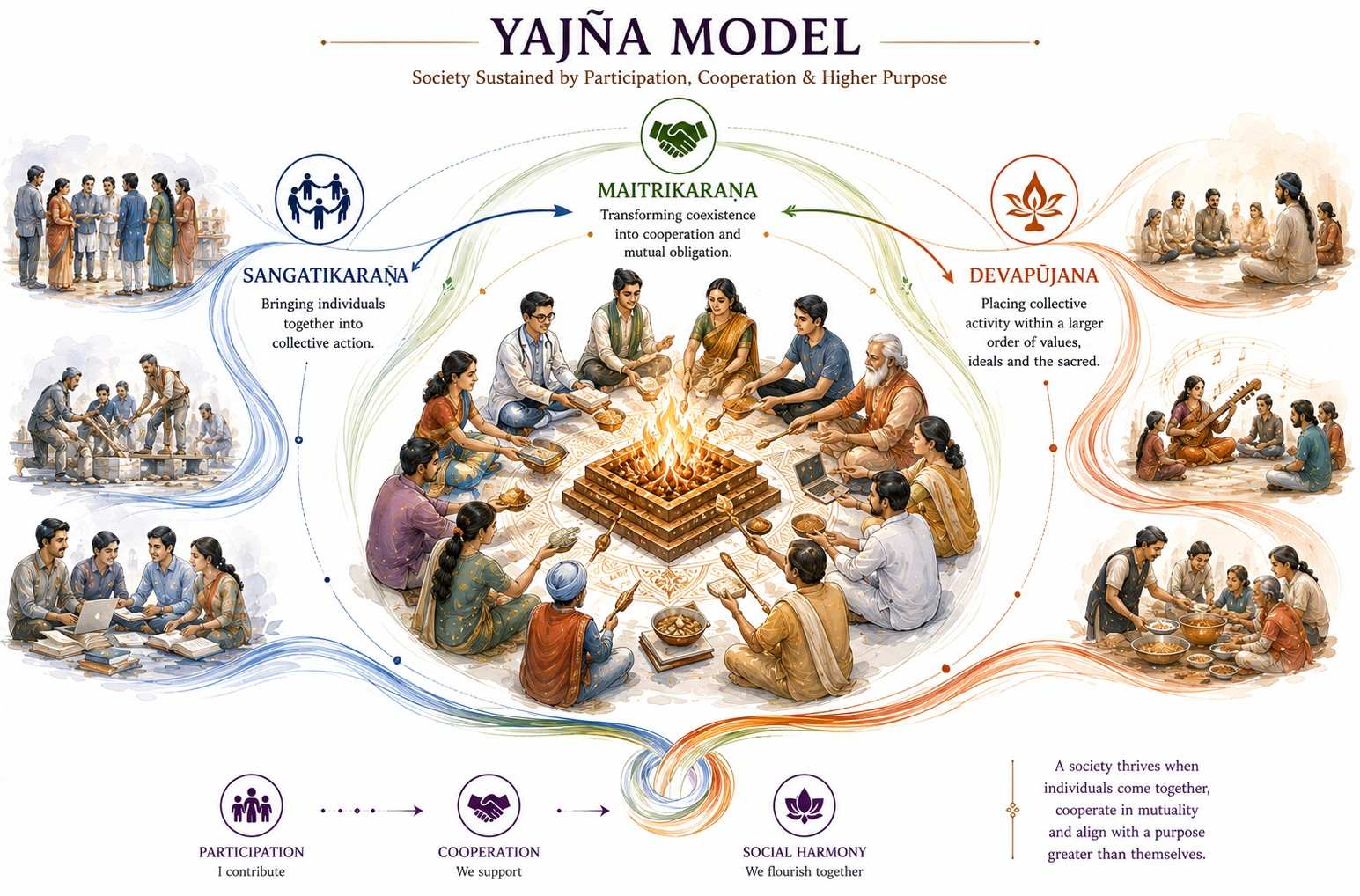
Yajna Model of Society Harmony
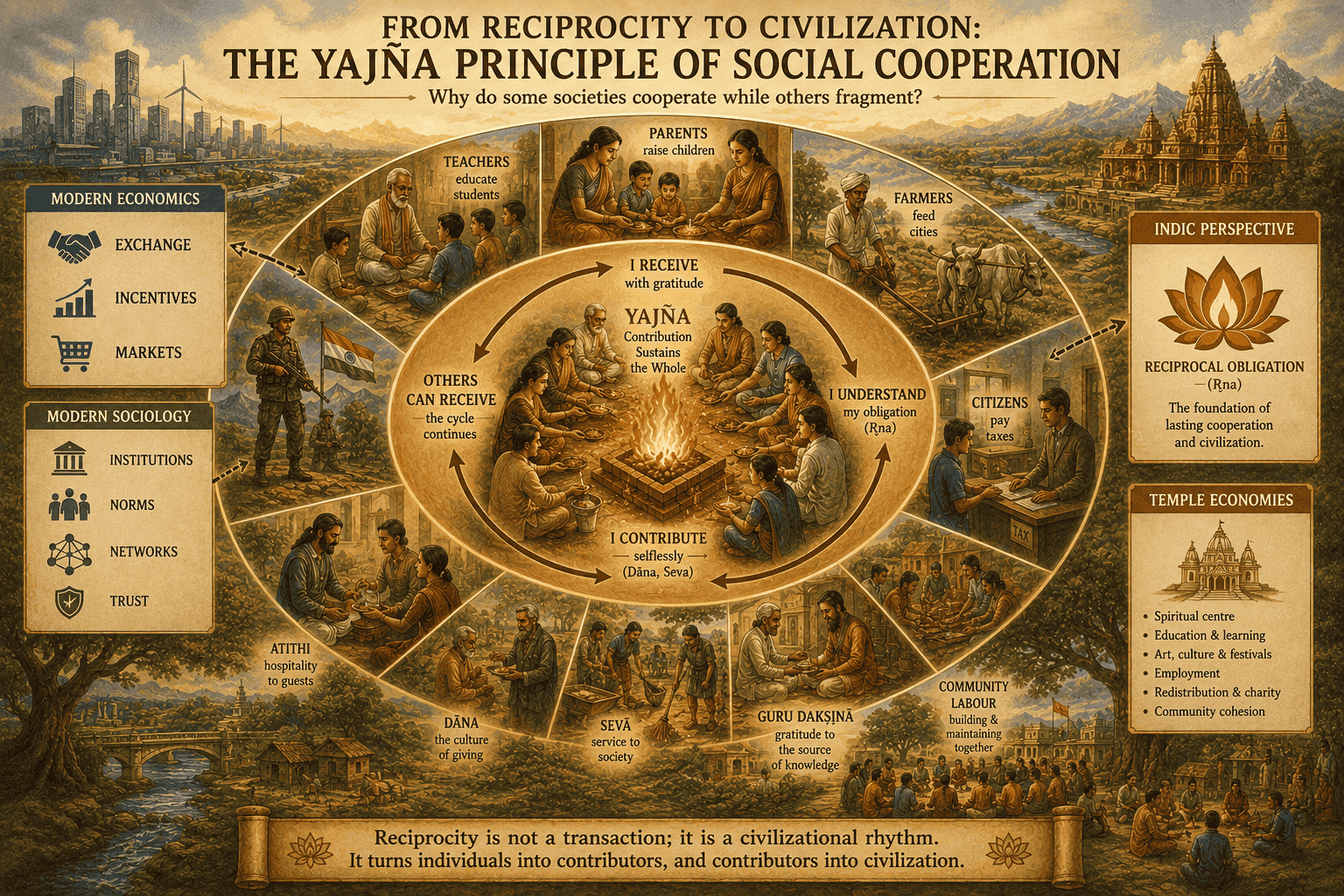
2. Yajna Model of Social Harmony: An Introduction
2. Yajna Model of Social Harmony: An Introduction
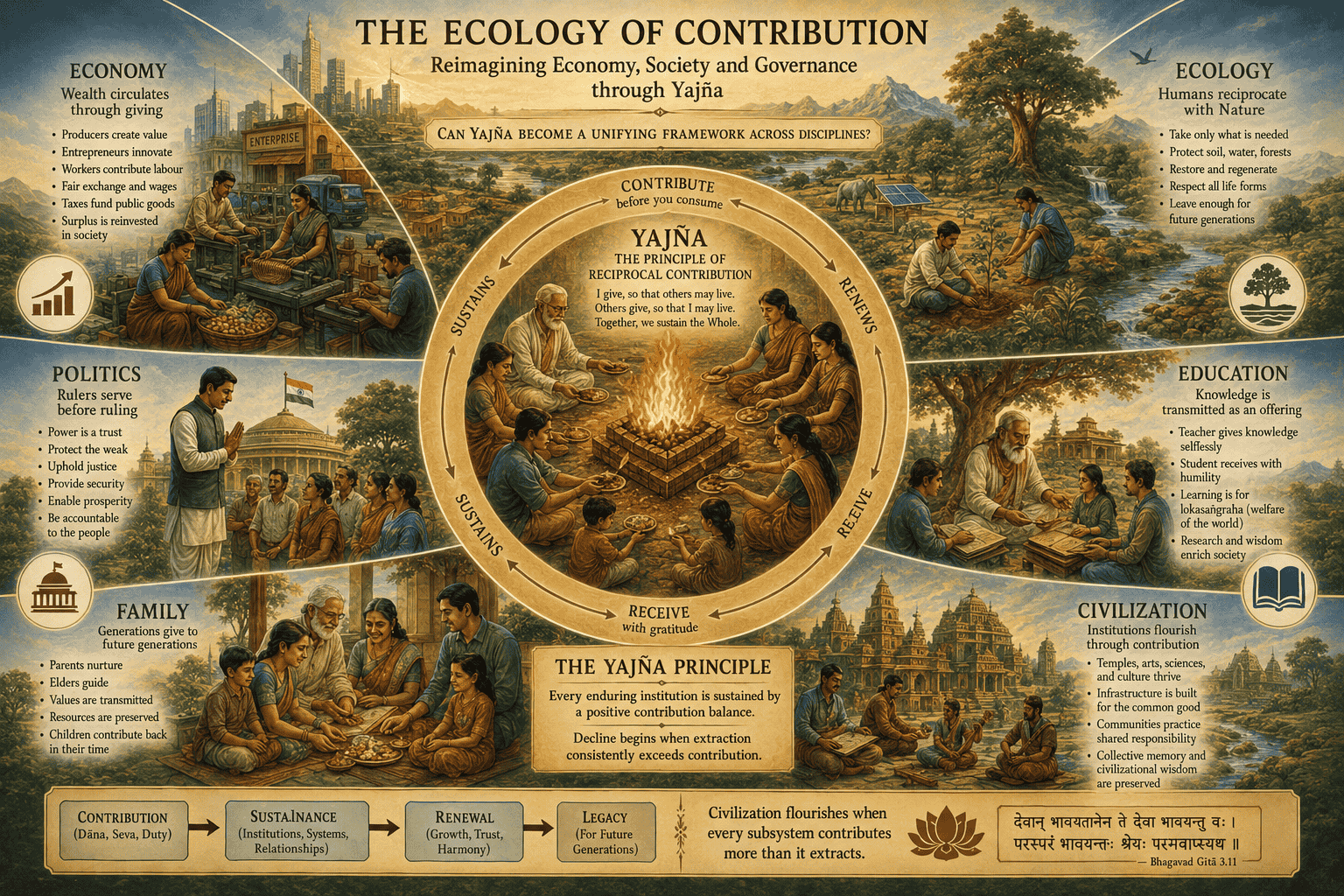
The Ecology of Contribution: Reimagining Economy, Society and Governance through Yajña
The Ecology of Contribution: Reimagining Economy, Society and Governance through Yajña
From Reciprocity to Civilization: The Yajña Principle of Social Cooperation
From Reciprocity to Civilization: The Yajña Principle of Social Cooperation
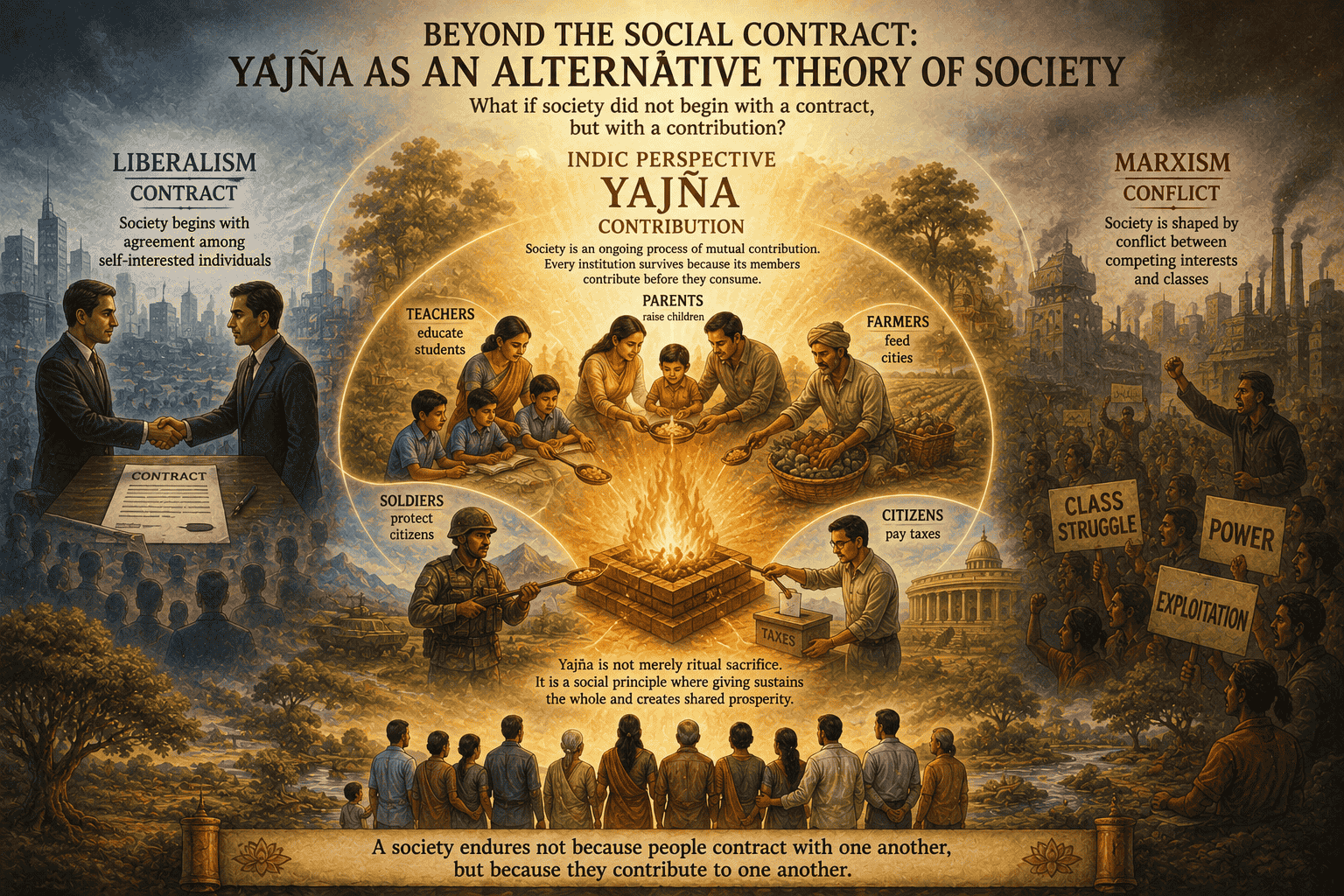
Beyond the Social Contract: Yajña as an Alternative Theory of Society