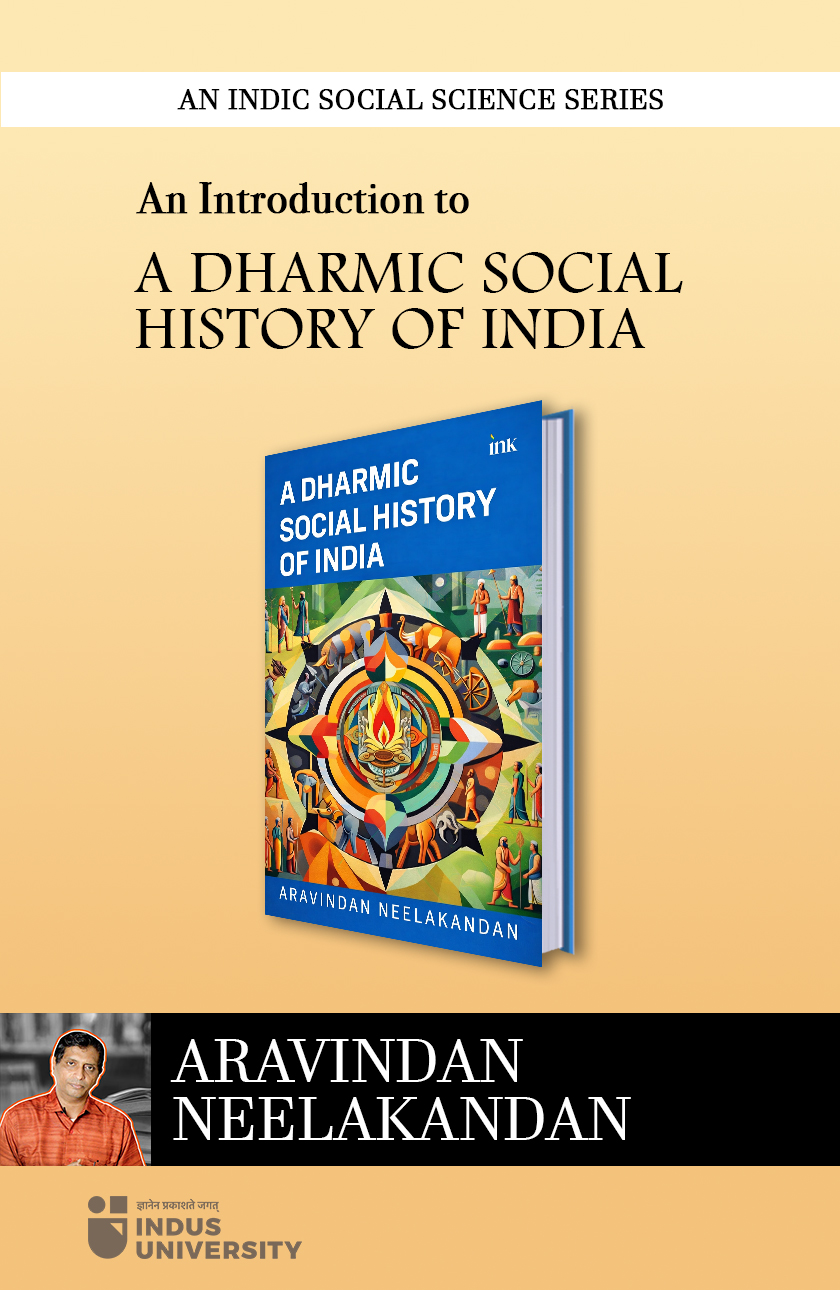
An Introduction to “A Dharmic Social History of India” | Indic Social Science Series
Series: An Indic Social Science Series
Published by: Centre for Indic Cultural and Social Studies, Indus University
Author (Original Work): Aravindan Neelakandan
Book Review by: Dr. Ritendra Sharma
Access: Open Educational Resource / Free Academic Publication (Non-Commercial)
About the Booklet
As part of the Indic Social Studies Series published by Indus University, this educational booklet serves as a foundational guide to understanding A Dharmic Social History of India by renowned author Aravindan Neelakandan.
Designed strictly for educational, academic, and non-commercial dissemination, this publication offers students, scholars, and interested readers a structured introduction to alternative, indigenous frameworks in Indian social science.
What’s Inside This Booklet?
This open educational resource brings together two crucial analytical components:
-
The Concluding Chapter of A Dharmic Social History of India:
Gain direct access to the final synthesis of Aravindan Neelakandan’s landmark work. This section encapsulates the core thesis, key insights, and overarching conclusions regarding how Dharmic values, social structures, and cultural continuities have shaped Indian history.
-
Critical Book Review by Dr. Ritendra Sharma:
An in-depth academic critique and commentary by Dr. Ritendra Sharma. This review contextualizes the book’s contributions within the broader landscape of Indian social history, highlighting its methodologies, historiographical significance, and value for modern Indic research.
Primary Goals:
-
Promote Indic Historiography: Introduce researchers and students to indigenous perspectives on Indian social evolution and sociology.
-
Encourage Academic Discourse: Provide accessible critical tools, reviews, and summaries for classroom discussions and study groups.
-
Support Open Access Knowledge: Offer key scholarly excerpts to make foundational texts in Indic social science widely accessible to researchers worldwide.
Key Topics Covered
-
Indic Social Science: Re-evaluating Indian societal structures through an indigenous lens.
-
Dharmic Historiography: Understanding historical evolution through core Dharmic principles rather than imported colonial frameworks.
-
Sociological Continuity: Exploring traditional institutions, knowledge systems, and social history across India.
