Reconstructing Indian Society Through Institutions, Education and Social History
A Short Biography
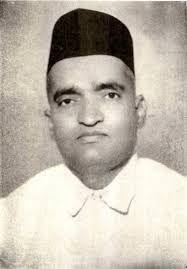
Anant Sadashiv Altekar was a historian, archaeologist and numismatist whose scholarship made an important contribution to the study of ancient and early medieval Indian society. Born in Maharashtra in 1898, he taught Ancient Indian History and Culture at Banaras Hindu University and later served as University Professor at Patna University and Director of the Kashi Prasad Jayaswal Research Institute. He was also closely associated with the development of Indian numismatic studies and became the first chairman of the Numismatic Society of India in 1947. His scholarship moved beyond dynastic history towards the study of institutions and social life, particularly education, women, village communities, government and political organisation.
What makes Altekar particularly relevant to Indic Cultural and Social Studies is the breadth of his attempt to reconstruct Indian civilisation. His Education in Ancient India examined education through Sanskrit and Buddhist literature, inscriptions, archaeological evidence and accounts of foreign travellers, while The Position of Women in Hindu Civilization attempted to trace women’s position across several thousand years through Vedic, Epic, Jain, Buddhist, Smṛti and classical Sanskrit literature, as well as sculptures and paintings. His State and Government in Ancient India, History of Village Communities in Western India, The Vakataka-Gupta Age, The Rāṣṭrakūṭas and Their Times and his works on Gupta coinage further demonstrate his interest in reconstructing Indian history through institutions, material evidence and social structures rather than through rulers alone.
Major Works
- History of Village Communities in Western India (1927)
- Education in Ancient India (1934)
- The Position of Women in Hindu Civilization (1938)
- Benares, Past and Present (1937)
- The Rāṣṭrakūṭas and Their Times
- State and Government in Ancient India (1949)
- The Vakataka-Gupta Age
- Studies on Gupta coinage and Indian numismatics.
Some Important Insights
“The real history of India consists of the history of its village communities.”
— A. S. Altekar, History of Village Communities in Western India (1927).
This is perhaps one of the most useful statements for a civilizational approach to Indian history. Altekar was drawing attention away from the conventional dynastic narrative towards the institutions through which ordinary social life was organised. His argument was that dynasties came and went, whereas village communities could preserve social practices, institutions and cultural traditions across political changes. Later scholarship has rightly questioned the older image of the Indian village as completely static and self-sufficient, but the larger methodological proposition remains valuable: if we want to understand civilizational continuity, we must study the institutions beneath political history.
“Our education enabled us to do this for several centuries.”
Altekar’s larger argument was that the purpose of education was not exhausted by individual advancement; education also played a role in preserving and expanding cultural inheritance. In Education in Ancient India, he argues that ancient Indian education was closely connected with the preservation of culture and the preparation of individuals for their social responsibilities.
This becomes particularly significant when education is viewed from a civilizational perspective. A civilization does not merely possess knowledge; it requires institutions capable of reproducing knowledge across generations. Altekar’s study therefore allows us to examine education not simply as a pedagogical institution but as one of the mechanisms through which civilization maintains intellectual continuity.
“Ancient Indians held that the individual exists more for society than vice versa.”
— A. S. Altekar, Education in Ancient India.
Altekar uses this observation while comparing the aims of ancient Indian education with those of other civilizational traditions. His point is that education was expected to acquaint the individual with the culture of the community and prepare the person for participation in social life, rather than treating education merely as an instrument of individual advancement.
For contemporary researchers, this opens an important question: what is education for? Is education primarily a means of producing employable individuals, or does it also transmit a society’s understanding of responsibility, character, culture and collective life? This is precisely the kind of question that makes Altekar relevant beyond the history of education.
“One of the best ways to understand the spirit of a civilisation and to appreciate its excellences and realise its limitations is to study the history of the position and status of women in it.”
— A. S. Altekar, The Position of Women in Hindu Civilization, Chapter I.
This may be one of Altekar’s most methodologically significant propositions. Rather than treating the position of women as a narrow social-history subject, he uses it as a window into the character of an entire civilization. He examines childhood, education, marriage, widowhood, public life, religious participation, property rights, social attitudes and changes across historical periods.
There is an important intellectual lesson here: a civilization should be judged not only by its monuments and philosophical achievements, but also by the actual social arrangements through which people lived. This makes the study of women a civilizational question rather than merely a demographic or gender question.
Reading Altekar
Why Altekar deserves to be read today. A thinker does not become valuable because every conclusion remains correct; he becomes valuable when his questions, evidence and arguments continue to give researchers something to investigate. Altekar collected sources, reconstructed institutions, made comparative arguments and attempted to understand Indian civilisation through the structures of everyday life. Some of his interpretations require revision, some require qualification, and some remain remarkably suggestive.
For Indic Cultural and Social Studies, his enduring contribution lies in this methodological instinct: Do not study Indian civilisation only through its rulers; study the institutions through which society actually lived. Study the village, the school, the family, women’s position, systems of government, economic arrangements, educational practices, inscriptions, coins and material culture, and then ask what these reveal about the larger civilisation.
In that sense, Altekar helps us move from the question “Who ruled India?” towards a much more consequential question: “How was Indian society organised, how did its institutions function, and how did they change across centuries?” That is a question with which Civilizational Studies can still do a great deal of work.
