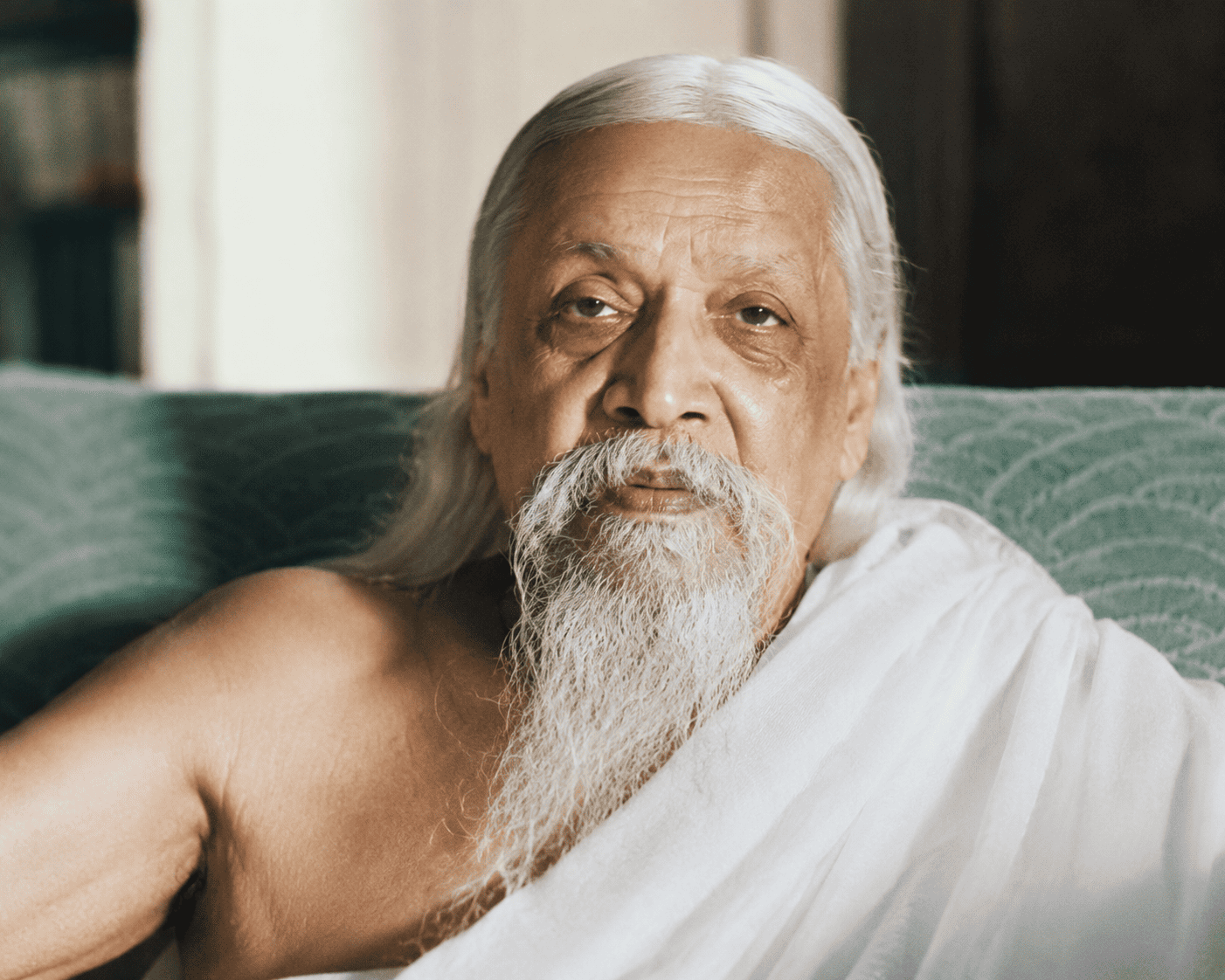
Who was Sri Aurobindo?
Sri Aurobindo (Aurobindo Ghose) was one of modern India’s foremost philosophers, yogis, poets, nationalist leaders, educationists, and civilizational thinkers. Born in Calcutta on 15 August 1872, he received his early education in England at St. Paul’s School and King’s College, Cambridge. After returning to India, he joined the Baroda State Service before emerging as one of the principal leaders of India’s early freedom movement.
Following the Alipore Bomb Case (1908–09), Sri Aurobindo gradually withdrew from active politics and settled in Pondicherry, where he devoted the remaining four decades of his life to spiritual practice, philosophical inquiry, and literary creation. Together with The Mother (Mirra Alfassa), he developed the philosophy of Integral Yoga, which sought not merely individual liberation but the transformation of human consciousness and earthly life.
His writings encompass philosophy, psychology, political thought, education, literature, Vedic interpretation, social evolution, and Indian civilization. Today he is regarded as one of the most original thinkers of the twentieth century, whose work attempted to reconcile ancient spiritual wisdom with the future evolution of humanity.
Major Works
Some of Sri Aurobindo’s most influential works include:
- The Life Divine – his magnum opus on philosophy and evolution.
- The Synthesis of Yoga – a comprehensive exposition of Integral Yoga.
- Essays on the Gita – interpretation of the Bhagavad Gita.
- The Secret of the Veda – reinterpretation of the Vedas.
- The Upanishads
- The Foundations of Indian Culture
- The Human Cycle
- The Ideal of Human Unity
- War and Self-Determination
- The Future Poetry
- The Renaissance in India
- The Hour of God
- Letters on Yoga
- Savitri: A Legend and a Symbol (his epic poem of nearly 24,000 lines)
- Bande Mataram (political writings)
- Karmayogin (political writings and speeches)
- Early Cultural Writings
Selected Quotes
————–
On Education
“The first principle of true teaching is that nothing can be taught.”
Source: A System of National Education, in Early Cultural Writings (Complete Works of Sri Aurobindo, Vol. 1).
“The mind has to be consulted in its own growth.”
Source: A System of National Education.
————–
On Yoga
“All life is Yoga.”
Source: The Synthesis of Yoga.
————–
On India
“India cannot perish because her soul is immortal.”
Source: The Renaissance in India, collected in The Foundations of Indian Culture.
“Sanatana Dharma is nationalism.”
Source: Uttarpara Speech (1909), reproduced in Karmayogin: Political Writings and Speeches.
————–
On Human Evolution
“Man is a transitional being.”
Source: The Life Divine.
“The animal is a living laboratory in which Nature has, it is said, worked out man. Man himself may well be a thinking and living laboratory in whom and with whose conscious co-operation she wills to work out the superman.”
Source: The Life Divine.
————–
On Civilization
“The spiritual life finds its most potent expression not in the renunciation of life but in its transformation.”
Source: The Life Divine.
————–
On Work
“Work that is done with the right consciousness becomes Yoga.”
Source: Letters on Yoga.
————–
On Knowledge
“Knowledge is not acquired; it is discovered.”
Source: The Human Cycle (theme expressed in his discussion of consciousness and education).
————–
On the Future
“A divine life upon earth is not only possible but the inevitable outcome of the evolution of consciousness.”
Source: The Life Divine.
————–
On Strength
“The sign of wisdom is not to escape life but to transform it.”
Source: The Life Divine.
————–
On India’s Mission
“The work that she has to do is to spiritualise humanity.”
Source: The Renaissance in India.
